


Goat Rearing To Supplement Income
- Women Livelihood
- By Savvy Soumya Misra
- 29 Aug, 2023
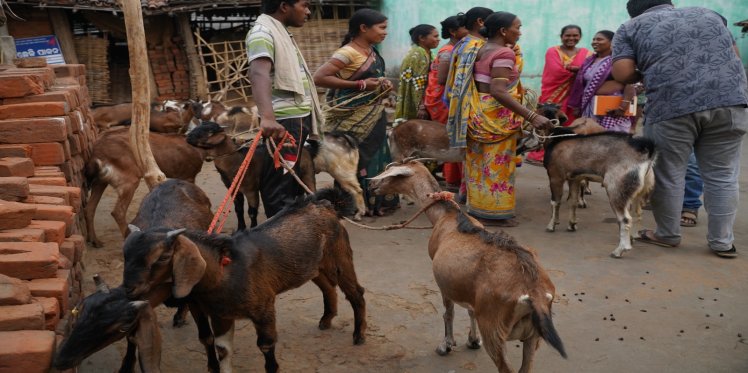
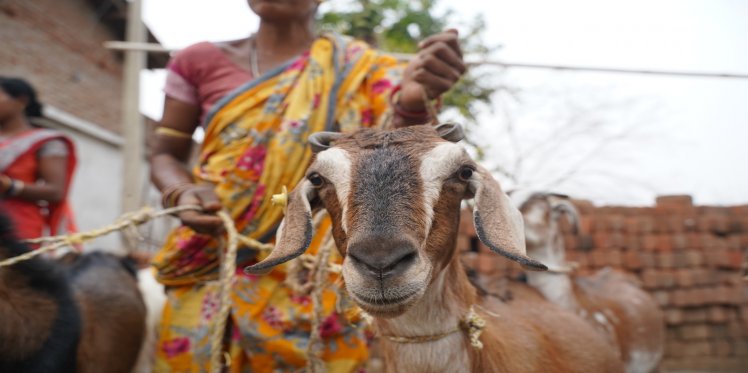
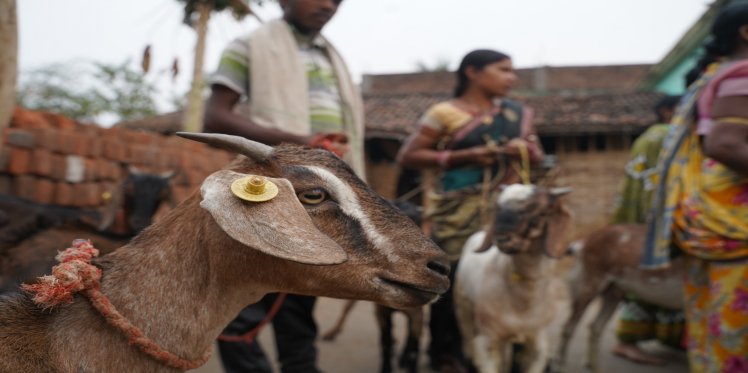
“Goat rearing is not an additional burden on us. In fact, it is our source for additional income,” says Rukha Jani of the Ma Janaki SHG in Nunpur village in Odisha’s Kalahandi district. The group of 10 women received 15 goats of the Black Bengal Variety (14 female and 1 male) through Project Utthan, an Oxfam India-HDFC Bank project, in 2022. The 10-member group has divided their work and share the grazing responsibilities.
The women—all landless farmers—belong to the OBC and tribal communities. Apart from working as farm labourers, these women had no additional source of income. Goat rearing is an opportunity for them to become economically independent. Of the 15 goats, now the SHG have 11 female adult goats and 13 kids (six female and seven male). If the group members decide to sell the goats in the market, it will be based on the weight of the goat; these tall goats will fetch almost Rs 600 per kg.
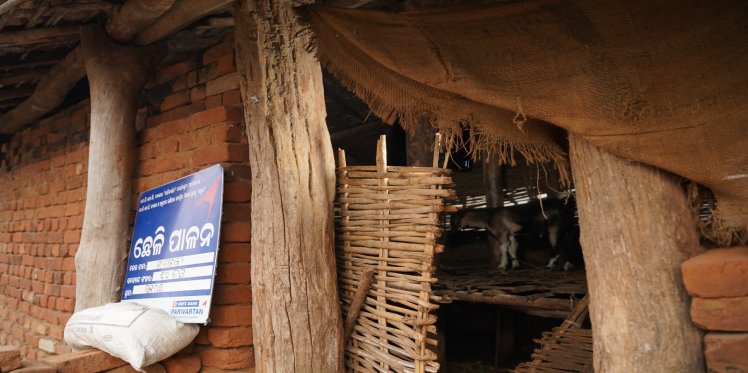
The goats are kept in a goat shed in Rukha Jani’s house. The women made a raised goat shed with a ramp. The goat droppings fall on the ground which are then scraped out and the goat shed remains clean. This was done to ensure that goats are reared in a clean environment and they do not get any infection. The 200 square feet goat shed was made by the contribution of the women members; they contributed between Rs 1000 and Rs 1500 per head.
The goats are grass fed. The waste from the crops in the farms is also a part of their feed. They are taken out twice during the day by a batch of 2-3 women members. “We take them out for grazing once we finish our morning chores of cooking, cleaning and sending children to school. The women members are very responsible about the goats and at least 2-3 of them are always available to take them out for grazing,” says Rukha Jani.
The women members keep a close eye on the goats. They have in the last one and a half years lost two goats to dog bite. The goats are vaccinated and they have insurance. The women SHG members have also been trained by a Veterinarian doctor; they call up the doctor whenever they feel that the goat is unwell or requires medical assistance.
When we met the women in March, they were not worried that the goats hadn’t yet started giving them returns. Rukha jani explains, “We want to make sure we have a good, healthy stock. And we are confident that the goats will give us good income. We have plans of spending that money on our children’s education and this they will be able to do so without having to borrow money from the local mahajan.”
📢Oxfam India is now on Telegram. Click here to join our Telegram channel and stay tuned to the latest updates and insights on social and development issues.
Recent Stories
Solar-based IRP: Providing Clean Drinking Water
13,Sep,2023 | Savvy
Sprinklers For Nalanda Farmers Ushers Improved Yields
22,Aug,2023 | Savvy
Vermicompost Pit | Our Gift To Mother Earth
21,Aug,2023 | Savvy
Community Seed Bank: Beyond Preservation And Conservation
09,Aug,2023 | Savvy
A Fresh Start For Pinky
07,Jul,2023 | Savvy
Solar Solution for Bihar Farmers
05,Jul,2023 | Savvy
Araskupa Processing Unit: A Blessing In Disguise
03,Jul,2023 | Savvy
The All-Rounder Women Farmers of Talnuagaon
28,Jun,2023 | Savvy
The Ginger Women of Koraput
27,Apr,2023 | Savvy
Spawning A Success Story In Parsauni Village
26,Apr,2023 | Savvy
Anganwadi Centre No.115 Is Now A Model Centre
17,Apr,2023 | Savvy
Building A Robust Kitchen Garden
10,Apr,2023 | Savvy
Upparnuagaon Anganwadi Centre Gets A Makeover
07,Apr,2023 | Savvy
Making Schools Better
04,Apr,2023 | Savvy
Brand Ananya Launched
30,Mar,2023 | Savvy
Women Farmers of Koraput Make Brinjal Cultivation Profitable
29,Mar,2023 | Savvy
Mushroom Cultivation: Making The Most Of Cash Transfers
29,Mar,2023 | Savvy
Solar Street Light: Reducing Carbon Footprint and Making Streets Safe
24,Mar,2023 | Savvy
Making Clean Drinking Water Accessible
23,Mar,2023 | Savvy
Sonali Neye: Public Heath Champion
02,Mar,2023 | Savvy
From Resource Centre To A Business Hub
27,Feb,2023 | Savvy
Adi Burudi: A President, Farmer and An Inspiration
27,Feb,2023 | Savvy
Cash Nudge for Divya Devi
22,Feb,2023 | Savvy
Sweet Potato For A Sweet Future
22,Dec,2022 | Savvy
Cash Boost For Entrepreneurship
24,Nov,2022 | Savvy
Solar Street Lamps Light Up 15 Villages
23,Nov,2022 | Savvy
Farmer Field School: A Centre For Learning
23,Nov,2022 | Savvy
Making Schools Fit And Smart
23,Nov,2022 | Savvy
Convergence With Govt Schemes Improves Productivity
14,Nov,2022 | Savvy
Vermicompost Brings Better Yield And Better Income
10,Oct,2022 | Savvy
Cash Push To Revive Tailoring Business
06,Oct,2022 | Savvy
Social Security For Sugarcane Cutters
30,Sep,2022 | Savvy
Shripati Devi Leads The Way
19,Sep,2022 | Savvy
Solar Lamps Lights Up Future
13,Sep,2022 | Savvy
Overcoming Adversity As A Small Business Owner: Munni Devi
01,Sep,2022 | Savvy
Storeowner And Businesswoman: Mamta Devi
01,Sep,2022 | Savvy
Advocacy Win: One Job Card At A Time
22,Aug,2022 | Savvy
Bhanumati Pungari Turns Her Life Around
17,Aug,2022 | Savvy
Suraj Goes To School
09,Aug,2022 | Savvy
चाय दुकान से स्कूल तक शिक्षा का सफ़र
05,Aug,2022 | Savvy
It Is Now All About Sums, Not Samosas
03,Aug,2022 | Savvy
Out Of Brick Kiln, Not Out Of School
02,Aug,2022 | Savvy
From the Cycle Shop To School
01,Aug,2022 | Savvy
Baide Kirsani's Exemplary Journey
01,Aug,2022 | Savvy
Securing Social Security Schemes For Anita
28,Jul,2022 | Savvy
Reviving Bal Sansad
27,Jul,2022 | Savvy
Shakuntala Devi Expands Her Business
27,Jul,2022 | Savvy
Samar and Aarti Go To School
07,Jul,2022 | Savvy
Food Stall Supports Families
09,Jun,2022 | Savvy
Cash For Livelihood
09,Jun,2022 | Savvy
1081 Out Of School Children Enrolled
30,May,2022 | Savvy
UNNATEA: The Tea Workers App
30,May,2022 | Savvy
Ananya and The EWS Story
29,May,2022 | Savvy
ऑक्सफैम इंडिया और महिंद्रा फाइनेंस की साझेदारी
20,May,2022 | Savvy
Children’s Fair: Learning Made Fun
18,May,2022 | Savvy
Ombeeri Devi : A Champion of Equal Wages
06,May,2022 | Savvy
A House For Tulsi Devi
05,May,2022 | Savvy
Bringing Relief To Families: Kerala Flood Response
04,May,2022 | Savvy
Farmer Field Schools: Boosting Farm Productivity And Confidence
02,May,2022 | Savvy
Linking Sugarcane Farmers With Social Security Schemes
28,Apr,2022 | Savvy
Registration of Workers on e-Shram Continues
28,Apr,2022 | Savvy
Back To School
28,Apr,2022 | Savvy
Firdous: The One Woman Army Spearheading Children’s Education in Mehrauli
28,Apr,2022 | Savvy
Resource Centres Augment Income Of Women Farmers
18,Apr,2022 | Savvy
Women Mushroom Farmers Cultivate An Empowered Future
05,Apr,2022 | Savvy
From a Survivor of Child Marriage to a Women’s Rights Champion
15,Mar,2022 | Savvy
Mission Sanjeevani Reaches The Musahars
07,Mar,2022 | Savvy
A School Away From School
03,Mar,2022 | Savvy
Shivani Rajak: The Volunteer and The Student
02,Mar,2022 | Savvy
Organic Farming Brings Life Back On Track
28,Feb,2022 | Savvy
Treadle Pump: A Low Cost Game Changer
28,Feb,2022 | Savvy
Village Backs Mohalla Classes
20,Feb,2022 | Savvy
Making Students Computer Savvy
18,Feb,2022 | Savvy
Sangita’s Shop
09,Feb,2022 | Savvy
For Vegetable Farmer Bati Hantal, Age Is Just A Number
03,Feb,2022 | Savvy
Rebuilding Lives In Kerala
31,Jan,2022 | Savvy
Jal Jeevan Mission in Tea Gardens
31,Jan,2022 | Savvy
बेरोजगारी एवं आर्थिक तंगी में मिली राहत
31,Jan,2022 | Savvy
Farming Yields Empowerment
25,Jan,2022 | Savvy
Supporting the Flood-Affected in Kerala
20,Jan,2022 | Savvy
Mohalla Classes 2.0
16,Jan,2022 | Savvy
Handcrafting a Water Filter
13,Jan,2022 | Savvy
Back to School and Digital Literacy
07,Jan,2022 | Savvy
The Bamboo Craftswomen of Kerala
06,Jan,2022 | Savvy
Relief for Stranded Mine Workers
03,Jan,2022 | Savvy
Silver Lining for Tiger Widows
31,Dec,2021 | Savvy
Picking Up The Threads
23,Dec,2021 | Savvy
Awl's Well That Ends Well
22,Dec,2021 | Savvy
Covid Relief Continues in Chennai
16,Dec,2021 | Savvy
Our Response in Kerala and Uttarakhand
16,Dec,2021 | Savvy
One Sweet Step At A Time
08,Dec,2021 | Savvy
Hope For Small Business Owners
06,Dec,2021 | Savvy
Babita Devi: Becoming Self Reliant through Kitchen Garden
04,Dec,2021 | Savvy
Solar Lamps Light Up Futures
20,Nov,2021 | Savvy
Parents Pushback Against School Closure In Odisha
13,Nov,2021 | Savvy
Water Filters For Better Health
07,Nov,2021 | Savvy
Sugarcane Workers’ On Record, Finally
07,Nov,2021 | Savvy
Call for Equal Wages in Palli Sabha
09,Oct,2021 | Savvy
Supporting Frontline Female Health Workers in Odisha
07,Oct,2021 | Savvy
Mission Sanjeevani Breathes Life Into A Stifled Health System
06,Oct,2021 | Savvy
Suman Devi: Inspiring Mohalla Classes in Raebareli
05,Oct,2021 | Savvy
Well-Armed Health Workers in Bihar's Nalanda
01,Oct,2021 | Savvy
Mohalla Classes to Tide through the Pandemic
23,Sep,2021 | Savvy
Trade Unions Warm Up To Living Wages
12,Sep,2021 | Savvy
Stitching A Brighter Future
06,Sep,2021 | Savvy
DIAL 1800-102-6869
26,Aug,2021 | Savvy
Back On Her Feet
15,Aug,2021 | Savvy
Oxfam India’s First Oxygen Plant in Tumkur
15,Aug,2021 | Savvy
Delivering Hope and Dignity to Refugees
02,Aug,2021 | Anisha
Labour Codes Training for Assam Tea Garden Workers
07,Jul,2021 | Savvy
Mushroom Cultivation Makes Communities Resilience
13,Apr,2021 | Savvy
Sewing A Better Future
18,Mar,2021 | Savvy
Youth Volunteer As Teachers During Pandemic
10,Mar,2021 | Savvy
Solar Boost For Rural Livelihood
14,Feb,2021 | Savvy
Making Toilets Sustainable
11,Feb,2021 | Savvy
Food For Two
12,Jan,2021 | Savvy
A Helping Hand
12,Jan,2021 | Savvy
The First Ray of Hope
12,Jan,2021 | Savvy
Where There Is A Will, There Is A Way
28,Dec,2020 | Savvy
Bitiya Murmu: Fighting for Women’s Rights
22,Dec,2020 | Savvy
Hemlata: Fighter, Nonconformist And Rebel Rolled In One
17,Dec,2020 | Savvy
Women Spearheading Leaf Plate Trade in Jharkhand
11,Dec,2020 | Savvy
Dinesh Prasad: Unrelenting Discrimination Warrior
24,Nov,2020 | Savvy
Breaking Barriers of Disability to Educate Children
12,Oct,2020 | Anisha
A Generous Unforgettable Help
01,Oct,2020 | Savvy
In the Nick of Time
29,Sep,2020 | Savvy
Fighting to End Gender Discrimination: Johani Kisku
25,Sep,2020 | Savvy
Surviving Caste Discrimination: Mahender Kumar Roushan
24,Sep,2020 | Savvy
Despite All Odds
14,Sep,2020 | Savvy
On Auto Mode
14,Sep,2020 | Savvy
Community ownership helps improve education in a village school
03,Sep,2020 | Anisha
ग्राम विकास कार्यों हेतु ग्राम जल प्रबंधन समिति के प्रयास एवं सफलता
26,Aug,2020 | Savvy
Active community involvement to ensure quality healthcare
25,Aug,2020 | Anisha
Help for Weavers in Lockdown
24,Aug,2020 | Savvy
Relief for Weavers Community
21,Aug,2020 | Savvy
Certainly Positive, In Her Resolve
17,Aug,2020 | Savvy
Money Support Gives Wings to Ideas
16,Aug,2020 | Savvy
Cash Support Helps Restart Business
11,Aug,2020 | Savvy
Locked Down in Tea Estates
07,Aug,2020 | Savvy
A Pleasant Surprise
15,Jul,2020 | Savvy
A Shopping Experience
15,Jul,2020 | Savvy
Timely Intervention
14,Jul,2020 | Savvy
Bypassing The Digital Divide
01,Jul,2020 | Savvy
Lockdown Tough on Single Mothers
29,Jun,2020 | Savvy
Waste Pickers Continue Work Despite Covid Scare
29,Jun,2020 | Savvy
Domestic Workers Stranded in the Lockdown
29,Jun,2020 | Savvy
Jagga’s Food Cart for Project Pathik
25,Jun,2020 | Savvy
'Pad'ding Up During Crisis
16,Jun,2020 | Savvy
Reaching Out to the Poorest of the Poor in Chhattisgarh and Jharkhand
09,Jun,2020 | Anonymous
अब कौन पूछता है, हम ज़िंदा है !!
02,Jun,2020 | Savvy
Leaving a Life Behind
23,May,2020 | Savvy
The Homeward Journey
21,May,2020 | Savvy
Livelihood in the Time of a Lockdown
18,May,2020 | Savvy
On Foot, On Truck and Finally, A Bus
17,May,2020 | radhika
Getting Home, Somehow
16,May,2020 | radhika
COVID-19 Lockdown Makes Meeting Ends Difficult
07,May,2020 | radhika
A Bleak Future
06,May,2020 | Savvy
Strengthening communities for improving health and nutrition
27,Mar,2020 | Anisha
Taking to the Streets for Public Health Promotion
03,Mar,2020 | Anisha
Reducing Inequality by Ensuring Formal Education
03,Mar,2020 | Anisha
Community-Based Organisations Raise Awareness on Healthcare
04,Feb,2020 | Anisha
Rebuilding lives of flood-affected families in Kerala
30,Jan,2020 | Anisha
Swantana has big dreams to achieve
20,Nov,2019 | Anisha
From Survivor to Champion of Women’s Rights
05,Nov,2019 | Anisha
Empowering girls through education
30,Oct,2019 | Anisha
Oxfam India helps Gudiya restart schooling
17,Sep,2019 | Anisha
Jharkhand’s Geeta* Goes Back to School
23,Jul,2019 | Anisha
Devyani goes back to school
05,Jul,2019 | Anisha
Lakshmi Returns Home After Fani
27,Jun,2019 | Anisha
Music for a New Life
21,May,2019 | admin
Collective Action to tackle Violence Against Women and Girls at home
21,May,2019 | admin
Ungendering domestic work
21,May,2019 | admin
Collective actions from communities on Violence against women and girls
21,May,2019 | admin
Ajay Goes To School
26,Apr,2019 | Anisha
Oxfam India in Kerala: Voices from the Ground
18,Apr,2019 | Anisha
Phulme Majhi - Building a collective strength towards equality
05,Apr,2019 | Anisha
United Voices against Alcoholism
19,Mar,2019 | ursila
Nandini's mother helps fortify her daughter's future
19,Mar,2019 | ursila
Manju Devi's Journey Towards Self Reliance
15,Mar,2019 | ursila
Challenging Gender Bias through Innovative Farming Practices
15,Mar,2019 | ursila
Oxfam India in flood hit Kerala: Stories from the ground
27,Feb,2019 | Anisha
Strengthening Panchayats to respond to Violence Against Women
04,Feb,2019 | ursila
Fighting for a brighter future
31,Dec,2018 | ursila
A champion of change
31,Dec,2018 | ursila
Stronger Together
31,Dec,2018 | ursila
This woman is breaking through Kandhamal’s skewed power dynamics
04,Dec,2018 | tiasdutta
Paving the way for change
03,Dec,2018 | ursila
Being a trailblazer
01,Dec,2018 | ursila
Being the voice of her community
01,Dec,2018 | ursila
Broken but not defeated
01,Dec,2018 | ursila
Her struggle for an education
15,Nov,2018 | Anisha
Scripting Her Own Fate
03,Nov,2018 | admin
Breaking Boundaries at Home
03,Nov,2018 | admin
Small Steps towards Empowerment
03,Nov,2018 | admin
A day in the life of a 16-year-old Rani
12,Oct,2018 | Anisha
"Land is our life"
27,Sep,2016 | oxfamadmin
Surviving the floods
19,Aug,2016 | oxfamadmin
Teams are registering for the OxfamTrailwalker. Are you?
09,Aug,2016 | oxfamadmin
Low on food in Assam, uncertain of the future
08,Aug,2016 | oxfamadmin
Assam Floods: What your donations are making possible
03,Aug,2016 | oxfamadmin
This Assam village had not seen a flood in decades
03,Aug,2016 | oxfamadmin
Oxfam India and Chhattisgarh Police jointly released awareness posters
28,Jul,2016 | oxfamadmin
Women’s Right to Agricultural Land Removing Legal Barriers for Achieving Gender Equality
20,Jul,2016 | oxfamadmin
Why is passing the Women’s Reservation Bill urgent?
16,Jul,2016 | oxfamadmin
BREXIT & What It Means for Humanitarian Aid
15,Jul,2016 | oxfamadmin
Women farmers are still fighting for recognition and right to land ownership
14,Jul,2016 | oxfamadmin
8 things that make our bucket life-changing
27,May,2016 | oxfamadmin
Panama Papers Reveal the Murky Details of the Richest 1%: Oxfam India
04,Apr,2016 | oxfamadmin
Hamid Ansari advocates special audit mechanism for 'more serious' implementation of RTE
22,Mar,2016 | oxfamadmin
No-Detention: Who Is Under The Scanner?
18,Mar,2016 | oxfamadmin
Women enthused to rise up and speak up for rights
16,Mar,2016 | oxfamadmin
"People were not sure if I would survive..." Amala Devi from Bihar
14,Mar,2016 | oxfamadmin
महिला किसानों की सहखातेदारी पर विचार करेगी सरकार : मांझी
11,Mar,2016 | oxfamadmin
MHRD objected the Rajasthan government to amend the No-Detention Policy
10,Mar,2016 | oxfamadmin
Five Stories That Are Proof That Women Are Breaking Stereotypes In Rural India #IWD2016
08,Mar,2016 | oxfamadmin
A Tense Calm: Mehjabi Khatun
02,Mar,2016 | oxfamadmin
Odisha Hosts Regional Consultation on Protection of Women from Domestic Violence Act
01,Mar,2016 | oxfamadmin
A Misplaced Sense of Honour: Meena & Deepak’s Struggle Against Their Family
29,Feb,2016 | oxfamadmin
Helping others find a way to safety
25,Feb,2016 | oxfamadmin
TERI and the Crisis of Ethical Governance
12,Feb,2016 | oxfamadmin
Emphasizing the Role of CSR in Sustained Social Change: State-Level Consultation in Chhattisgarh
08,Feb,2016 | oxfamadmin
3 Key Observations from #WEF2016 that Indian Businesses Must Take Note Of
05,Feb,2016 | oxfamadmin
Here’s Why States Need to Provide Free Basic Medicines
04,Feb,2016 | oxfamadmin
Update: Oxfam to Provide Shelter to 300 Households Hit by The Manipur Earthquake
01,Feb,2016 | oxfamadmin
From Darbhanga to Davos: Access to Affordable Medicine Still Remains a Key Question
25,Jan,2016 | oxfamadmin
Bihar designs 15-year roadmap to reduce risk of disaster
13,Jan,2016 | oxfamadmin
The 7 Images Show How Clean Drinking Water Can Be The Next Crisis in Manipur
08,Jan,2016 | oxfamadmin
48 hours after the Manipur Earthquake: Oxfam’s Assessment
06,Jan,2016 | oxfamadmin
Women vendors in Manipur’s Ima market are angry after the earthquake. Here’s why.
06,Jan,2016 | oxfamadmin
Earthquake hits Manipur in India, Oxfam working with local partners
04,Jan,2016 | oxfamadmin
National consultation on Community Forest Resource Rights and Governance
31,Dec,2015 | oxfamadmin
Violence as an Effective Mode of “Indian” Communication
16,Dec,2015 | oxfamadmin
Oxfam is responding to the floods in Tamil Nadu.
16,Dec,2015 | oxfamadmin
Because it’s 2015!
09,Dec,2015 | oxfamadmin
Let’s welcome a new dawn, minus domestic violence
08,Dec,2015 | oxfamadmin
Oxfam to provide relief to people displaced by floods in Cuddalore
06,Dec,2015 | oxfamadmin
#ChennaiFloods Update: Oxfam is close to getting relief materials on the ground
05,Dec,2015 | oxfamadmin
7 survival tips to remember during floods
04,Dec,2015 | oxfamadmin
Here’s how Oxfam is responding to the #ChennaiFloods
03,Dec,2015 | oxfamadmin
Thousands in Jharkhand challenge the #Farq against women. What are you doing?
01,Dec,2015 | oxfamadmin
8 sectors where women in India are facing the #Farq
29,Nov,2015 | oxfamadmin
These 5 questions will explain everything on social norms
26,Nov,2015 | oxfamadmin
7 things we hear everyday on gender norms
23,Nov,2015 | oxfamadmin
Problems hindering girl education brought under spotlight in education week
12,Nov,2015 | oxfamadmin
Komal overcame all obstacles to go to school
10,Nov,2015 | oxfamadmin
Data and Discrimination: Women’s Ownership of Assets in India
04,Nov,2015 | oxfamadmin
India’s missing millions of out of school children: A case of reality not living up to estimation?
02,Nov,2015 | oxfamadmin
“No Woman, No Cry!”
30,Oct,2015 | oxfamadmin
Build resilience of vulnerable communities on this National Disaster Risk Reduction day
29,Oct,2015 | oxfamadmin
Here’s what the experts had to say about the IRBF index
28,Oct,2015 | oxfamadmin
Meet Jyoti
23,Oct,2015 | oxfamadmin
10 questions that will answer all your queries about BRICS
23,Oct,2015 | oxfamadmin
Privatising Forests: A Bad Idea
16,Oct,2015 | oxfamadmin
10 questions that will answer all your queries about BRICS
12,Oct,2015 | oxfamadmin
100,000 women, 10 years, one demand: let us own our farmland
09,Oct,2015 | oxfamadmin
“I have suffered a lot due to my silence. Not anymore.”
06,Oct,2015 | oxfamadmin
Gender Quiz
04,Oct,2015 | oxfamadmin
Climate change affecting women farmers the most in Chhattisgarh
25,Sep,2015 | oxfamadmin
Adoption of Agenda 2030: 17 SDGs for 15 years
25,Sep,2015 | oxfamadmin
Five questions about the #GlobalGoals you were too embarrassed to ask
25,Sep,2015 | oxfamadmin
When will the ambulance arrive? Pregnant women are asking in a block in #Bihar
22,Sep,2015 | oxfamadmin
‘Yoga Bars’ will help you complete the Trailwalker with ease
19,Sep,2015 | oxfamadmin
Four charts show how India lags in tackling inequality
19,Sep,2015 | oxfamadmin
Parity in education welcomed by NGOs in Uttar Pradesh
17,Sep,2015 | oxfamadmin
Rampant child marriage in Jharkhand village is becoming a health concern
15,Sep,2015 | oxfamadmin
Last mile smile
13,Sep,2015 | oxfamadmin
Social responsibility of companies should not stop at 2%
11,Sep,2015 | oxfamadmin
In ‘campaign mode’, states flout FRA rules
10,Sep,2015 | oxfamadmin
10 facts on illiteracy in India that you must know
08,Sep,2015 | oxfamadmin
10 reasons why rolling back ‘No detention’ policy in RTE act would be a bad idea
04,Sep,2015 | oxfamadmin
Oxfam is responding to the floods in Manipur and Gujarat
03,Sep,2015 | oxfamadmin
Take a look why Oxfam is providing cash support to families in violence affected Assam
31,Aug,2015 | oxfamadmin
Oxfam India’s partner RAHAT awarded for work on ending violence against women
28,Aug,2015 | oxfamadmin
Floods in Manipur and Gujarat
25,Aug,2015 | oxfamadmin
A Tribute to Humanitarian Workers
21,Aug,2015 | oxfamadmin
“I will not leave my forest. I will keep my jungle”
21,Aug,2015 | oxfamadmin
This International Humanitarian Day take a look back to all disasters Oxfam India has responded to.
19,Aug,2015 | oxfamadmin
Registrations for the Bengaluru Trailwalker are now open! Have you signed up yet?
18,Aug,2015 | oxfamadmin
A toolkit to help tribals in Chhattisgarh understand their land rights
17,Aug,2015 | oxfamadmin
Three-day meet in #Odisha to discuss land rights of women farmers
14,Aug,2015 | oxfamadmin
Where is the health worker? Pregnant women in Jharkhand village are waiting
13,Aug,2015 | oxfamadmin
Oxfam provides aid to over 400,000 people in Nepal
12,Aug,2015 | Avantika
Nepal: Building shelters for women
11,Aug,2015 | oxfamadmin
Get smart: Children in Odisha use creative learning techniques to improve quality of education
07,Aug,2015 | oxfamadmin
No place to go. Pregnant women in Jharkhand get check-up done in open field
05,Aug,2015 | oxfamadmin
Joint statement on “making health affordable across Asia”
04,Aug,2015 | oxfamadmin
Building resilience of farmers in flood prone Odisha
03,Aug,2015 | oxfamadmin
Early warning system installed by Oxfam in flood prone area of Odisha helps locals
30,Jul,2015 | oxfamadmin
“We have no toilets and we worry about diseases”, says Nepal earthquake survivor
30,Jul,2015 | oxfamadmin
A functional rural health centre shows the way in Bihar
29,Jul,2015 | oxfamadmin
“I don't think I'll be back in any kind of home in the next two years”
28,Jul,2015 | oxfamadmin
Healthcare for all in India: When, How, and Why RSBY?
27,Jul,2015 | oxfamadmin
Women secure their maternal health entitlements in Bihar
25,Jul,2015 | oxfamadmin
Women are living in fear for their safety three months on from Nepal earthquake, Oxfam says
24,Jul,2015 | oxfamadmin
Mapping maternal health in Odisha? This atlas will guide the way.
23,Jul,2015 | oxfamadmin
Economic “BRICS” to cement a new partnership
21,Jul,2015 | oxfamadmin
Geeta Devi overcame every barrier to ensure forest rights for her community
20,Jul,2015 | oxfamadmin
Sewing together a new life after the Nepal earthquake
17,Jul,2015 | oxfamadmin
“If we save the forest, the forest will save us”
16,Jul,2015 | oxfamadmin
Cash incentive guaranteed under government scheme only a myth for pregnant women in Jharkhand
14,Jul,2015 | oxfamadmin
Corporate stranglehold on development finance must end in Addis
13,Jul,2015 | oxfamadmin
Surging tides of inequality
12,Jul,2015 | oxfamadmin
Phulmani Khacchap’s daily struggle keeps an entire village healthy in Jharkhand
10,Jul,2015 | oxfamadmin
Jharkhand is counting its eggs to improve nutrition of children and expecting mothers
09,Jul,2015 | oxfamadmin
No hurdle too big for Laxmi as she helps women get justice
08,Jul,2015 | oxfamadmin
Where is the nutrition? Ask pregnant women in a village of Bihar
07,Jul,2015 | oxfamadmin
Learning to read at schools, but where are the textbooks?
05,Jul,2015 | oxfamadmin
Progressive tax norms must underlie financing of the Sustainable Development Goals
04,Jul,2015 | oxfamadmin
Guess who Chris Martin could not stop listening to?
03,Jul,2015 | oxfamadmin
Guess who Chris Martin could not stop listening to?
03,Jul,2015 | oxfamadmin
Chris Martin visits education project of Oxfam India in Delhi
02,Jul,2015 | oxfamadmin
An open letter to all Doctors from an anonymous patient
01,Jul,2015 | oxfamadmin
Teachers needed! Government schools are falling behind due to lack of funds
30,Jun,2015 | oxfamadmin
Woman charged Rs 500 to get her umbilical cord cut at government health centre in Bihar
27,Jun,2015 | oxfamadmin
State-level meet in Bihar focuses on investment in agriculture and small-holder farmers
27,Jun,2015 | oxfamadmin
Nepal should grab opportunity to rebuild stronger, says Oxfam
26,Jun,2015 | oxfamadmin
#EvenitUp: Ten Reasons Why Strengthening Public Services Makes for a More Equal World
23,Jun,2015 | oxfamadmin
Protect and expand India’s public healthcare system: The inequality imperative
22,Jun,2015 | oxfamadmin
One woman’s traumatic experience of giving birth at a state-run health facility
21,Jun,2015 | oxfamadmin
So near, yet so far: Pregnant women fear to visit crumbling health centre
18,Jun,2015 | oxfamadmin
Women farmers come together for state level meet in Bihar to discuss land rights
17,Jun,2015 | oxfamadmin
Making the rich richer is not good for growth, says International Monetary Fund in inequality report
15,Jun,2015 | oxfamadmin
Oxfam India and partner empowered Gurugumia, she inspired her village
14,Jun,2015 | oxfamadmin
Youth are not useless, but they are used less
13,Jun,2015 | oxfamadmin
Roshni’s march to education was halted at the school gate, then Oxfam India intervened
11,Jun,2015 | oxfamadmin
Teeja fought for her land, Oxfam India helped her become a leader
10,Jun,2015 | oxfamadmin
Meenakhi fought for her marriage with the help of Oxfam India’s women support centre
08,Jun,2015 | oxfamadmin
“We gave our daughter an Oxfam blanket as parting gift after her wedding”
06,Jun,2015 | oxfamadmin
“We can’t even see the fish anymore”
05,Jun,2015 | oxfamadmin
10 recipes to ensure food for all in India
04,Jun,2015 | oxfamadmin
“On My Second Day At School, A Kid Asked Me What Caste I Was”
03,Jun,2015 | oxfamadmin
India matters: Safe City Dialogue - Mumbai Slums
02,Jun,2015 | oxfamadmin
Cash scheme by Oxfam helped 500 families after Kashmir floods; Nepal could be next
01,Jun,2015 | oxfamadmin
India’s missing girls: A tale of healthcare neglect faced by girls
30,May,2015 | oxfamadmin
Nepal may not be in headlines, but disaster is far from over
30,May,2015 | oxfamadmin
‘Killer’ heat wave affecting the urban poor, the homeless
29,May,2015 | oxfamadmin
Should we only give attention to women’s health on International day of action?
28,May,2015 | oxfamadmin
No respite for 72-year-old Sitaram, a month after #NepalEarthquake
25,May,2015 | oxfamadmin
One month on, education of children still jolted by Nepal earthquake
25,May,2015 | oxfamadmin
Last mile distribution of relief supplies is biggest challenge in Nepal: Indian ambassador
25,May,2015 | oxfamadmin
New worry for Nepal; landslides, floods may block relief work
25,May,2015 | oxfamadmin
Monsoon preview in Kathmandu blows away shelters in relief camp
25,May,2015 | oxfamadmin
Event: National Symposium on Women's Land Rights & Access in Odisha
20,May,2015 | oxfamadmin
When Delhi’s Streets Buzzed with ‘Haq Banta Hai’
17,May,2015 | oxfamadmin
No early marriage for Sabita as Oxfam India makes her mother see reason
17,May,2015 | oxfamadmin
EFRAH calls for support to help community affected by slum fire
17,May,2015 | oxfamadmin
Oxfam India to help Bihar be better prepared for disasters
16,May,2015 | oxfamadmin
Nepal’s second quake a double disaster says Oxfam
13,May,2015 | oxfamadmin
Nepal hit by another big earthquake, casualties reported
12,May,2015 | oxfamadmin
Old life turned to rubble, people in Nepal looking at long road to recovery
12,May,2015 | oxfamadmin
Lack of water, toilets making things worse for women in Nepal
10,May,2015 | oxfamadmin
500 slums gutted by major fire in Delhi; children lose books, uniforms
09,May,2015 | oxfamadmin
Lack of water, toilets making things worse for women in Nepal
06,May,2015 | oxfamadmin
Race to reach Nepal earthquake survivors before monsoon rains
06,May,2015 | oxfamadmin
“Need for shelter in monsoons biggest concern in rural areas of Nepal”
05,May,2015 | oxfamadmin
Oxfam India gets government approval to respond to #NepalEarthquake in 28 hours
02,May,2015 | oxfamadmin
Relief material from India reach Gorkha district in Nepal
02,May,2015 | oxfamadmin
Desperation creeping in, people in Nepal wait for aid
02,May,2015 | oxfamadmin
Oxfam trucks in aid to Nepal by land for the first time from India
01,May,2015 | oxfamadmin
#OxfaminNepal: “More than 60,000 litres of water has been provided till now”
30,Apr,2015 | oxfamadmin
Oxfam assessing the situation in devastated Gorkha district
30,Apr,2015 | oxfamadmin
Political (and some other) priorities in Nepal as of 28 April 2015
30,Apr,2015 | oxfamadmin
Oxfam has reached Gorkha district in Nepal
29,Apr,2015 | oxfamadmin
Five things that you can do to help people In Nepal
28,Apr,2015 | oxfamadmin
Five things that you can do to help people In Nepal
28,Apr,2015 | oxfamadmin
#NepalEarthquake: Oxfam begins relief work for thousands
27,Apr,2015 | oxfamadmin
#Nepal Earthquake: “The death toll has crossed 2000 and this is just the beginning”
26,Apr,2015 | oxfamadmin
#NepalEarthquake: It is going to be a long road to recovery
26,Apr,2015 | oxfamadmin
Massive earthquake hits Nepal, parts of India
25,Apr,2015 | oxfamadmin
Money Matters!
24,Apr,2015 | oxfamadmin
Kalyan Jewellers will withdraw Aishwarya ad from its campaign
23,Apr,2015 | oxfamadmin
Open letter to Aishwarya Rai Bachchan: This ad you figure in is insidiously racist
22,Apr,2015 | oxfamadmin
Hard work is the key to success: Kamlesh, a woman farmer
22,Apr,2015 | oxfamadmin
The New Land Acquisition Ordinance: Dismissing Democracy, Displacing Safeguards?
21,Apr,2015 | oxfamadmin
All for Education, Education for All
21,Apr,2015 | oxfamadmin
Oxfam condemns coalition bombing of a warehouse containing vital humanitarian aid
20,Apr,2015 | Avantika
“Teacher, May I Go To The Toilet?” What toilet?
16,Apr,2015 | oxfamadmin
Leading from within
12,Apr,2015 | oxfamadmin
Woman farmer braves odds in male dominated agriculture sector
11,Apr,2015 | oxfamadmin
School cabinets write to Odisha Chief Minister on RTE Act
08,Apr,2015 | oxfamadmin
Delhi’s cultural hub ‘plays up’ Oxfam India’s RTE demand
06,Apr,2015 | oxfamadmin
Oxfam India working to remove roadblocks in education of Dalit children in Uttar Pradesh
03,Apr,2015 | oxfamadmin
When schools continue to exclude, can education reduce caste discrimination in India?
03,Apr,2015 | oxfamadmin
Oxfam showcases its humanitarian work in Bihar
30,Mar,2015 | oxfamadmin
Ensuring the right to education, forming bonds for life
26,Mar,2015 | oxfamadmin
How can India send a spaceship to Mars but not educate its children?
24,Mar,2015 | oxfamadmin
How can India send a spaceship to Mars but not educate its children?
24,Mar,2015 | oxfamadmin
India wins in cricket, but losing out on education
23,Mar,2015 | oxfamadmin
Making up for lost time to get education
17,Mar,2015 | oxfamadmin
UP women farmers demand equitable land ownership
12,Mar,2015 | oxfamadmin
No justice yet for their daughter, nine months on
07,Mar,2015 | oxfamadmin
It’s time to understand ‘womanhood is beyond maternity’
07,Mar,2015 | oxfamadmin
Balancing expectations, learning lessons
04,Mar,2015 | oxfamadmin
The "Ten-thousand Committee": Reviving VHSNCs in Jharkhand
02,Mar,2015 | oxfamadmin
Oxfam India honours 19 ‘Agents of Change’ in Odisha
02,Mar,2015 | oxfamadmin
Tracking the journey of Asian Circle in India
28,Feb,2015 | oxfamadmin
Singing their way out of child marriage
27,Feb,2015 | oxfamadmin
Delhi RTE forum holds two-day event to chalk out roadmap of working with new state government
26,Feb,2015 | oxfamadmin
Understanding gender violence through a different lens
25,Feb,2015 | oxfamadmin
Land Acquisition bill tests government’s pro-poor stance
25,Feb,2015 | oxfamadmin
Breaking the silence, standing tall
25,Feb,2015 | oxfamadmin
Why's the Asian Circle in India? Answers Kalyani
25,Feb,2015 | oxfamadmin
Let’s Talk About Sex
16,Feb,2015 | oxfamadmin
Sheltering safety and privacy for displaced people in Assam
06,Feb,2015 | oxfamadmin
Why ending poverty in India means tackling rural poverty and power
30,Jan,2015 | oxfamadmin
Oxfam India CEO Nisha Agrawal talks about the inequality report to NDTV
22,Jan,2015 | oxfamadmin
Urgent need to "Even it Up"
20,Jan,2015 | oxfamadmin
Maternal health consultation in Delhi yields rich recommendations
20,Jan,2015 | oxfamadmin
5 pictures that show Oxfam's response to the Assam crisis
06,Jan,2015 | oxfamadmin
Considering Gender: A Mediaperson’s Guide to Covering Disasters
29,Dec,2014 | oxfamadmin
Our Response To Cyclone Phailin (Odisha)
22,Nov,2014 | oxfamadmin
Changing the Face of Urban Poverty
22,Nov,2014 | oxfamadmin
Chhattisgarh – Food Security Region: West
22,Nov,2014 | oxfamadmin
Trailwalker, an Event of Immense Potential
22,Nov,2014 | oxfamadmin
India’s New Middle Classes – Friends of progress or a Political mall-rats?
22,Nov,2014 | oxfamadmin
After a Bleak End to 2012, Hopefully 2013 will Bring some Positive Changes for Indian Women
22,Nov,2014 | oxfamadmin
Intolerance Impeding Innovation
22,Nov,2014 | oxfamadmin
CLOSETHEGAP Launch
22,Nov,2014 | oxfamadmin
I Want My Land
22,Nov,2014 | oxfamadmin
Video: Even it up!
22,Nov,2014 | oxfamadmin
Media training workshop, a decade after 2004 tsunami
22,Nov,2014 | oxfamadmin
Girl, Interrupted
22,Nov,2014 | oxfamadmin
Supreme Court puts Human Rights before Excessive Profits
22,Nov,2014 | oxfamadmin
Changing the Face of Urban Poverty
07,Nov,2014 | abhij89
These 8 Goals Were Set To Develop The World, But 14 Years Since, This Is Where We Stand
04,Sep,2014 | Anonymous
A Look At The Year 2029: What Kind Of Legacy Will We Leave Behind For Our Future Generations?
03,Sep,2014 | Anonymous
Related Stories
28 Apr, 2022
Meerut, Uttar Pradesh
Linking Sugarcane Farmers With Social Security Schemes
Oxfam India's Power of Voices Project (PvP) aims to ensure rights of informal sector worker specifically those engaged in sugar value chain.
28 Apr, 2022
Meerut, Uttar Pradesh
Registration of Workers on e-Shram Continues
Oxfam India has, in the last eight months, helped over 3600 workers from the unorganised sector register on the e-Shram portal.
28 Apr, 2022
Uttar Pradesh, Jharkhand
Back To School
First with the sustained efforts of the Mohalla Classes and later with a dogged enrolment drive, we have managed to enrol 448 Out Of School children in schools in 8 districts in Uttar Pradesh and J
28 Apr, 2022
Mehrauli, Delhi
Firdous: The One Woman Army Spearheading Children’s Education in Mehrauli
”Most school going children in Ghosiya Colony (Mehrauli) do not have access to smartphones and internet connectivity. Without the latter, their education will get disrupted,” says Firdous.