


Covid-19 India Press Release
- By Oxfam India
- 30 Mar, 2020
Oxfam India writes to Prime Minister, requests urgent measures to fight Coronavirus in India
Oxfam India today released an open letter (attached) to the Indian Prime Minister Narendra Modi calling for an eight-point plan that includes focus on increasing free testing, ensuring gender and socially inclusive response, and enabling the civil society network to join the fight against coronavirus.
The pandemic has caused widespread suffering in rich countries, overwhelming some of the best healthcare systems in the world. In India, high levels of poverty and inequality risk accelerating the disease, the public health challenges are even greater.
This is a public health emergency which requires government to provide free healthcare, testing for all. Testing should be made free in both public and private sector in line with the recommendations made by the ICMR; current private sector rates capped at 4500 INR are too expensive given that 74.25% of households earn less than 5000 INR per month (SECC, 2011).
Safety of health workers and those on the frontlines of the response must be ensured by making available personal protective equipment to minimize the risk of their infection and monitor and prevent any discrimination or attacks on health workers.
Measures taken as part of the recovery package announced by the Finance Minister are welcome. However, more could be done. According to the World Bank's Global Findex Database 2017, 20% of Indian adults lack a bank account; 54% of women's Jan Dhan accounts are inactive. Some of India’s most marginalized, like unregistered construction workers and those without Jan Dhan accounts, will remain outside social protection during the pandemic.
Urgent support is needed for migrant informal sector workers including food, temporary housing (for those stranded) and cash transfer. The government should explicitly ban reduction in workforce of MSMEs and other enterprises and put a freeze on any evictions and demolitions in all low-income settlements for the duration of the endemic.
Amitabh Behar, Oxfam India CEO said “These are unprecedented times. We need community support and compassion in these times. We have suggested an eight-point plan which includes allowing the civil society to respond to this public health emergency. Civil society can potentially help by pooling resources, running awareness campaigns and addressing issues of livelihood and providing relief material. To make this happen, we need Indian government to provide guidelines which would help transport relief material and enable volunteers, staff of credible organisations to support the response on ground.”
India has a small window of opportunity to implement prevention measures to stop and delay the further spread of the pandemic. The world into which we would emerge at the end of the pandemic would be a fundamentally different one. All steps need to be taken to ensure that it is a better one.
Oxfam India is coordinating with different inter-state agencies across various states in India to prepare a relief response. We are also appealing people to support our effort and donate https://www.oxfamindia.org/coronavirus
Note To The Editors:
Oxfam India’s spokespersons are available for interviews on different issues- Health, Education, Inequality & Humanitarian Response. To arrange interviews or further queries please contact Himanshi Matta, 91-8860182310
Recent News
Related Stories
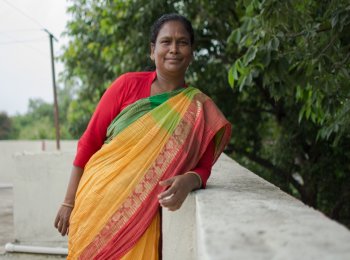
22 Dec, 2020
Jharkhand
Bitiya Murmu: Fighting for Women’s Rights
44-year-old Bitiya Murmu hasn’t let a single life experience go waste. Her journey to becoming a social activist and a leading Santhal voice, began when she was barely 13. A child bride, a mother at 15, and a survivor of domestic violence — it is Bitiya’s grit and determination that she charted out a course that has not only made her a source of inspiration for her daughter but for thousands of women around her.
Read More
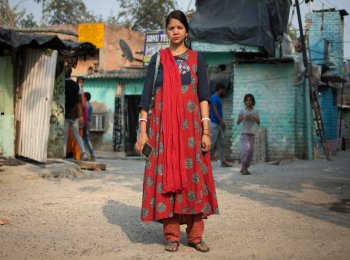
17 Dec, 2020
New Delhi
Hemlata: Fighter, Nonconformist And Rebel Rolled In One
Not the kinds to be bogged down by troubles, Hemlata Kansotia refused to feel sorry for herself and devoted herself to the cause of migrant workers. She decided to tackle discrimination — one that she faced because of her social and economic background, one she faced because of her disability, and finally gender discrimination.
Read More
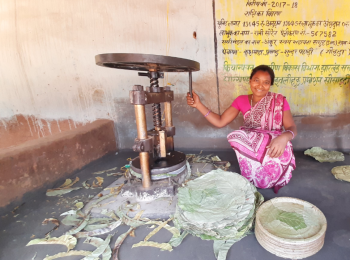
11 Dec, 2020
Godda, Jharkhand
Women Spearheading Leaf Plate Trade in Jharkhand
The Sal leaf plate making initiative, in Jharkhand, holds promise of a bright future because it has been well accepted by the community. Moreover, this intervention will strengthen community governance of an important NTFP— Sal leaves— and build much needed resilience for the economically and socially marginalized sections of the society, especially women.
Read More
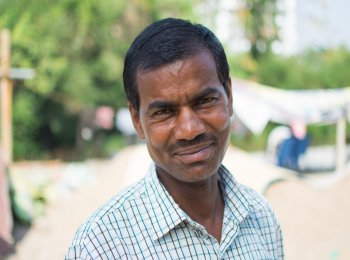
24 Nov, 2020
Uttar Pradesh
Dinesh Prasad: Unrelenting Discrimination Warrior
Dinesh Prasad has become synonymous to hope and spirits for the people of his community-Musahars-today. Oxfam India worked with Dinesh to fight caste discrimination and train his community to understand their rights and entitlements and demand for what is rightfully theirs.
Read More
