


#TimeToCare (Global)
- By Oxfam
- 16 Jan, 2020
World’s billionaires have more wealth than 4.6 billion people
The world’s 2,153 billionaires have more wealth than the 4.6 billion people who make up 60 percent of the planet’s population, reveals a new report from Oxfam today ahead of the World Economic Forum (WEF) in Davos, Switzerland.
Global inequality is shockingly entrenched and vast and the number of billionaires has doubled in the last decade. Oxfam India CEO Amitabh Behar, who is in Davos to represent the Oxfam confederation this year said: “The gap between rich and poor can't be resolved without deliberate inequality-busting policies, and too few governments are committed to these.”
Oxfam’s report, ‘Time to Care’, shows how our sexist economies are fuelling the inequality crisis —enabling a wealthy elite to accumulate vast fortunes at the expense of ordinary people and particularly poor women and girls:
- The 22 richest men in the world have more wealth than all the women in Africa.
- Women and girls put in 12.5 billion hours of unpaid care work each and every day- a contribution to the global economy of at least $10.8 trillion a year, more than three times the size of the global tech industry.
- Getting the richest one percent to pay just 0.5 percent extra tax on their wealth over the next 10 years would equal the investment needed to create 117 million jobs in sectors such as elderly and childcare, education and health.
“Our broken economies are lining the pockets of billionaires and big business at the expense of ordinary men and women. No wonder people are starting to question whether billionaires should even exist,” Behar said.
“Women and girls are among those who benefit least from today’s economic system. They spend billions of hours cooking, cleaning and caring for children and the elderly. Unpaid care work is the ‘hidden engine’ that keeps the wheels of our economies, businesses and societies moving. It is driven by women who often have little time to get an education, earn a decent living or have a say in how our societies are run, and who are therefore trapped at the bottom of the economy,” added Behar.
Women do more than three-quarters of all unpaid care work. They often have to work reduced hours or drop out of the workforce because of their care workload. Across the globe, 42 percent of women cannot get jobs because they are responsible for all the caregiving, compared to just six percent of men.
Women also make up two-thirds of the paid ‘care workforce’. Jobs such as nursery workers, domestic workers, and care assistants are often poorly paid, provide scant benefits, impose irregular hours, and can take a physical and emotional toll.
The pressure on carers, both unpaid and paid, is set to grow in the coming decade as the global population grows and age. An estimated 2.3 billion people will be in need of care by 2030 —an increase of 200 million since 2015. Climate change could worsen the looming global care crisis —by 2025, up to 2.4 billion people will live in areas without enough water, and women and girls will have to walk even longer distances to fetch it.
The report shows governments are massively under-taxing the wealthiest individuals and corporations and failing to collect revenues that could help lift the responsibility of care from women and tackle poverty and inequality.
At the same time, governments are underfunding vital public services and infrastructure that could help reduce women and girls’ workload. For example, investments in water and sanitation, electricity, childcare, healthcare could free up women’s time and improve their quality of life. For example, providing access to an improved water source could save women in parts of Zimbabwe up to four hours of work a day, or two months a year.
“Governments created the inequality crisis —they must act now to end it. They must ensure corporations and wealthy individuals pay their fair share of tax and increase investment in public services and infrastructure. They must pass laws to tackle the huge amount of care work done by women and girls, and ensure that people who do some of the most important jobs in our society —caring for our parents, our children and the most vulnerable— are paid
Recent News
Related Stories
08 Feb, 2016
Chhattisgarh
Emphasizing the Role of CSR in Sustained Social Change: State-Level Consultation in Chhattisgarh
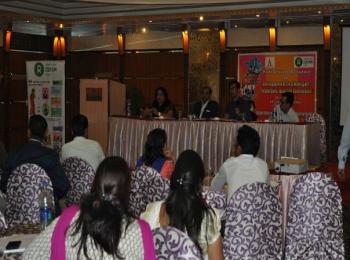
Oxfam India and the National Foundation for India conducted a state level private sector and civil society consultation on corporate social responsibility (CSR) engagements in Chhattisgarh titled “Perspectives, Idea and Development” on 29 January 2016 in Raipur.
Read More
05 Feb, 2016
New Delhi
3 Key Observations from #WEF2016 that Indian Businesses Must Take Note Of
The theme for this year’s annual meeting of the World Economic Forum was ‘Mastering the Fourth Industrial Revolution.’ This was rather brave, considering the backdrop of China’s economic slowdown, rock-bottom oil prices, the fear of an impending economic recession, and the growing threat of terror.
Read More
04 Feb, 2016
Odisha
Here’s Why States Need to Provide Free Basic Medicines
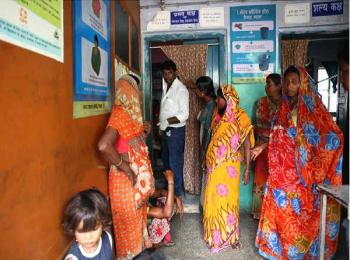
Last year, 18-year-old Nabina Bagartee, who lives in a village in Kalahandi district of Odisha, developed a high fever and fainted. Unsure of the treatment their daughter would get at the CHC at Junagarh, the parents took her directly to the District Hospital in Bhawanipatna.
Read More
01 Feb, 2016
Manipur
Update: Oxfam to Provide Shelter to 300 Households Hit by The Manipur Earthquake
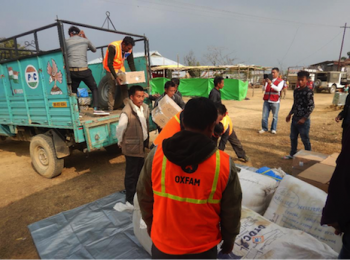
Oxfam has initiated its response in Kabui Khullen 1 village in Manipur after the state was hit by an earthquake on January 4. Oxfam will reach out to 300 affected households in 18 villages in the Tamenglong and Senapati districts.
Read More
