


'Systemic violence against women cannot be solved with more violence'
- By Oxfam India
- 05 Dec, 2019
Oxfam India condemns the brutal gang rapes of women in India and demands concrete, effective and long-term solutions to end the rising violence against women in the country. The NCRB Crime in India 2017 report states that more than 900 crimes against women take place every day. The shocking reality is that large number of such assaults go unreported. More than 90% of perpetrators are known to the survivor.
Oxfam India demands that notions of justice for the survivor should include enabling her to heal and move on. Death penalty is not a solution to end violence against women and girls. The deterrent in such cases lies in the certainty of punishment and not its severity. Death penalty discourages the woman from reporting the crime given the high number of perpetrators from family, neighborhood and known persons.
Despite the rhetoric of death penalty, only 32% of sexual assault cases end in conviction. Justice delayed is justice denied. Much more can and should be done both to prevent sexual assault and to enable survivors to recover from the trauma. High level of male entitlement and no fear of the law fuel the rape crisis. There is need to teach men and boys to respect women, end subordination of women and girls, end male entitlement and end the sense of shame linked to sexual assault. There is also need to bring the police to account for failing to file a prompt FIR, institute good policing practices and improve law enforcement. It is also important to recognize sexual assault of transgender persons and men which is not adequately recognized in law.
Justice also includes believing in what the survivor says, enabling psycho-social support, healthcare, compensation, healing and recovery. However, the promises of these essential services made to women and girls, after another brutal rape which happened in 2012 have not been fulfilled. Merely 17% of funds for One Stop Centres, 20% of Central Victim Compensation funds and only 43% of funds for women’s helpline have been utilised[1]! Most districts do not have any services to assist survivors. Both public and private spaces continue to be unsafe for women and girls.
In this context, we place the following demands for addressing sexual violence against women and girls.
-
Make One Stop Centres and 181 helplines accessible and functional at the district and sub-district level
-
Ensure effective utilisation, periodic monitoring and tracking of Nirbhaya Funds
-
Provide adequate budgets and make the Rape Compensation Scheme functional in all states
-
Make the police accountable for prompt filing of cases and speedy investigation
-
Set up fast track and sensitive courts for speedy trial
- Make public places, transportation and work places safe for women and girls
[1] http://www.cbgaindia.org/publication/promises-priorities-analysis-union-budget-2019-20/
For media queries, please write to us at: himanshi@oxfamindia.org
Recent News
Related Stories
12 Sep, 2021
Assam
Trade Unions Warm Up To Living Wages
Following the release of our report In Defense of Living Wages for Tea Plantation Workers, the trade unions in Assam and AIPWF have now started talking about living wages for plantation workers and not just ensuring a basic minimum wage.
Read More
06 Sep, 2021
Nalanda, Bihar
Stitching A Brighter Future
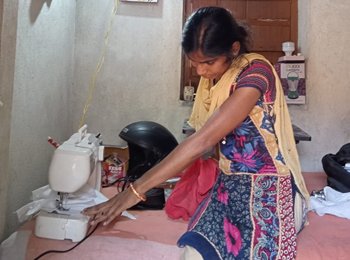
Oxfam India-HDFC project—UTTHAN—has been working in 15 villages in Nalanda since July 2020. HDFC’s CSR initiative Parivartan aims to ‘Create Sustainable Communities’ by enhancing sustainable livelihood options and improving access to essential services, especially of women, from the most marginalised and vulnerable communities.
Read More
26 Aug, 2021
Lucknow, Uttar Pradesh
DIAL 1800-102-6869
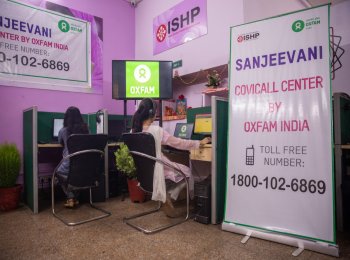
SANJEEVANI, the covicall centre inaugurated on 27 June 2021 was set up by Oxfam India (in technical collaboration with ISHP) as part of its ongoing COVID-19 response—Mission Sanjeevani. The Covicall Centre will respond to all COVID and Non-COVID queries. The number to remember is 1800-102-6869.
Read More
15 Aug, 2021
Sirsi, Nalanda
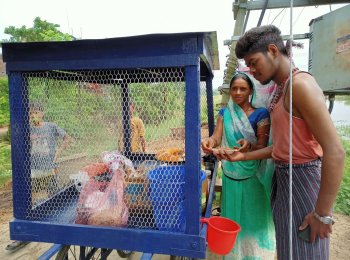
Back On Her Feet
Pinki was able to restart her food business thanks to the Oxfam India-HDFC project—UTTHAN—that has been working in Nalanda for nearly a year now. HDFC’s CSR initiative Parivartan aims to ‘Create Sustainable Communities’ by enhancing sustainable livelihood options and improving access to essential services, especially of women, from the most marginalised and vulnerable communities.
Read More
