


'Systemic violence against women cannot be solved with more violence'
- By Oxfam India
- 05 Dec, 2019

Oxfam India condemns the brutal gang rapes of women in India and demands concrete, effective and long-term solutions to end the rising violence against women in the country. The NCRB Crime in India 2017 report states that more than 900 crimes against women take place every day. The shocking reality is that large number of such assaults go unreported. More than 90% of perpetrators are known to the survivor.
Oxfam India demands that notions of justice for the survivor should include enabling her to heal and move on. Death penalty is not a solution to end violence against women and girls. The deterrent in such cases lies in the certainty of punishment and not its severity. Death penalty discourages the woman from reporting the crime given the high number of perpetrators from family, neighborhood and known persons.
Despite the rhetoric of death penalty, only 32% of sexual assault cases end in conviction. Justice delayed is justice denied. Much more can and should be done both to prevent sexual assault and to enable survivors to recover from the trauma. High level of male entitlement and no fear of the law fuel the rape crisis. There is need to teach men and boys to respect women, end subordination of women and girls, end male entitlement and end the sense of shame linked to sexual assault. There is also need to bring the police to account for failing to file a prompt FIR, institute good policing practices and improve law enforcement. It is also important to recognize sexual assault of transgender persons and men which is not adequately recognized in law.
Justice also includes believing in what the survivor says, enabling psycho-social support, healthcare, compensation, healing and recovery. However, the promises of these essential services made to women and girls, after another brutal rape which happened in 2012 have not been fulfilled. Merely 17% of funds for One Stop Centres, 20% of Central Victim Compensation funds and only 43% of funds for women’s helpline have been utilised[1]! Most districts do not have any services to assist survivors. Both public and private spaces continue to be unsafe for women and girls.
In this context, we place the following demands for addressing sexual violence against women and girls.
-
Make One Stop Centres and 181 helplines accessible and functional at the district and sub-district level
-
Ensure effective utilisation, periodic monitoring and tracking of Nirbhaya Funds
-
Provide adequate budgets and make the Rape Compensation Scheme functional in all states
-
Make the police accountable for prompt filing of cases and speedy investigation
-
Set up fast track and sensitive courts for speedy trial
- Make public places, transportation and work places safe for women and girls
[1] http://www.cbgaindia.org/publication/promises-priorities-analysis-union-budget-2019-20/
For media queries, please write to us at: himanshi@oxfamindia.org
Recent News
Related Stories
15 Aug, 2021
Tumkur, Karnataka
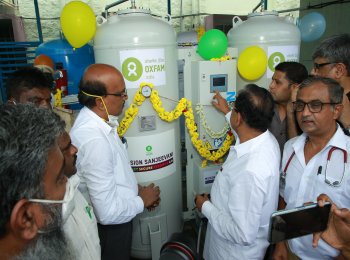
Oxfam India’s First Oxygen Plant in Tumkur
The 300 LPM Oxygen plant, set up under Oxfam India’s COVID-19 response ‘Mission Sanjeevani’, at the 80-bed government hospital at Koratagere in Tumkur in Karnataka will cater to people from 46 surrounding villages. Tumkur MLA, Dalit Leader and former deputy chief minister of Karnataka, G Parameshwara inaugurated the Oxygen plant on 26 July 2021.
Read More
02 Aug, 2021
New Delhi
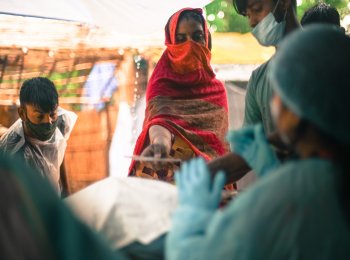
Delivering Hope and Dignity to Refugees
Oxfam India has been supporting communities worst affected by the pandemic, across India, for over a year now. At the heart of our response are communities already living on the margins such as daily wage workers, transgender communities, informal sector workers and differently abled people. We partnered with HAI to extend our support to refugees from Pakistan living in Delhi.
Read More
07 Jul, 2021
Assam
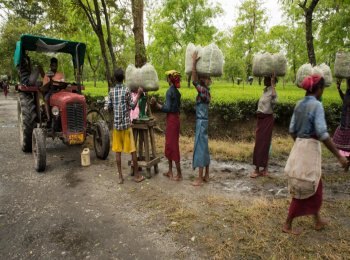
Labour Codes Training for Assam Tea Garden Workers
The Labour Codes will have significant impacts on the informal sector workers including the tea garden workers. A need was thus felt to train the workers around these Codes. The existing Plantation Labor Act, 1951 which used to govern the tea industry will be subsumed under these Codes. Different aspects of the Act will now feature in these four codes. In the above context, Oxfam India in collaboration with Centre for Workers’ Management initiated a training programme for workers across seven districts of Assam, during the month of June.
Read More
13 Apr, 2021
Sitamarhi, Bihar
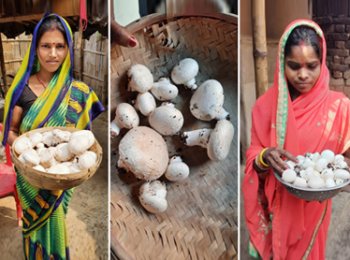
Mushroom Cultivation Makes Communities Resilience
Oxfam India has been working with these communities through its disaster risk reduction programme since 2012. It was in 2017 that it finally started its livelihood intervention programme — mushroom cultivation and vermicomposting — with the women from the Musahar community. This proved useful during the lockdown in 2020.
Read More
