


Informal Sector Workers Rapid Survey
- By Abhirr VP
- 03 Nov, 2021
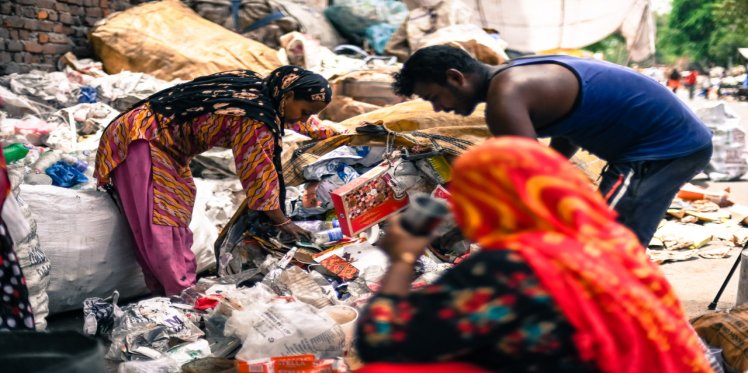
Civil society members, experts and researchers meet to push for better access to health and PDS for migrant workers
Pune, 3 November 2021 | Only one percent of informal sector workers surveyed by Oxfam India had access to the Ayushman Bharat Scheme or the Pradhan Mantri Jan Arogya Yojana (PMJAY) and none of them have used the scheme in the last one year. A survey of 1,461 informal and migrant workers was conducted by Oxfam India in New Delhi, Mumbai, Pune and Bengaluru in collaboration with civil society groups — Basti Suraksha Mancha, Centre for Youth Development and Activities, Centre for Promoting Democracy and The United Foundation.
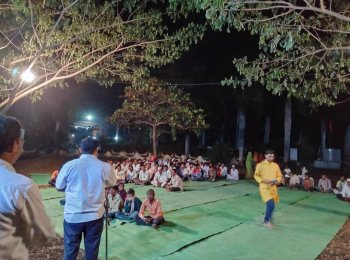
The survey was conducted in 4 major slums of Ambedkarnagar in Mumbai, Tadiwala in Pune, Seemapuri in Delhi and DJ Halli in Bengaluru to find out how informal sector workers were affected during the nationwide lockdown caused by the COVID-19 pandemic. The findings of the survey were released by Oxfam India here in the presence of prominent civil society members in Pune. Experts from civil society, working people’s groups and researchers were invited to shape recommendations of the survey reports to the government and policy makers for better access to PMJAY and Public Distribution System (PDS) to informal sector workers.
“Pradhan Mantri Jan Arogya Yojana is the national public health insurance fund of the Government of India. The Yojana aims to provide free access to health insurance coverage for low income earners in the country. This scheme should have actually helped informal and migrant workers during the nationwide lockdown caused by the COVID-19 pandemic. But in our survey, we found that in the four cities in spite of 11.4 percent of regular wage workers having heard of the scheme, only 0.3 percent actually have the card,” said Ranjana Das, Lead Specialist, Private Sector Engagement at Oxfam India.
“The pandemic, as we all have seen, has hit the informal and migrant workers the most. During the lockdown of 2020, out of a total 122 million who lost their jobs, 75 percent which accounts for 92 million jobs were lost in the informal sector. It is in this backdrop of the ever-growing vulnerability of informal sector workers that Oxfam India conceptualised the rapid survey to understand the accessibility of informal sector workers to social security schemes during the pandemic,” said Ranjana.
“It is a welcome report and it is important to universalize the social protection programmes for urban informal sector workers who are at the intersection of class, caste and gender and invisible in the economy,”said Roshni Nuggerhalli, Executive Director YUVA.
The rapid survey had four objectives:
- To understand the access to the Public Distribution System (for food security) and Ayushman Bharat Scheme (for health insurance) by informal sector workers (in the sample) during the pandemic;
- To identify the challenges faced by informal sector workers (in the sample) in accessing the above social security schemes;
- To identify any social security benefits provided to informal sector workers (in the sample) by their employers;
- To assess the knowledge of informal sector workers (in the sample) about schemes especially designed for them as well as the Social Security Code and Wage Code.
Some of the major findings of the Oxfam India survey are:-
- Of those that had a ration card, one-third were unable to buy ration at a PDS outlet during the pandemic.
- The income group with an annual income above INR 75,000 has the highest percentage of ration cards, which is close to 80 percent. The income category of INR 60,001-75,000 has the lowest percentage of ration cards (54.6 percent).
- Around 80 percent of those who are employed do not receive any social security benefits at all.
- Provision of paid leaves is highest for Pune (30 percent) while none of the employed respondents were receiving the other three benefits.
- 88.3 percent of respondents did not hear of any of the nine government schemes. The schemes are: al Family Benefit Scheme (NFBS); Indira Gandhi National Old Age Pension Scheme (IGNOAPS); Aam Admi Bima Yojana (AABY)/Janashree; Pradhan Mantri Shram Yogi Maan-dhan (PM-SYM); National Pension Scheme for Traders and Self-Employed Persons (NPS-Traders); Atal Pension Yojna (APY); Pradhan Mantri Jeevan Jyoti Bima Yojana (PMJJBY); Pradhan Mantri Suraksha Bima Yojana (PMSBY); One Nation One Ration Card (ONORC).
- Of the 11.7 percent of the respondents who have heard about the schemes, 8.8 percent of them are aware of ONORC, implying that this scheme has been heard of the most.
Based on the rapid survey, Oxfam India recommends that a coherent strategy be developed for Informal Sector Workers (ISW) based on the following key recommendations:
1: Increase awareness of social security schemes: ISWs knowledge about social security schemes is exceptionally low and as a result they risk missing out on benefits that they are entitled to. Therefore, local governments and workers’ welfare boards should inform and educate workers, in their jurisdiction, about available social welfare schemes, employee benefits and legal rights. Local civil society organizations should also be made partners in the regular dissemination of such awareness programmes.
2: Reduce administrative and registration barriers: The registration of potential beneficiary in a social security schemes is a difficult to navigate and a long-drawn process.
3: Create and enforce mechanisms to protect casual and migrant workers: Casual workers and migrants, particularly, short-term circular migrants are two of the most vulnerable groups among the ISW. It is absolutely essential to ensure that they can access social security benefits. This can be done by ensuring that casual and migrant workers across all occupations are registered with worker’s welfare boards or with the e-shram portal right before they pick up casual wage labour, perhaps on-site as well.
4. Ensure legal compliance: The Code on Social Security, 2020 explicitly identifies ISWs as a target group needing access to health care and income security, particularly in cases of old age, unemployment, sickness, invalidity, work injury, maternity or loss of a breadwinner. However, the heterogeneous nature of the informal sector makes it hard to oversee if employers, are, in fact practicing the legal dictum. Health insurance and maternity benefits are the two of the least accessible provisions.
5. Clear set of guidelines for employers: It is pertinent that employers are provided with a clear set of guidelines on the compliances required under law. This includes the issuing of mandatory written contract of employment, payment of wages within 30 days of work and guaranteed basic pay in the face of any crisis.
You can read the full report here.
For more details, contact:
Abhirr VP (Manager, Media and PR):+91 97399 81606
About Oxfam India
Oxfam India is a movement of people working to end discrimination and create a free and just society. We work to ensure that Adivasis, Dalits, Muslims, and women and girls have safe violence-free lives with freedom to speak their mind, equal opportunities to realize their rights, and a discrimination-free future.
📢Oxfam India is now on Telegram. Click here to join our Telegram channel and stay tuned to the latest updates and insights on social and development issues.
Recent News
Related Stories
22 Dec, 2021
Nalanda, Bihar
Awl's Well That Ends Well
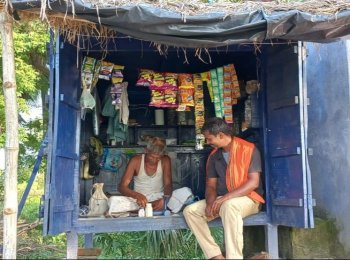
Ram Bihari, a cobbler by profession, received help through the Oxfam India-HDFC initiative. Not only did he set up a wooden stall he diversified to sell grocery as well. Not only has his monthly income increased by Rs 2000, it is also a huge step towards ending discrimination and breaking the mould where the profession of a person is pre-decided and imposed upon them because of the caste they are born into.
Read More
16 Dec, 2021
Chennai
Covid Relief Continues in Chennai
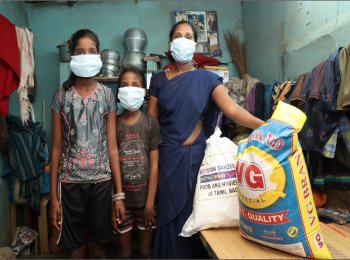
Through Mission Sanjeevani, with the support from Technicolor, we delivered food and safety kits to families in Chennai. We distributed relief material to 575 families adversely affected by the pandemic. These are the stories of four families who received relief kits, comprising food and hygiene items, in Chennai’s Vyasarpadi neighbourhood.
Read More
16 Dec, 2021
Uttarakhand & Kerala
Our Response in Kerala and Uttarakhand
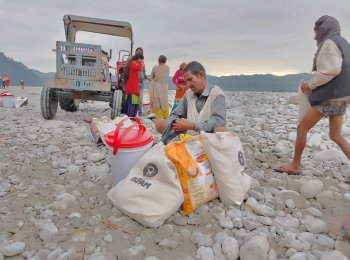
We have reached out to over 6000 families stranded in the October floods and landslides in Kerala and Uttarakhand with dry ration and hygiene kit. In Kerala we have carried out WASH activities to repair 144 wells so as to ensure clean drinking water.
Read More
08 Dec, 2021
Beed, Maharashtra
One Sweet Step At A Time
Loknete Sundarrao Solanke Co-Operative Sugar Factory in Maharashtra's Beed district has taken the responsibility of registration of sugarcane cutters and promised education material for the children of the cutters. The registration of cane cutters is a big step towards providing them social security. This was also a big step for the children, who migrate with their parents for nearly six months (from Diwali to March) and have no recreational or learning avenues.
Read More
