


Consultation on Trans-Boundary Cooperation for Effective Management of Water Risks, Bhutan - India
- By Oxfam India
- 08 Jul, 2019
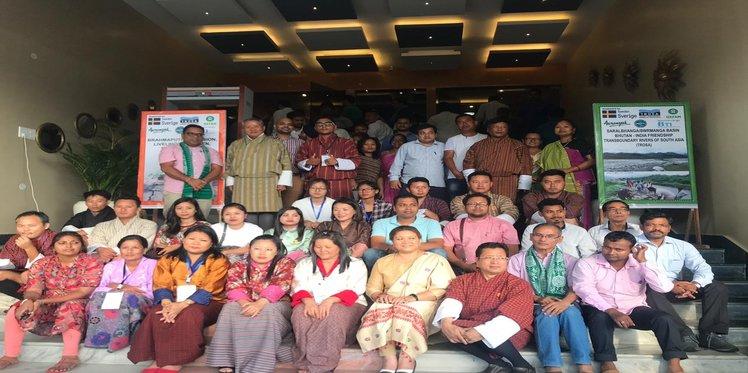
Kokrajhar (Assam), June 21st, 2019: As multiple countries in the South Asian region struggle individually to deal with the impacts of climate change induced disasters, unfortunately, there is yet to be promising development in collectively combating these vulnerabilities at the regional and transboundary level. Several rivers that flow down from Bhutan to India - with 56 such rivers flowing down from Bhutan to Assam itself. Though these rivers are the lifeline for riparian communities in both countries, they oftentimes wreak havoc, with flash floods, long term inundation, erosion, cyclones and siltation. Unscientific mining, unsustainable fishing, and improper water management and flood protection measures could be likely causes for cumulative risks and vulnerabilities in the region. If governed effectively, these rivers could help both countries thrive in trade and tourism, as well as enabling a prosperous livelihood for the respective riparian communities.
With Bhutan and India enjoying a friendly and cordial relationship, and in recent times, CSO to CSO ties strengthening, amicable ties between border communities and their collective approach in managing rivers is being cited as an early instance of transboundary cooperation. As understanding grows, transboundary communities are making continued endeavors to bring respective cultures together through various activities.
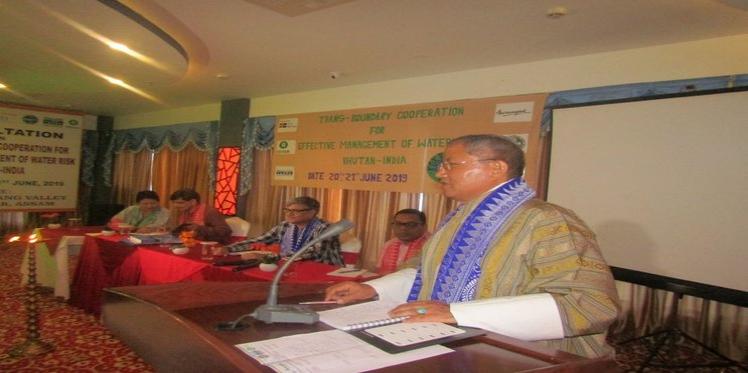
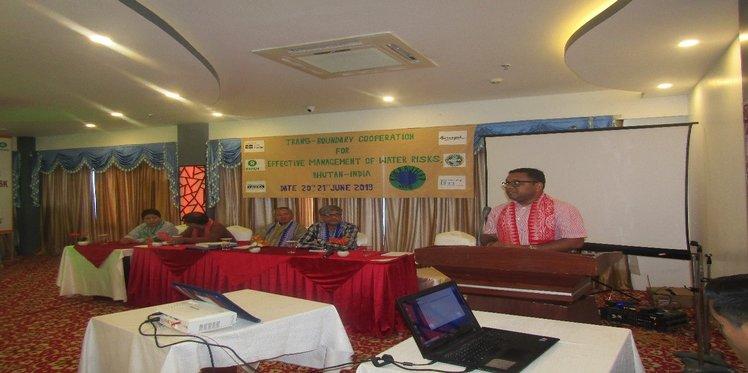
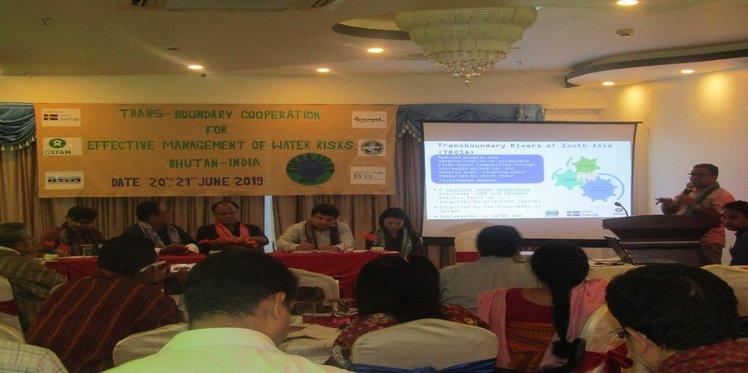
In this context, a two-day consultation was organized, involving representatives from Government, CSO, Media and Academic Institutions. Titled ‘Consultation on Trans-Boundary Cooperation for Effective Management of Water Risks’, it was held on June 20th and 21st, 2019, at Kokrajhar, BTC, Assam.
Tireless efforts by women leaders from India and Bhutan have resulted in early platforms to enhance women’s participation in trans-boundary risk governance. A cadre of community based women leaders are coming together to collectively manage risks in the last mile with support from upstream and downstream communities.
The Consultation on Trans-Boundary Cooperation for Effective Management of Water Risks was a collective effort of these women champions, represented by several agencies, including North East Research & Social Work Networking (NERSWN), Aranyak and Bhutan Transparency Initiative (BTI), Bhutan India Friendship Association, supported by Oxfam’s Project TROSA.
This two-day consultation aimed at strengthening transboundary collaboration and cooperation with Government, CSOs, Academia and others with the following long term objectives:
- Transboundary communities are enabled to reduce vulnerability to water resource related shock, together, including from water stress and disasters.
- Transboundary Governance is improved as a result of relevant bilateral mechanisms and protocols for transboundary risk governance in India and Bhutan
- CSOs and Networks increasingly participate in and influence transboundary risk governance
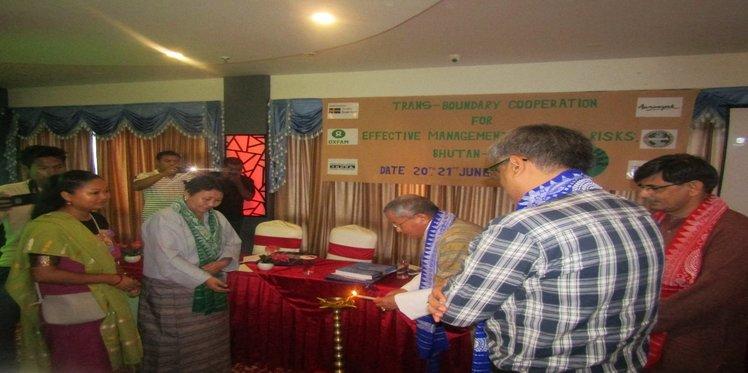
The Consultation was jointly inaugurated by Biren Chandran Phukan, IAS, Principal Secretary, BTC, and Dr. Kinzang Dorji.
Chairperson, BTI Board (Former Minister, Prime Minister & Speaker) and Mr. Pankaj Anand (Director, Oxfam India) in the august presence of eminent representatives from Bhutan and India.
In his inaugural address, Dr. Kinzang Dorji emphasized, “Bhutan and India have always been friendly nations and share a time tested relationship. This consultation is a step towards strengthening this relationship, specially through managing water risks.”
Pankaj Anand further highlighted through his keynote address, “Effective management of water risks will not only lead to joyous access to water, but will help transform the conflicts around water into a peaceful state. I am sure this is just the beginning; both countries together have to realize different goals which will benefit either side.”
Dr. Sunil Kaul (Managing Trustee, the ant) asserted, “Boundaries should become a failure gradually. We should be reminded constantly that boundaries divide. Water sees no boundary.”
Drawing focus to the roles of CSOs in transboundary cooperation and youth leadership in water cooperation, Mr. Jyotiraj Patra (Manager - TROSA, Oxfam Cambodia) said, “We must utilize this energy of the youth to take forward the agenda of water cooperation. How can we make these actions more sustainable? How can we bring stronger partnership mechanisms and deliver at the regional level?”
Ms. Pema Lhamo (Founder & Executive Director – BTI Secretariat) discussed at length that cooperation is imperative for peace, safe environment and prosperity of border communities.
Dr. Kinzang Dorji steered the technical session on Trans-Boundary Cooperation for Managing Water Risks, and explained, "Water can be an instrument in deepening a long-standing friendship between India and Bhutan."
Through the day, eminent participants discussed and deliberated on different topics, resolutions of these discussions will be declared at the end of the consultation.
The second day commenced with a session on Women Leadership for Effective Bhutan-India Cooperation, followed by an open brainstorming session on Re-Imagining Bhutan-India Friendship.
Establishing that partnership and collaboration of civil societies will advance the benefits of bilateral cooperation beyond diplomatic relations and will yield wider benefits to the grassroots communities, the two-day Consultation also dwelt on the further scope for multiple formal platforms for collective action, and concluded with a formal signing of the Kokrajhar Call for Action on Bhutan – India CSO’s Partnership for Inclusive Water Governance.
Oxfam India released this press statement on 21 June 2019.
For media queries please contact Himanshi Matta, 91-8860182310.
Recent News
Related Stories
03 Mar, 2022
Lohardaga, Jharkhand
A School Away From School
Not only are Mohalla Classes helping bridge the learning gap, the child-friendly and activity-based classes are proving to be the best way to ensure children do not drop out of schools and go back to formal schools once they reopen and run. The Lohardaga Mohalla Classes are helping children from the most marginalised communities catch up.
Read More
02 Mar, 2022
Pratapgarh, Uttar Pradesh
Shivani Rajak: The Volunteer and The Student
From a dalit family, and eldest of four siblings, Shivani is driven by two things—one, the strong belief that children have to study so that they have a better future and two, that she wants to be a teacher and is seeing this as her training to become one. She along with Alka, Oxfam India's community mobiliser, takes classes for 31 children—18 girls and 13 boys—in Gaukhedi village in Pratapgarh district.
Read More
28 Feb, 2022
Lakhimpur Kheri, Uttar Pradesh
Organic Farming Brings Life Back On Track
Before Oxfam India and Aim Trust started working in the Lakhimpur Kheri district, Rajeshwari and her husband would only use pesticides and chemical fertilisers in their field. They believed that the usage of chemicals on land was their only option and they were not aware of the harmful effects of dangerous chemicals on soil.
In 2018, Aim Trust organised a meeting in Jangalipurwa, in which Rajeshwari participated alongside 10 women. They learned about organic farming techniques that did not damage soil quality.
Read More
28 Feb, 2022
Koraput, Odisha
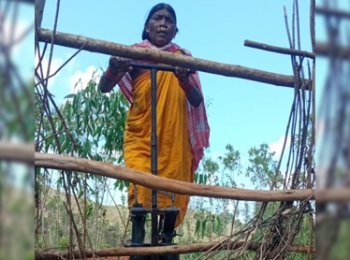
Treadle Pump: A Low Cost Game Changer
In May 2021, the group comprising 52 women farmers was formed in Lingamguda, Koraput. Sunduri Nayak was one among them. One of the first things they discussed was the farm pond, the difficulty in irrigation, and the need for proper irrigation in the area. Our team then started discussions around low cost irrigation technologies. After some deliberation, the treadle pump was decided as the idle irrigation system for the area.
Read More
