


Why the Wage Code is Unlikely to Improve the Conditions of Indian Workers
- By Tomojit Basu
- 19 Sep, 2019

The Code does little to address the existing wage inequality and given the current landscape, a significant hike in the minimum wage may have exacerbated unemployment.
The first 100 days of Prime Minister Narendra Modi’s second stint are likely to be remembered for what appears to be a significant economic downturn. A sharp deceleration in consumer demand coupled with private investment at a 15-year low saw the Indian economy grow at 5% in the first quarter of FY20 down from 8% a year earlier. The figure reflects the slowest pace of growth in over six years and the lowest since Modi’s ascent to power in 2014.
Multiple sectors appear to be bearing the brunt of slowing demand. Automotive giants have reported declines in domestic sales while ancillaries and dealerships pull down their shutters. Fast-moving consumer goods (FMCG) majors are reporting lower growth while inventories of unsold units in the real estate and construction sector stand at 42 months. Credit data published by the Reserve Bank of India (RBI) show that lending to micro, small and medium enterprises (MSMEs) – a major informal sector employer – dropped to 0.6% in the April-June quarter from 0.7% in 2018.
While finance minister Nirmala Sitharaman announced a slew of supply-side measures to revive growth over the last few weeks, the slump is worrying from a jobs perspective. The National Sample Survey Office’s Periodic Labour Force Survey had earlier reported unemployment to be at a 45-year high of 6.1%. The Centre for Monitoring Indian Economy paints a gloomier picture with unemployment estimated at 7.5% in July 2019, up from 4.1% two years ago.
Labour reforms: The good and the questionable
The precariousness of the Indian worker appears to have, at least in part, been recognised by the government last month. Parliament passed the Code on Wages, 2019, which aims to universalise minimum wage provisions and timely wage payments to all employees. It paves the way for the introduction of mandatory minimum wages nationally, subsuming four existing laws – the Minimum Wages Act (1948), Payment of Wages Act (1936), Payment of Bonus Act (1965) and Equal Remuneration Act (1976).
The legislation has some commendable aspects. It covers nearly 50 crore organised and unorganised sector workers and protects full-time, part-time and contract workers across skill levels. The Code calls for the formation of multi-stakeholder committees comprising representatives of employers, trade unions and state governments to fix floor wages for workers. It has made provisions on equal remuneration gender-neutral. It also attempts to standardise some definitions, reduce the number of authorities, leverage technology for inspection and prescribe heftier fines for non-compliance.
Also read | India’s Labour Laws Are Being Amended for Companies, Not Workers
The key concern, however, is the multiplicity of minimum wage rates that the Code states should be fixed on basis of geographical regions, skills and how hazardous a vocation may be. A single statutory minimum wage applicable for workers across sectors which could be indexed for cost of living in specific regions may have been easier to implement.
The rationale for fixing the wage floor is also unclear. In January, a seven-member labour ministry panel had recommended that “the single value of the national of the national minimum wage for India should be set at Rs 375 per day” alongside a housing allowance of Rs 1,430 for urban workers.
After the passage of the Code, however, the ministry indicated a national minimum wage of Rs 178 per day, a mere Rs 2 increase over the current national minimum wage of Rs 176. This does little to address existing wage inequality among workers with 57% of regular workers earning less than Rs 10,000 per month and nearly 60% of casual workers earning less than Rs 5,000 per month.
Likely impact or lack thereof
The International Labour Organisation, in its 2018 India Wage Report, states that sustainable wage policies contribute to sustained economic growth given its reliance on a progressive increase in domestic consumption by lower- and middle-income groups and raise aggregate demand. The setting of a low floor wage ignores this principle while not taking cognisance of the potential of the “lighthouse effect” mentioned in the Economic Survey 2018-19.
Overall, it is unlikely to do much to raise bargaining capacities by all workers for higher incomes commensurate with productivity.
As highlighted earlier, a key driver of the current downturn is sliding private consumption which accounts for nearly 60% of India’s gross domestic product (GDP). Private final consumption expenditure saw a steep fall from 7.2% in the March quarter to 3.1% in the first quarter of the current fiscal year. Consumption expenditure, obviously, is directly related to incomes. Further, if one were to focus on rural workers – who make up 71.1% of the country’s workforce as per the 2011 Census – and trace rural wage growth over the last decade, the consumption slowdown is even more easily comprehensible.
From a peak of almost 28% in FY14, driven by the Mahatma Gandhi National Rural Employment Guarantee Scheme and a booming construction sector, it declined to a little less than 5% in FY19. Declining wage growth has also had an adverse impact on savings and investment. Household sector savings in India have declined from 23.6% of GDP in FY12 to 17.2% in FY18 which, in turn, has negatively impacted investment appetite.
Despite some of its progressive ambitions, it is unclear at this stage as to how the Code, with its low floor and ambiguous implementation plan will help narrow the wage gap between permanent workers and contract workers or between workers in the formal sector and those in the informal sector. It is also unlikely to help bring more women into the workforce and improve the participation rate that currently stands at 23.3% in 2017-18 which places it in the bottom 12 globally.
Given the current landscape, however, it can be argued that a significant hike in the minimum wage applicable across sectors and strict penalties for non-compliance may have exacerbated unemployment with businesses likely to render more unskilled and semi-skilled workers redundant. Given the celebration surrounding yet another ‘historic’ step, one would have expected a longer-term calculus in labour policy formulation.
As a first step, thus, the Code on Wages, 2019, is certainly welcome. However, for it to meaningfully improve the conditions of the Indian worker and subsequently the wider economy, the government will have to deliberate on how best to align competing interests in a framework that works for all concerned stakeholders.
Recent News
Covid-19 Global Press Release
30 Mar, 2020
#LocatingTheBreach
28 Feb, 2020
#TimeToCare (Global)
16 Jan, 2020
#TimeToCare (India)
16 Jan, 2020
Related Stories
30 Sep, 2022
Maharashtra
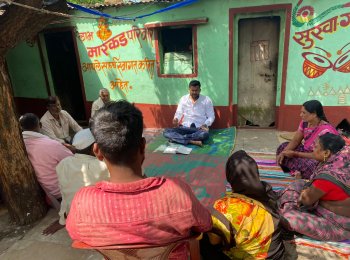
Social Security For Sugarcane Cutters
From submitting the charter of demands to the Maharashtra CM Eknath Shinde and coordinating with the Sugarcane Cutters Corporation, our team is working to ensure that the migrating cutters have access to their social security schemes for their safety, security and development.
Read More
19 Sep, 2022
Sitamarhi, Bihar
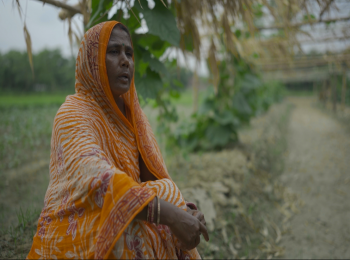
Shripati Devi Leads The Way
In 2021, Oxfam India started Project Utthan in Sitamarhi. It was during one of the village development committee meetings which Shripati attended that she explained her problems. She was supported with high yielding variety seeds, vermicomposting, IPM material and training to improve vegetable cultivation. She increased her profits by 30-40% and her field will now be a Farm Field School.
Read More
13 Sep, 2022
Sitamarhi, Bihar
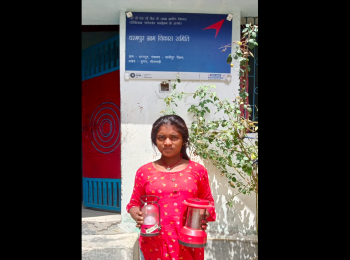
Solar Lamps Lights Up Future
Neha was unable to study at nights due to electricity cuts. Through the Oxfam India-HDFC project—Project Utthan—she received a solar lamp which has since helped her studies and her performance in school. We have distributed two solar lamps to each of the 440 households in 15 villages in Sitamarhi.
Read More
01 Sep, 2022
Nalanda, Bihar
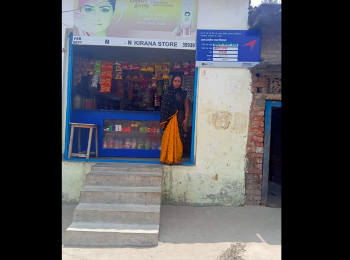
Overcoming Adversity As A Small Business Owner: Munni Devi
In January 2022, under the HRDP Project, Munni Devi was supported with business training and Conditional Cash Transfer of Rs 10,000 to invest in her business. With the money, she bought a counter and racks. Now she easily manages customers, the new counter and racks have spruced up her shop and she has many more customers, which in turn increased the family’s income.
Read More
