


Oxfam India responding to Kerala floods
- By
- 18 Aug, 2018
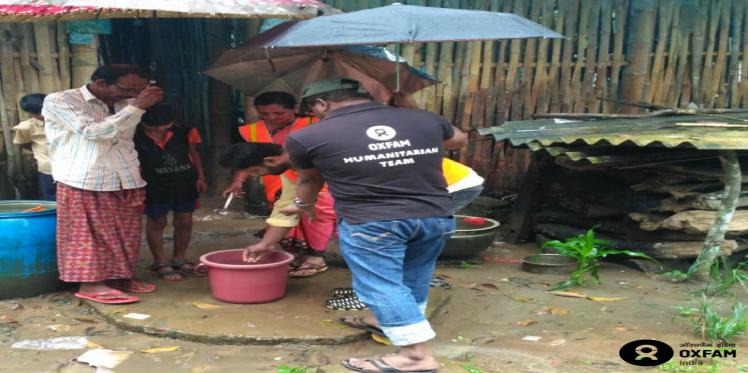
Oxfam India will respond with clean water, hygiene, emergency food security and temporary shelter support in Idduki and Wayanad districts of Kerala. Humanitarian assistance will also be extended from these districts to Alappuzha, Palakkad and Pathanamthitta.
Pankaj Anand, Director Programs and Humanitarian Response said:
“We will put our experience and expertise on water, hygiene and sanitation into action in Kerala. Our energy will initially be dedicated to providing safe drinking water.
“Our assessment of the situation also indicates that we will need to repair existing toilets and build new temporary toilets. Village cleaning drives, debris removal and raising awareness about the importance of cleanliness are also needed to prevent the outbreak of disease. The personal hygiene of women and girls will be a priority and we are preparing for the large scale distribution of 'dignity kits' in the most underserved areas.”
Floods and landslides have caused massive destruction. Houses in most districts are submerged and inaccessible, crops are damaged and livestock have been killed. The airport is closed, public transport systems have been suspended, phone towers are broken, and the power-supply is out. People are stranded, running out of food and clean water, and making desperate appeals for help through social media and other channels.
Mini John, Management Coordinator at the Institute for Sustainable Development and Governance, who resides in the state capital of Thiruvananthapuram, said:
“These floods are unprecedented and pervasive. People were not prepared. Everyone is out to help yet thousands are still unreachable. Dams are still open and the water is over-flowing as heavy rainfall continues. Right now the priority is to rescue stranded people. There is also an immediate need for dry food, clean water, medical supplies, clothes, sanitary napkins, and diapers for children among other things.”
Government rescue teams and the Indian army has been pressed into action. Helplines have been set up to provide information about those stranded, and around 2000 relief camps have been set up. However, the scale of disaster has affected operations and made it difficult for the rescue teams to work. Oxfam India is coordinating with the government, and working with local partners and other non-governmental organisations to ensure maximum support reaches the affected people.
Amitabh Behar, Oxfam India CEO, said:
“We are concerned about the rising death toll. The situation is grim and the scale of the tragedy will not be clear until affected areas become more accessible. While rescue and relief are the priority in the short term to save lives, the enormity of this catastrophe means on-going support will be needed with recovery, rehabilitation and reconstruction.
“Multiple agencies must come together to provide relief. The international community will need to back the efforts that the India government and people are making in response to the unprecedented crisis in Kerala,” added Behar.
For media queries please contact Media Coordinator, Himanshi Matta, himanshi@oxfamindia.org, 8860182310
Recent News
Related Stories

14 Jul, 2016
Uttar Pradesh
Women farmers are still fighting for recognition and right to land ownership
Joint ownership of land will empower women farmers, making them more independent and confident of their self-worth. Oxfam India has partnered in the AAROH campaign which is fighting for rights of women farmers, including joint ownership of land.
Read More
27 May, 2016
New Delhi
8 things that make our bucket life-changing
We know that clean water saves lives, but in order to access it, people need to be able to safely transport and store it. That’s why a better bucket makes all the difference.
So what makes the “Oxfam bucket” so innovative?
Read More
28 Apr, 2016
New Delhi
BY THE PEOPLE: Civil society organizations led by members of marginalized communities influencing governance processes for inclusive development
Today, 90% of India owns less than a quarter of the country’s wealth. While the existence of such inequality is deeply disturbing, it is even more disturbing to know that certain groups in the country are further being excluded from India's growth story.
Read More
04 Apr, 2016
New Delhi
Panama Papers Reveal the Murky Details of the Richest 1%: Oxfam India
The Panama Papers give us a disturbing look into the murky world of tax dodging, a problem that governments and international institutions refuse to tackle head-on. Tax havens prosper by helping potential tax payers to hide income and assets from the authorities in other countries.
Read More
