


Women, Unemployed, Rural Poor Lagging due to Digital Divide: Oxfam India Report
- By Akshay Atmaram Tarfe
- 05 Dec, 2022
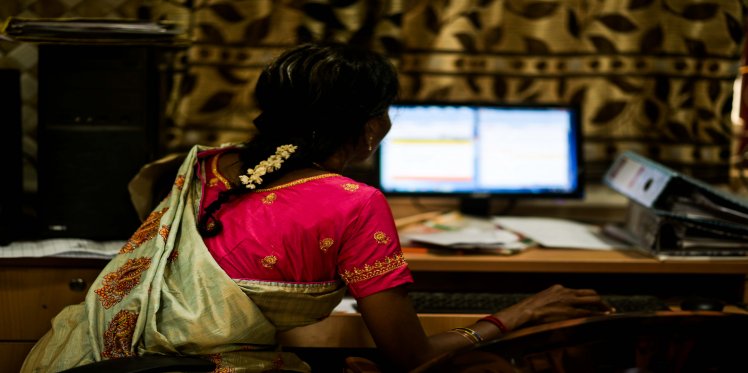
December 5, 2022; New Delhi: India’s growing inequalities based on caste, religion, gender, class, and geographic location are being worryingly replicated in the digital space, according to Oxfam India’s latest ‘India Inequality Report 2022: Digital Divide’. Percentage of men owning phones is as high as 61 per cent while only 31 per cent women owned phones in 2021 according to the report. Oxfam India calls on the Union government and state governments to ensure universal access to internet connectivity by investing in digital infrastructure to not only make internet affordable, but also push for greater accessibility to smartphones.
The reach of digital technologies remains limited to largely male, urban, upper caste and upper-class households and individuals, according to the report. 8 per cent of the General caste have a computer or a laptop whereas less than 1 per cent of the Scheduled Tribes (ST) and 2 per cent of the Scheduled Castes (SC) have it. As per Mobile Gender Gap report by GSMA, women are less likely to use mobile internet by 33 percent when compared to men in 2021.
“The digital technologies were supposed to make public services and schemes more accessible. But the ‘India Inequality Report 2022: Digital Divide’ shows this isn’t happening. The report highlights how digital technologies are accessible to the rich and privileged. The report shows that a person with a post-graduate or a PhD is 60 per cent more likely to have a phone than a person with no education. This is worrying because this digital divide can further deepen the existing socio-economic inequalities in the country. We urge the state and Union governments to immediately take necessary steps to universalise internet connectivity and treat digital technologies as public utility not a privilege”, said Amitabh Behar, CEO of Oxfam India.
The report analyses primary data from Centre for Monitoring Indian Economy’s (CMIE) household survey from January 2018 to December 2021. The report looks at CMIE’s data on internet access, mobile ownership, computer, and broadband availability to assess the inclusivity of digital initiatives to deliver public services and entitlements. The report also uses secondary analysis from National Sample Survey (NSS).
The report revealed digital divide based on employment status where 95 per cent of the salaried permanent workers have a phone whereas only 50 per cent of the unemployed (willing and looking for job) have a phone in 2021. The report also highlights that contrary to popular perception the use of computer devices decreased in rural areas. Pre pandemic, only 3 per cent of rural population owned a computer. This has come down to just 1 per cent post-pandemic. Whereas in urban areas, the number of people with computer is 8 percent.
The use of digital technologies in delivering essential services such as education and health is also reflecting country’s digital divide and its consequence. Oxfam India’s five states rapid assessment survey during the lockdown in September 2020 showed 82% parents faced challenges in supporting their children to access digital education; signal and internet speed were the biggest issues in private schools. In government schools, 80% parents reported that education was not delivered during the lockdown. 84% of government school teachers also struggled with delivery through digital mediums due to lack of devices and internet.
Amitabh Behar, CEO of Oxfam India said, “India's growing inequality is accentuated due to the digital divide. The growing inequality based on caste, religion, gender, class, and geographic location also gets replicated in the digital space. People without devices and internet get further marginalised due to difficulties in accessing education, health, and public services. This vicious cycle of inequality needs to stop.”
The report welcomes several initiatives by state and union governments in India to promote digital literacy, availability, accessibility, and affordability of the digital technologies. Following are some recommendations provided by the authors to bridge digital divide in India:
- The report highlights economic inequality as a key driver of the digital divide. To this end, the government’s efforts to bridge India’s current income inequality by improving the income of the poor becomes pertinent and can go a long way. This can be done by setting a decent minimum living wage, easing the indirect tax burden on citizens and provision of universal health and education services.
- The most basic step toward bridging the digital divide is availability. In rural and hard-to-reach areas, internet availability is either intermittent, poor or non-existent. Service providers need to ensure its availability through community networks and public WiFi/ internet access points. Community networks are a subset of crowdsourced networks, designed to be open, free, and neutral, and often reliant on shared infrastructure as a common resource. They are usually built, used, and managed with a bottom-up approach by communities. Such networks should also have good-quality upload and download speeds, sufficient for the local needs of internet users.
- To ensure universal access to internet connectivity, it has to be affordable for the masses.
- To drive down prices, the government can invest in digital infrastructure to not only make internet affordable, but also push for greater accessibility to smartphones.
- The government has to be a strong regulatory figure in this regard, ensuring that data and broadband services are not monopolized by private players.
- Additionally, the government can lower taxes on computers and phones that are often prohibitively high.
- Conduct digital literacy camps, especially in rural India, to teach the use of technology in schools, and digitize panchayats and schools.
- Establish a responsive and accountable grievance redressal mechanism to handle EdTech and Healthtech related complaints by parents, children and other consumers.
- Acknowledge that tech-based solutions are not always the right answers. Even in times of crises like pandemics, the governments also need to consider low- or no-tech solutions.
Download the full report here - https://www.oxfamindia.org/knowledgehub/workingpaper/india-inequality-report-2022-digital-divide
For any query, please reach out to - abhirr@oxfamindia.org
About Oxfam India
Oxfam India is a movement of people working to end discrimination and create a free and just society. We work to ensure that Adivasis, Dalits, Muslims, and women and girls have safe violence-free lives with freedom to speak their minds, equal opportunities to realize their rights, and a discrimination-free future.
📢Oxfam India is now on Telegram. Click here to join our Telegram channel and stay tuned to the latest updates and insights on social and development issues.
Recent News
Related Stories
18 Mar, 2021
Mumbai
Sewing A Better Future
In Mumbai, livelihood trainings are being carried out among 12 SHGs in Govandi and Mankhurd. Despite the economy opening up, many have still not been able to either get their jobs back or restore the wages that they were getting pre-pandemic. The situation is worse for those who lost their sole breadwinners to the virus. Here's a story of 3 women who have been able to make ends meet, thanks to the livelihood training they received. These trainings are being done in collaboration with Siemens.
Read More
10 Mar, 2021
Mayurbhanj, Odisha
Youth Volunteer As Teachers During Pandemic
Last year, the sudden lockdown led to the closure of more than a million schools throughout the country leading to disruption in education of school students. While children everywhere faced the impact of this discontinuity of their education, the situation proved to be more severe for children from remote rural areas who had no access to internet, smartphone or electricity to be able to access virtual classes. This problem was further exacerbated for tribal students who further faced the challenge with regard to the language of instruction used for classes that were being broadcast. This situation prompted the Dharamveer Youth Group from Prasan Chandrapur Village of Noto Panchayat to come forward and take the responsibility of supporting children from the community so that they could continue their education.
Read More
14 Feb, 2021
Chhattisgarh & Jharkhand
Solar Boost For Rural Livelihood
Based on the success of the solar-powered Sal leaf plate making unit in Chhattisgarh, two more machines were installed in Jharkhand and Chhattisgarh. This value addition will improve the quality of the product and fetch better price than the traditional hand-made plates. These have been set up in Bade Gobra village in Mainpur block in Chhattisgarh's Gariaband district and in Mohanpur Village in Sundarpahari Block in Jharkhand's Godda district.
Read More
11 Feb, 2021
Kushinagar, Uttar Pradesh
Making Toilets Sustainable
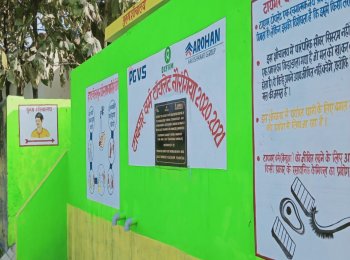
On February 2, 2021, Oxfam India handed over a Tiger Worm Toilet (TWT) complex to the Naurangiya panchayat in Uttar Pradesh’s Kushinagar district. Present at the handing over were community members and representatives from the Arohan Foundation and our on-ground partner PGVS. The toilet complex has five toilets and is built in the complex of the panchayat bhawan.
Read More
