


Two Years of Pandemic
- By Akshay Tarfe
- 24 Mar, 2022
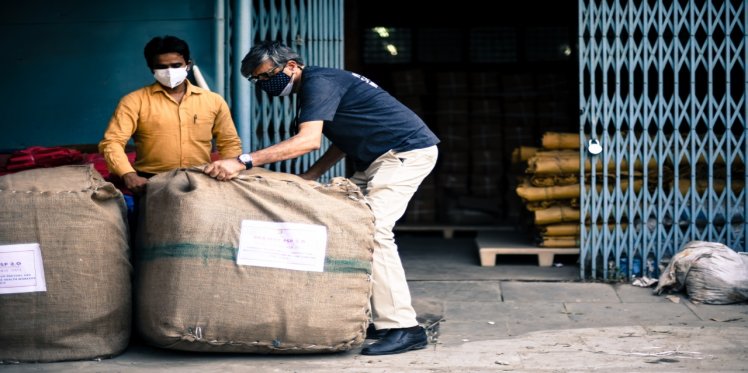
Oxfam India’s pandemic relief initiatives such as the provision of rations, life-saving equipment, oxygen plants, strengthening of the public healthcare system, and measures to bridge the learning gap among children aided the country’s recovery efforts
24 March 2020 | New Delhi: It’s been two years since India has been disrupted by the COVID-19 pandemic. While the new cases and death toll have dropped, India still has to totally recover from the unprecedented disruption caused by the pandemic. Oxfam India reaffirms its commitment in helping India recover by providing relief to communities in need through rations, life-saving equipment, strengthening of the public healthcare system, and measures to bridge the learning gap among children across 16 states in the country.
Amitabh Behar, CEO, of Oxfam India said, “As we enter the third year of pandemic, Oxfam India reaffirms its commitment to continue to provide relief and support the civil society, communities, frontline workers, and the government’s efforts in helping India to recover from the pandemic. Throughout the COVID-19 pandemic years, Oxfam India has worked with respective state and district administrations and reached diverse communities in need. These include transgenders, sex workers, miners, rag pickers, cancer survivors, survivors of domestic violence, weavers, fisherfolk, construction workers, and those affected by floods and cyclones. The food ration kits alone have reached more than 6 lakh people and livelihoods interventions have helped 81 women’s Self-Help Groups.”
Even before the lockdown began in 2020, Oxfam India’s humanitarian team started planning ‘Mission Sanjeevani’ which is one of India’s largest non-governmental responses to COVID-19 spread across 16 states. Oxfam India has provided lifesaving medical and diagnostic equipment to 150 District Hospitals, 172 Primary Health Centres, and 166 Community Health Centres in 16 states. Seven oxygen plants have been set up and made operational across the country, the latest being at Kushinagar in Uttar Pradesh.
Oxfam India has reached out to more than 64993 ASHA workers across 10 states by building their capacities and providing crucial equipment. This means the organisation has provided the thermal gun with batteries, pulse oximeter, 5 sets of nasal masks, 100 surgical masks, 2 sets of reusable gloves, and 20 sets of disposable gloves to almost 6% of ASHAs in the country.
Oxfam India has provided unconditional cash transfers to more than 12 thousand households amounting to more than INR 5.44 Cr. Through 15 other significant projects, Oxfam India has helped more than 1.5 million people comprising mainly Dalits, Adivasis, minorities, and women and girls in 9 states, 25 districts, and approximately 300 villages during this period.
“Oxfam India has been working with government and communities during the biggest crisis in the history of independent India. During these tough times, our teams have been helping to strengthen the government and civil society’s relief work and ensuring that no one is left behind,” said Amitabh Behar, CEO, Oxfam India.
Reaching the most vulnerable during tough times
The state and union governments in India started programs to help people during the pandemic through various schemes and initiatives. But many communities and underserved areas are left to fend for themselves in the middle of a pandemic due to gaps in the government effort to provide relief. Oxfam India’s efforts have helped to fill these gaps. This included the provision of relief material to migrant fisherfolk community (Gujarat), transpersons (Kolkata), homeless population (Delhi), sugarcane workers (Maharashtra), tea garden workers (Assam), Cyclone-affected families (Sunderbans in West Bengal and Odisha), artisans such as weavers (Assam) and dholak makers (UP), domestic workers (Delhi), Pak Hindu refugees (Delhi), Particularly Vulnerable Tribal Groups (Chhattisgarh), Cancer patients (Delhi), migrant workers (Bihar) and daily wage workers.
“The members of the transgender community have no identity like Aadhar card or PAN card. Hence the loss of our family and friends is not being recorded. Nothing was being done for those who are dependent on sex work or begging. Our organisation Kolkata Rista along with Oxfam India started providing relief materials like dry rations to members of the transgender community during the second wave of COVID-19,” said Dr. Santosh, Secretary and Executive Director of Kolkata Rista.
Amitabh Behar, CEO, Oxfam India said, “Oxfam has been part of India’s growth story since 1951. The organisation has played a key role in assisting the country to recover from famines, earthquakes, cyclones, and tsunamis. Oxfam India continues to work on building people’s resilient livelihood, access to education and health and a gender just society. We remain firmly committed to doing as much as we can to accelerate India’s recovery from the COVID-19 pandemic.”
For any query, please reach out to - abhirr@oxfamindia.org
About Oxfam India
Oxfam India is a movement of people working to end discrimination and create a free and just society. We work to ensure that Adivasis, Dalits, Muslims, and women and girls have safe violence-free lives with freedom to speak their minds, equal opportunities to realize their rights, and a discrimination-free future.
📢Oxfam India is now on Telegram. Click here to join our Telegram channel and stay tuned to the latest updates and insights on social and development issues.
Recent News
Related Stories
01 Aug, 2022
Koraput, Odisha
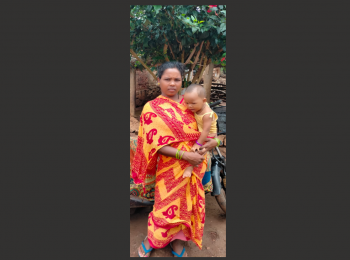
Baide Kirsani's Exemplary Journey
In May 2021, Baide became associated with the project and supported the formation of the WFP group which now has 76 members. The group conducts regular meetings to discuss agriculture, specifically vegetable and ginger cultivation. The project provided various thematic training sessions, onsite technical support, and input support to the group. Along with paddy and millets, Baide also grew ginger, beans, and tomato during Kharif and Rabi season last year. She took a loan of Rs 15,000 from the group for agriculture and consumption. She invested the money and gained a net profit of about Rs 19,000.
Read More
28 Jul, 2022
Meerut, Uttar Pradesh
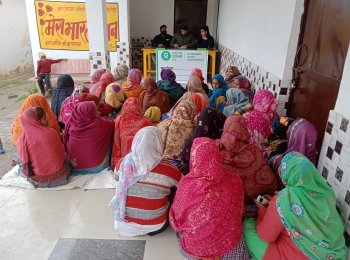
Securing Social Security Schemes For Anita
Despite the circumstances Anita continued working in the field in her husband’s place. During one of the meetings, the Oxfam India team met with Anita. Our team apprised her about the social security schemes such as the National Family Benefit Scheme and the Widow Pension Scheme by the Government of India.
Though she was eligible for these, she hadn’t applied for them. Our team helped her apply for these schemes; they have now been approved at the district level.
Read More
27 Jul, 2022
Raebareli, Uttar Pradesh
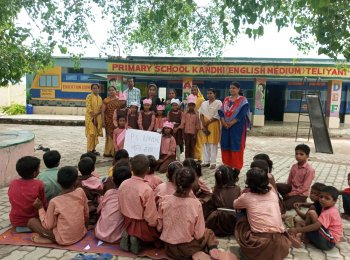
Reviving Bal Sansad
After running the Mohalla Classes since December to close the digital divide and mainstream out of school children in schools, we have started working to revive /reinforce Child Collectives. Till date, Oxfam team had helped revive 26 Bal Sansads in schools— 10 Pratapgarh, 8 Fatehpur & 8 Raebareli. The plan is to cover 90 schools in the three districts.
Read More
27 Jul, 2022
Nalanda, Bihar
Shakuntala Devi Expands Her Business
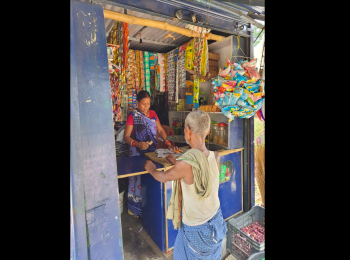
Shakuntala Devi visited the Village Development Committee (VDC) at Lodipur and convinced the Holistic Rural Development Programme (HRDP) team to support her enterprise. In March 2021 she received Rs 12000 as financial support through HRDP. With this grant, she was able to purchase a fridge for her shop and began stocking and selling milk, curd, and soft drinks. These additions helped increase her business and her daily earnings.
Read More
