


Women workers most vulnerable in unequal Indian jobs market
- By
- 28 Mar, 2019
Employment opportunities continue to be marked by identities including gender, caste and class
Lack of quality jobs and increasing wage disparity are key markers of inequality in the Indian labour market, Oxfam India’s new report ‘Mind The Gap – State of Employment in India’ revealed today. The decline in rural jobs, transforming urban areas, unequal pay, the burden of unpaid care work, and the continuing prevalence of regressive social norms are factors underlying low women’s participation in the workforce.
The report also highlights that on average, women are paid 34 per cent less than similarly qualified male workers for performing the same tasks. In 2015, 92 per cent of women and 82 per cent of men earned a monthly wage less than INR 10,000 in India.
“Despite the rhetoric of job creation and ensuring gender justice, the reality is sobering on the ground. The report draws particular attention to women being left out of the economic growth narrative. It shows that women’s participation is low due to decline in rural jobs, transforming urban areas, unequal pay, the burden of unpaid care work, and the continuing prevalence of regressive social norms. And this is a consequence of poor policy choices and lack of investment in social security and infrastructure,” Oxfam India CEO Amitabh Behar said while releasing the report.
While over the last two decades the World Bank has found India to have grown at an average of 7 per cent, employment opportunities have not kept pace with this economic expansion. The largest number of jobs continue to be generated largely in the unorganised sector or as informal vocations within the formal sector. The status quo limits the potential of majority Indians, working in low paying and often insecure jobs, for upward social and economic movement.
The report also assesses the role of social identities such as caste and class in determining employment for men and women. Specifically, in stigmatised vocations such as sanitation, rag-picking, and jobs in the leather industry.
Analytical highlights contained in the report include:
• Women on an average are paid 34 per cent less than similarly qualified male workers for performing the same tasks. Based on the National Sample Survey Office (2011-12) estimates, in nominal terms, women earning a regular salary were paid, on average, INR 105 and INR 123 less than male workers daily in urban and rural settings, respectively; corresponding figures for casual workers were estimated at INR 72 and INR 47 for urban and rural workers.
• In 2015, 92 per cent of women and 82 per cent of men were earning a monthly wage less than INR 10,000, far below the Seventh Central Pay Commission (2015) recommendation of INR 18,000 per month.
• There is an over-representation of women in unpaid care work. If unpaid care and household activities are included in the NSSO’s definition of work, the Female Labour Force Participation Rate (FLFPR) in 2011-12 rises from 20.5 per cent to 81.7 per cent, more than that of men.
• Declining FLFPR comprises demand and supply side challenges: decreasing demand for farm work, relatively low employment demand from sectors that are more likely to employ women (e.g. garments), lower likelihood of working women in richer households, occupational segregation, and to some extent in rural areas, older or only daughters pursuing higher education etc.
• There is no major divergence in urban FLFPR in terms of religion; it is similar in terms of caste but occupational segregation exists with Muslim women concentrated in household manufacturing, Schedule Caste (SCs) in construction and services such as waste collection while non-SCs are more likely to work in education and health services.
• Urban women's work is sectorally concentrated – 10 industries make up over half of female employment; education sector accounts for over 1 in 7 urban women workers.
• Almost half (49.5%) of married women workers work in the same industry as their husbands.
• FLFPR is location-specific – districts in Southern and North-Eastern states show higher participation but even there it is very low by international standards.
• Public interventions (e.g. access to drinking water, Ujjwala Scheme) help women spend more time engaged in paid work; family nuclearisation has increased time poverty.
• The propensity of rural women to look for work has risen steadily with an increase in the number of female members in the household between 2001 and 2011; the trend is noticeable for urban households as well.
• Rural labour markets are strongly structured and regulated by gender, caste and class identities. Traditional occupations by caste continue to persist in rural India e.g. Women belonging to Mahadalit community assist with child-birth, richer Baniyas own shops and small businesses while poorer ones serve as vendors or peddlers; discrimination appears to exist in terms of prices and market participation e.g. milk produced by Dalit families, who also do not produce milk products as the latter is the preserve of the Ahirs, fetches a lower price.
• With outward and seasonal migration towards non-farm employment of male family members, 75 per cent of rural women are engaged in agriculture. However, they are relegated to low wage labour roles such as weeding, threshing, and paddy transplantation. Such roles, in many cases, are characterised by degrees of unfreedom.
“In the last few years, we have heard statements and promises on providing employment and generating jobs. However, the focus has never been on delivering quality jobs. We need a labour market where people are adequately remunerated for their skills and provided social protection to access quality education and healthcare. This can help uplift families out of the cycle of poverty,” said Ranu Bhogal, Director of Policy Research and Campaigns at Oxfam India.
Specific chapters also elucidate on non-gender specific aspects of India’s labour market and its linkages to inequality. The report examines the role of labour legislation in furthering job insecurity among workers and also analyses the social security framework for workers that exposes the precariousness for certain groups. It draws attention to increasing informalisation in formal manufacturing through the rise of contractual labour and wage differences between regular workers and managers. Finally, it assesses caste realities in stigmatised occupations. The often fatal health implications of being employed as a manual scavenger or as a cleaner in the leather industry is an important aspect of this section of the report.
Each chapter deals with a specific challenge within the labour force and ends with a set of policy recommendations for the Union and State governments to consider.
To bridge the gap furthering inequality in employment, Oxfam India recommends the following:
• Shift development focus on labour-intensive sectors to create more jobs.
• Growth in jobs must be inclusive and new jobs need to be decent and secure with better work conditions including social security benefits and the right to organise.
• Substantially higher investments in health and education to improve productivity. These two are also the sectors which could be large employment generators in the future.
• Greater focus is required on better and relevant skilling opportunities so as to raise India as an equal competitor to its neighbours and global competitors.
• Governments need to prioritise curbing corruption and regulate other drivers of inequality and joblessness such as crony capitalism.
• Finally, there must be a greater focus on progressive taxation to reduce a race to the bottom on corporate tax exemptions. The additional revenue generated from these measures can be invested in social protection and essential services such as health and education.
“To create a gender just society and to ensure equal and dignified opportunities for all, we will need to overcome the gender blindness in our perspectives. We must make the right policy choices. The formal social security system in India is accessible to only a small percentage of workers and this access is extremely inequitable across sex, social group, religion, and economic class, mirroring labour market outcomes. This inequality can be addressed both through appropriate labour policy instruments and by an expansion of social security among uncovered workers,” Amitabh Behar said.
For media queries, please contact Himanshi Matta, himanshi@oxfamindia.org, 91-8860182310
Recent News
Global Hunger Index: Govt Living In Denial
18 Oct, 2021
Pandora Papers: Oxfam India Responds
04 Oct, 2021
First Oxygen Plant Inaugurated in Tumkur, Karnataka
27 Jul, 2021
Related Stories
29 Mar, 2023
Koraput, Odisha
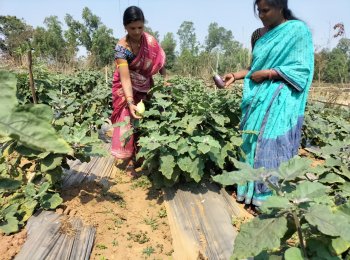
Women Farmers of Koraput Make Brinjal Cultivation Profitable
Jani Nayak, Namita Pujari and Sunita Pujari are breaking new grounds. The three women farmers have learnt brinjal grafting, implemented it in their field and are earning better profits and have reduced their input costs. This is unique because farmers in tribal pockets like Koraput had never experimented with brinjal grafting in the past. In fact the seedlings of the grafted brinjal was available only in neighbouring Chhattisgarh.
Read More
29 Mar, 2023
Nalanda, Bihar
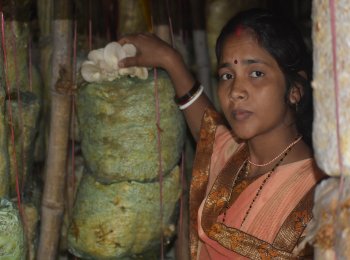
Mushroom Cultivation: Making The Most Of Cash Transfers
Conditional cash transfers was one of the components of the project and Rinku Devi was one of the community members who received Rs 12000 in March 2021. Armed with cash and technical knowhow of mushroom cultivation, Rinku decided to set up a 450 square feet mushroom production unit on her land.
Read More
24 Mar, 2023
Sitamarhi, Bihar
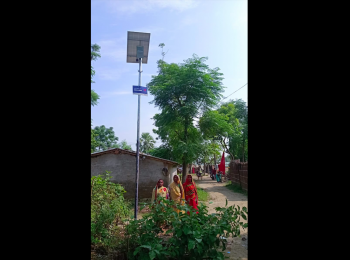
Solar Street Light: Reducing Carbon Footprint and Making Streets Safe
The unlit streets made the returning residents vulnerable to animal attacks. A VDC member told us that her children’s safety was a concern since they returned home at night after tuitions. The issue of lighting, especially in the streets, needed a solution. Under Project Utthan, an Oxfam India-HDFC Bank CSR initiative, 10 solar street lights were installed in the village.
Read More
23 Mar, 2023
Odisha
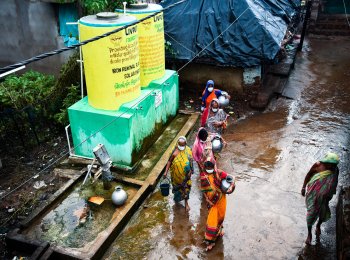
Making Clean Drinking Water Accessible
Access to clean drinking water is not as simple as it seems. It is a fundamental right yet many have no access to basic clean drinking water. This World Water Day calls for Accelerating Change. Amalin Patnaik and Savvy Soumya Misra write how simple innovations like the Iron Removal Plant is providing access to clean drinking water to coastal communities in Odisha.
Read More
