


Pandora Papers: Oxfam India Responds
- By Abhirr VP
- 04 Oct, 2021
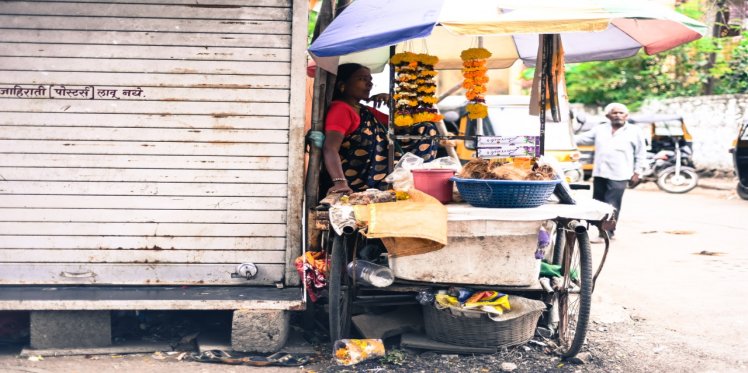
Tax havens cost governments around the world $427 billion each year. Ordinary taxpayers have to pick up the pieces. Developing countries are being hardest hit, proportionately.
4 Oct, 2021| Responding to the Pandora papers which exposed the wealthy individuals and multinational corporations using tax havens to avoid paying their fair share of tax, Amitabh Behar, CEO of Oxfam India, said:
“This is another shocking exposé of the oceans of money sloshing around the darkness of the world’s tax havens that must prompt immediate action, as has long been promised. Whenever a politician or business leader claims there is ‘no money’ to pay for health, education, climate damage, innovation and for a fair post-COVID recovery, they know where to look".
“Tax havens cost governments around the world $427 billion each year. That is the equivalent of a nurse’s yearly salary every second of every hour, every day. Ordinary taxpayers have to pick up the pieces. Developing countries are being hardest hit, proportionately. Corporations and the wealthiest individuals that use tax havens are outcompeting those who don’t. Tax havens also help crime and corruption to flourish".
“We cannot allow tax havens to continue to stretch global inequality to breaking point while the world experiences the largest increase in extreme poverty in decades. Abolishing tax havens can go a long way towards ensuring that government actually have the access to tax revenue they need to fund quality public expenditure, however at the same time governments must continue to spend more on social welfare and public services as a larger proportion of existing budget allocations to at least provide the bare minimum of services of health and education for all.”
Oxfam calls on governments to end tax havens by:
1: Ending tax secrecy on individuals, offshores and multinational corporations. Set up a public register on the real owners of bank accounts, trusts, shell companies and assets. Require multinational corporations to publicly report their accounts where they do business, country-by-country.
2: Increasing the use of automatic exchange, allowing revenue authorities access to information they need to track the money.
3: Agreeing a global blacklist of tax havens and taking counter measures, including sanctions, to limit their use.
4: Setting a new global agenda on taxing wealth and capital fairly; addressing tax competition between countries on high-net-worth-individuals, either on income or wealth, against agreed standards.
About Oxfam India
Oxfam India is a movement of people working to end discrimination and create a free and just society. We work to ensure that Adivasis, Dalits, Muslims, and women and girls have safe violence-free lives with freedom to speak their mind, equal opportunities to realize their rights, and a discrimination-free future.
📢Oxfam India is now on Telegram. Click here to join our Telegram channel and stay tuned to the latest updates and insights on social and development issues.
Recent News
Related Stories
28 Jul, 2016
Chhattisgarh
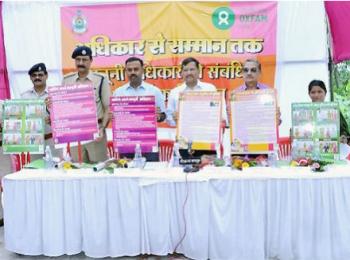
Oxfam India and Chhattisgarh Police jointly released awareness posters
In order to create awareness among people about rights of women and children regarding crime related issues Oxfam India in association with Chhattisgarh Police developed posters, in pictorial form and in easy language and unveiled in the state capital.
Read More
20 Jul, 2016
New Delhi
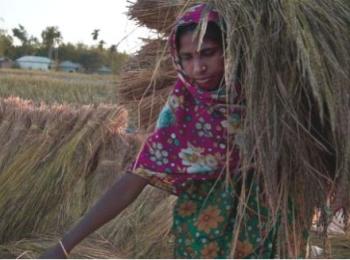
Women’s Right to Agricultural Land Removing Legal Barriers for Achieving Gender Equality
Women’s land rights (WLR) have been and continue to be a live agenda in social development discourse of India. The importance of WLR has been discussed in the context of agriculture; poverty reduction; reduction in gender based violence; women’s well-being and agency.
Read More
16 Jul, 2016
New Delhi
Why is passing the Women’s Reservation Bill urgent?
Women’s reservation in the national parliament and state legislatures was a necessary step to ensure women’s participation in decision-making. Assuming that women would automatically be able to create a level playing field in the political arena without any affirmative action is a misplaced idea.
Read More

15 Jul, 2016
New Delhi
BREXIT & What It Means for Humanitarian Aid
Brexit – the campaign for Britain’s exit from the EU - took centre stage in political and economic discussions the world over. On June 23, 2016, in a historic referendum, a majority of 51.89% voted to leave the EU. But what about international aid in India and the rest of the world?
Read More
