


Oxfam calls consumers and supermarkets to support government’s commitment to improve Assam tea sector
- By Oxfam India
- 10 Oct, 2019
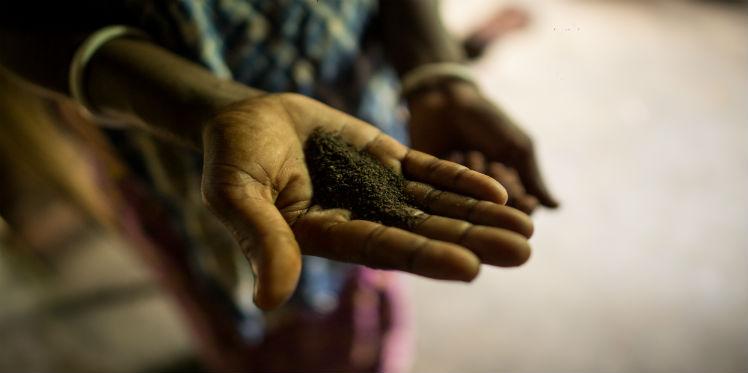
- Oxfam research on working and living conditions of the tea plantation workers finds no toilets, crumbling houses, poor wages, lack of quality health and education entitlements
- Oxfam calls consumers, supermarkets and brands to support government’s commitment to provide living wages to workers
Assam government’s commitment to increase the minimum wages of tea plantation workers to Rs. 351 met with hurdles of financial viability of the sector. The upcoming Occupational Health and Safety Bill is an opportunity to address some of the hurdles. This bill can enable the struggling Assam tea industry to be viable and at the same time ensure fair living wages and decent working and living conditions for tea plantation workers and their families.
To ascertain the main challenges faced by workers and to find solutions Tata Institute of Social Sciences (TISS) and Oxfam India conducted a research. The report ‘Addressing The Human Cost of Assam Tea’ included in-depth interviews with 510 workers on 50 tea estates in Assam.
The research shows that the relentless squeeze by supermarkets and brands on the share of the end consumer price for tea makes poverty and hardship for workers in Assam more likely. But, combined with rising costs and the impacts of the climate crisis, it is also contributing to a severe economic crisis for the entire Indian tea industry.
The research also found that despite working for over 13 hours a day, workers earn between Rs. 137 - Rs. 167. It found that tea brands and supermarkets typically capture over two thirds of the price paid by consumers for Assam tea in India – with just 7% remaining for workers on tea estates.
Some of the key findings of the research are:
- Many women tea pickers regularly clock up 13 hours of backbreaking work a day receiving between Rs 110 and Rs 130 a day. This wage is so low that half the workers interviewed, receive ‘Below Poverty Line’ ration cards from the government;
- Indian tea estates are legally obliged under the Plantation Labour Act to provide decent working conditions, housing, healthcare and education. The condition of housing and sanitation is very poor with dilapidated or non-existent facilities. Around 45% of workers interviewed reported suffering from water-borne diseases such as diarrhoea, typhoid and jaundice, among others;
- It is predominantly women who carry out the labour-intensive job of harvesting tea and end up being concentrated in these low-paid jobs. Women tea workers including unpaid domestic work, undertake up to 13 hours of physical labour per day after just six hours’ rest. Despite their large numbers, they remain under-represented in trade unions.
- Some of key issues that women tea workers face include inaccessible toilets, inadequate maternal and childcare facilities, inadequate maternity benefits and domestic violence;
- A 200 gms. packet of branded Assam tea is sold in India for Rs. 68. Of this, less than Rs. 5 is left for workers (using plucking costs as a proxy indicator) while tea brands and supermarkets retain around Rs. 40
Globally, supermarkets are taking an ever-increasing share of the price paid by shoppers – much of which is channelled to already wealthy shareholders and owners. In Germany and the United States supermarkets capture 87 and 76 percent of the price of a pack of black tea, with just 1 percent accruing to workers on tea estates. Tea workers receive just 2 cents from a packet of Assam black tea that sells for 75 cents in the Netherlands – just 14 cents per pack would be enough to ensure tea workers were paid a living wage
Amitabh Behar, CEO of Oxfam India said:
“We welcome the attempts of the government to increase the wages of tea plantation workers and the upcoming Occupational Health and Safety bill. Both have the potential to address the systemic injustice faced by the tea workers in Assam. However, our research points to the fact that the tea plantation workers and their families are living very vulnerable existence. The wages that they earn are very low and their working and living conditions call for an urgent response.
Tea brands have often questioned the financial viability of paying fair wages to workers, but our research shows that by sharing just 2% additional value of the price of tea fair living wages can be provided to millions of workers in the sector.”
Indian tea sector continues to be the largest private sector employer but poor implementation of labour laws is putting at risk the viability of the tea industry as a whole.
The problems highlighted in this report are not exclusive to Assam – they are endemic and prevalent in other supply chains also. But, they are particularly acute in Assam.
Namit Agarwal, Private Sector Lead of Oxfam India said:
“Tea brands need to improve their transparency and accountability, in line with India’s National Guidelines on Responsible Business Conduct framework. They must inform consumers about where their tea comes from and how much is paid for it at each stage of the supply chain. It is also important that Indian consumers continue enjoying their cup of tea and at the same time demand fair living wages for workers.
The upcoming Occupational Health and Safety Bill gives an opportunity to the government to correct this systemic injustice.”
FOR MEDIA QUERIES PLEASE CONTACT Himanshi Matta, 91-8860182310, himanshi@oxfamindia.org
Recent News
Related Stories
06 May, 2022
Muzaffarnagar, Uttar Pradesh
Ombeeri Devi : A Champion of Equal Wages
Ombeeri fought against alcoholism, discrimination against dalits, and gender pay gap in the sugarcane fields. She encouraged her daughter to train as a beautician and run a parlour at home, something that the latter set up at her marital home. Ombeeri ensured that her daughter in law completed her B.Ed. She was among the eight felicitated by Oxfam India for working for women empowerment.
Read More
05 May, 2022
Nainital, Uttarakhand
A House For Tulsi Devi
Tulsi Devi and 51 other families in Ramnagar and Ramgarh blocks in Nainital district in Uttarakhand were provided with temporary shelter kits to tide over harsh winters and wild animals after the landslides in October 2021. This was part of our flood and landslide response in Ramnagar, Ramgarh and Okhalkanda block in Nainital district in Uttarakhand.
Read More
04 May, 2022
Kerala
Bringing Relief To Families: Kerala Flood Response
Ammini, Kunjipennu, Pathumma and Susheela have a few things in common. They are from Kerala and were drastically affected by the 2021 floods. They were all also facing immense financial struggles both before and after the pandemic, when the floods worsened their financial situation. The ‘Kerala Landslide and Flood Response Programme 2021’ was launched. Under this, 2771 families received food and relief kits.
Read More
02 May, 2022
Nalanda, Bihar
Farmer Field Schools: Boosting Farm Productivity And Confidence
In November 2021, Oxfam India set up two Farmer Field Schools in each of its 15 villages. The School is a demonstrative farmer field—where a selected lead farmer demonstrates advanced and technology-savvy agricultural methods.This is also the learning centre for other farmers in the village.
Read More
