


More women leaders in Indian Parliament must pave way for passage of Women’s Reservation Bill
- By Oxfam India
- 31 May, 2019
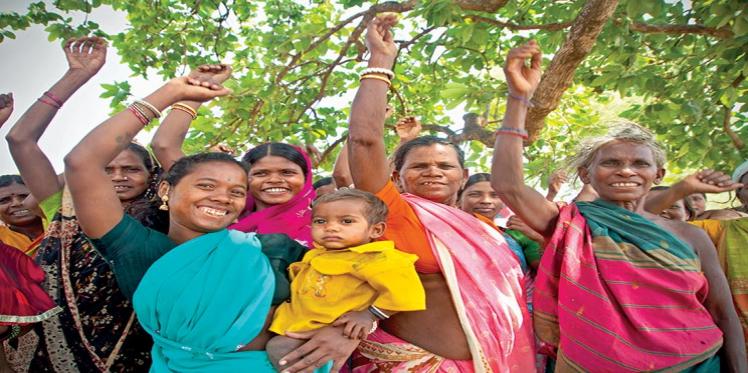
Oxfam India welcomes the rise in number of women parliamentarians in the 2019 elections from 11.9 per cent to 14 per cent. A total of 716 women candidates contested the elections against a total of around 7,334 male candidates. For the first time in India, 78 women Member of Parliamentarians-- highest till date have been elected.
“While we welcome the increase in number of women legislators in this election, the rise is still marginal and fails to represent women across the country, especially the most marginalised. We are hopeful that more women with political voice will ensure renewed support for passage of the Women’s Reservation Bill.
“The newly elected government must fulfil its election promise of at least 33 per cent reservation of all seats in the both the houses of the Parliament of India and in all state legislative assemblies for women. The BJP Government should work towards their commitment (made in manifesto) to design a ‘Women in Workforce’ roadmap with a focus to increase female workforce participation rate over the next five years,” said Ranu Bhogal, Director for Policy, Research & Campaigns at Oxfam India.
The Constitution (108th Amendment) Bill, also known as the Women’s Reservation Bill – which called for reserving 33 per cent of the seats in the Lower House of Parliament, Lok Sabha and all state legislative assemblies for women – was cleared by the Union Cabinet and Upper House of Parliament, Rajya Sabha in 2010. But it is still awaiting a nod from the Lower House of Parliament.
Representation of women in the Upper House of Parliament of India remains at an abysmal 11.4 per cent.
India’s performance continues to be unsatisfactory compared to global average of 23.4 per cent and Asian average of 19.6 per cent, according to the ‘Women in Politics Map-2017’, published by Inter-Parliamentary Union and UN Women. According to this report, India stands at 88th position globally with respect to women’s political representation.
India is a signatory to Global Conventions and treaties on promoting gender equality. It is India’s constitutional commitment to ensure political empowerment of women and in this regard the Central Government must undertake legislative and constitutional reforms to ensure women’s fair access to political spaces in the country.
Oxfam India released this press statement on 29th May, 2019.
For media queries please contact Himanshi Matta, 91-8860182310.
Recent News
Related Stories
22 Mar, 2016
New Delhi
Hamid Ansari advocates special audit mechanism for 'more serious' implementation of RTE
Vice President Hamid Ansari today advocated special audit mechanisms for effective implementation of Right To Education (RTE) Act like in the case of MNREGA and asked states and local education authorities to monitor implementation of the Act "more seriously."
Read More
18 Mar, 2016
New Delhi
No-Detention: Who Is Under The Scanner?
'Bring back the examination system'! This chant is gaining voice and beginning to receive greater attention within the recent discourse on education in our country. Some states are seeking amendments in the RTE Act to restore the examination system for the assessment of learner achievements.
Read More
16 Mar, 2016
Chhattisgarh
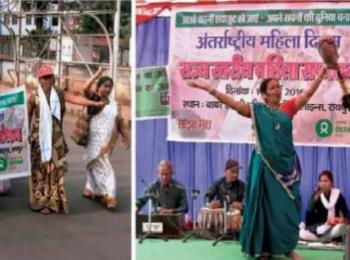
Women enthused to rise up and speak up for rights
Oxfam India along with Sajha Manch (a network of 22 Civil Society Organizations) and CASA organised a day long Convention on Women’s Rights and their fight against patriarchy, traditional regressive practices, on March 14 at Civil Lines, Raipur to celebrate International Women’s Day.
Read More
14 Mar, 2016
Bihar
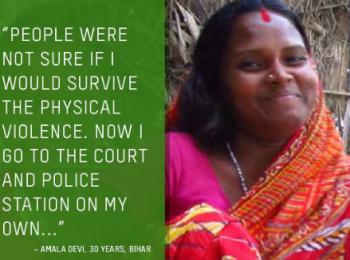
"People were not sure if I would survive..." Amala Devi from Bihar
Amala Devi resides in Bihar, with her husband and father. She used to work and live on a farm as a bonded labourer. She and her family were given only 3.5 kgs of grain as payment at the end of the harvest. With increased political awareness, her family demanded monetary rights for their labour.
Read More
