


More women leaders in Indian Parliament must pave way for passage of Women’s Reservation Bill
- By Oxfam India
- 31 May, 2019
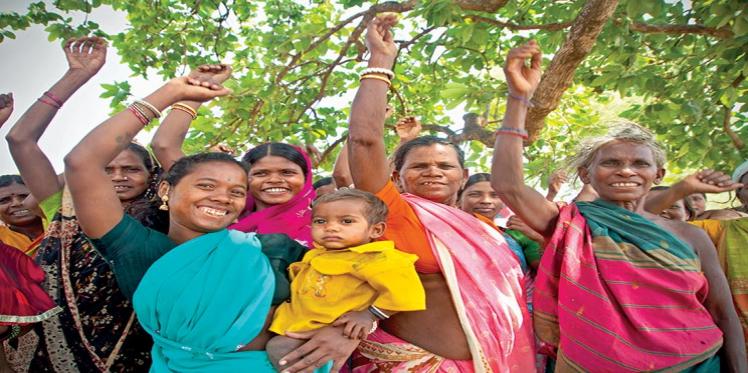
Oxfam India welcomes the rise in number of women parliamentarians in the 2019 elections from 11.9 per cent to 14 per cent. A total of 716 women candidates contested the elections against a total of around 7,334 male candidates. For the first time in India, 78 women Member of Parliamentarians-- highest till date have been elected.
“While we welcome the increase in number of women legislators in this election, the rise is still marginal and fails to represent women across the country, especially the most marginalised. We are hopeful that more women with political voice will ensure renewed support for passage of the Women’s Reservation Bill.
“The newly elected government must fulfil its election promise of at least 33 per cent reservation of all seats in the both the houses of the Parliament of India and in all state legislative assemblies for women. The BJP Government should work towards their commitment (made in manifesto) to design a ‘Women in Workforce’ roadmap with a focus to increase female workforce participation rate over the next five years,” said Ranu Bhogal, Director for Policy, Research & Campaigns at Oxfam India.
The Constitution (108th Amendment) Bill, also known as the Women’s Reservation Bill – which called for reserving 33 per cent of the seats in the Lower House of Parliament, Lok Sabha and all state legislative assemblies for women – was cleared by the Union Cabinet and Upper House of Parliament, Rajya Sabha in 2010. But it is still awaiting a nod from the Lower House of Parliament.
Representation of women in the Upper House of Parliament of India remains at an abysmal 11.4 per cent.
India’s performance continues to be unsatisfactory compared to global average of 23.4 per cent and Asian average of 19.6 per cent, according to the ‘Women in Politics Map-2017’, published by Inter-Parliamentary Union and UN Women. According to this report, India stands at 88th position globally with respect to women’s political representation.
India is a signatory to Global Conventions and treaties on promoting gender equality. It is India’s constitutional commitment to ensure political empowerment of women and in this regard the Central Government must undertake legislative and constitutional reforms to ensure women’s fair access to political spaces in the country.
Oxfam India released this press statement on 29th May, 2019.
For media queries please contact Himanshi Matta, 91-8860182310.
Recent News
Living Wages for Tea Plantation Workers
09 Jul, 2021
Equitable Vaccine Policy: Civil Society writes to PM
18 May, 2021
Related Stories
02 Mar, 2023
S 24 Parganas, West Bengal
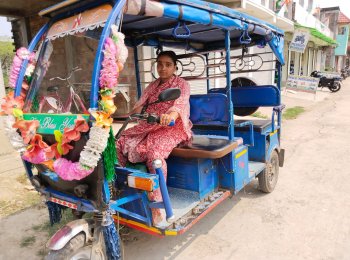
Sonali Neye: Public Heath Champion
Sonali is our Public Health Champion—spreading public health awareness to all the women and girls who ride with her in her Toto. She plans to keep sanitary napkins in the Toto so that it is easily accessible to menstruating riders. What's her story?
Read More
27 Feb, 2023
Kalahandi, Odisha
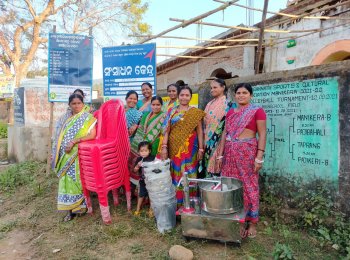
From Resource Centre To A Business Hub
What started as a Resource Centre for information dissemination in Manikera village in Kalahandi has now become a business hub. 30 women in 3 Resource Centres were provided with tent house kits and in the last month and a half they made a profit of Rs 13,500. One such resource centre at Manikera is being run by the 12-member Maa Tarini Women’s group.
Read More
27 Feb, 2023
Koraput, Odisha
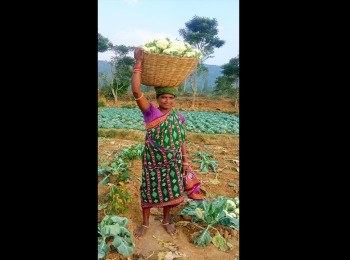
Adi Burudi: A President, Farmer and An Inspiration
Once a mono cropper and earning about Rs 20000 annually until a year ago, Adi Burudi now has expanded her scope and avenues of farming and making profits of nearly Rs 35000. The turning point for the 32-year-old was the Oxfam India-SDMCTrust project. The women farmer led livelihoods project was launched in 40 villages of Semiliguda and Pottangi blocks in 2020. Sanaphatu is also one of the project village.
Read More
22 Feb, 2023
Sitamarhi, Bihar
Cash Nudge for Divya Devi
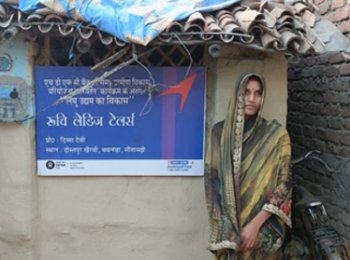
Since her family was going through financial constraints, the cash support was much needed. Divya Devi opened "Ruvi Ladies Tailor" shop. Through Project Utthan, she received Rs 10,800 which is 90% of the financial support she needed; she put in Rs 2000 of her own money to purchase a second-hand sewing machine, cloth, and other supplies for her shop. She also saved up some money to buy the next round of materials.
Read More
