


More women leaders in Indian Parliament must pave way for passage of Women’s Reservation Bill
- By Oxfam India
- 31 May, 2019
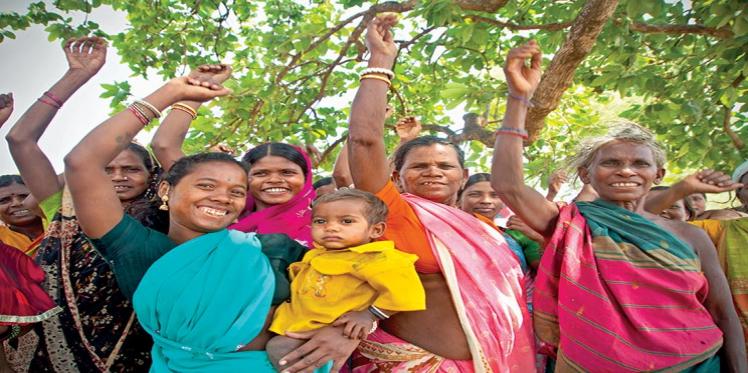
Oxfam India welcomes the rise in number of women parliamentarians in the 2019 elections from 11.9 per cent to 14 per cent. A total of 716 women candidates contested the elections against a total of around 7,334 male candidates. For the first time in India, 78 women Member of Parliamentarians-- highest till date have been elected.
“While we welcome the increase in number of women legislators in this election, the rise is still marginal and fails to represent women across the country, especially the most marginalised. We are hopeful that more women with political voice will ensure renewed support for passage of the Women’s Reservation Bill.
“The newly elected government must fulfil its election promise of at least 33 per cent reservation of all seats in the both the houses of the Parliament of India and in all state legislative assemblies for women. The BJP Government should work towards their commitment (made in manifesto) to design a ‘Women in Workforce’ roadmap with a focus to increase female workforce participation rate over the next five years,” said Ranu Bhogal, Director for Policy, Research & Campaigns at Oxfam India.
The Constitution (108th Amendment) Bill, also known as the Women’s Reservation Bill – which called for reserving 33 per cent of the seats in the Lower House of Parliament, Lok Sabha and all state legislative assemblies for women – was cleared by the Union Cabinet and Upper House of Parliament, Rajya Sabha in 2010. But it is still awaiting a nod from the Lower House of Parliament.
Representation of women in the Upper House of Parliament of India remains at an abysmal 11.4 per cent.
India’s performance continues to be unsatisfactory compared to global average of 23.4 per cent and Asian average of 19.6 per cent, according to the ‘Women in Politics Map-2017’, published by Inter-Parliamentary Union and UN Women. According to this report, India stands at 88th position globally with respect to women’s political representation.
India is a signatory to Global Conventions and treaties on promoting gender equality. It is India’s constitutional commitment to ensure political empowerment of women and in this regard the Central Government must undertake legislative and constitutional reforms to ensure women’s fair access to political spaces in the country.
Oxfam India released this press statement on 29th May, 2019.
For media queries please contact Himanshi Matta, 91-8860182310.
Recent News
Related Stories
04 Feb, 2019
Chhattisgarh
Strengthening Panchayats to respond to Violence Against Women
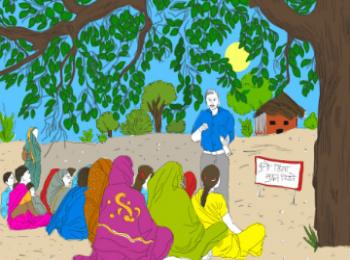
Sushi village of Janjgir Champa village in Chhattisgarh raised awareness about violence against women and girls, forced marriage and child marriage with support from Oxfam India, by performing skits during a gram sabha.
Read More

31 Dec, 2018
Odisha
Fighting for a brighter future
Upendra Patra, 45, belongs to Kalahandi, Odisha. He has been fighting against rampant child marriage practice within the Gond community through the help of Oxfam's Creating Spaces project.
Read More
31 Dec, 2018
Uttar Pradesh
A champion of change
Arpit, 26, is an advocate for women’s rights and gender equality. He was exposed to violence and gender inequality from a young age at his own home. After learning about gender equality and women's rights through Oxfam's partner Arpit started advocating for women's rights.
Read More
31 Dec, 2018
Uttar Pradesh
Stronger Together
“Child marriage was prevalent in our village, but it doesn’t happen anymore,” says Sunita, 30, a member of Creating Spaces Women’s Group in Bucchabasti Village, Uttar Pradesh. Adding that, “when a child is born in a house, the parents do not even have any papers to show how old the child is.
Read More
