


More women leaders in Indian Parliament must pave way for passage of Women’s Reservation Bill
- By Oxfam India
- 31 May, 2019
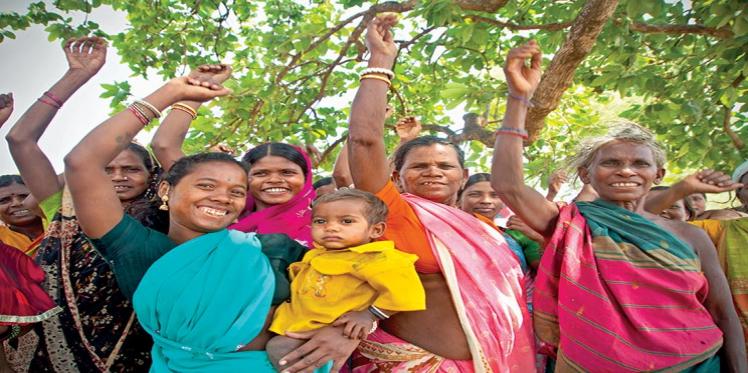
Oxfam India welcomes the rise in number of women parliamentarians in the 2019 elections from 11.9 per cent to 14 per cent. A total of 716 women candidates contested the elections against a total of around 7,334 male candidates. For the first time in India, 78 women Member of Parliamentarians-- highest till date have been elected.
“While we welcome the increase in number of women legislators in this election, the rise is still marginal and fails to represent women across the country, especially the most marginalised. We are hopeful that more women with political voice will ensure renewed support for passage of the Women’s Reservation Bill.
“The newly elected government must fulfil its election promise of at least 33 per cent reservation of all seats in the both the houses of the Parliament of India and in all state legislative assemblies for women. The BJP Government should work towards their commitment (made in manifesto) to design a ‘Women in Workforce’ roadmap with a focus to increase female workforce participation rate over the next five years,” said Ranu Bhogal, Director for Policy, Research & Campaigns at Oxfam India.
The Constitution (108th Amendment) Bill, also known as the Women’s Reservation Bill – which called for reserving 33 per cent of the seats in the Lower House of Parliament, Lok Sabha and all state legislative assemblies for women – was cleared by the Union Cabinet and Upper House of Parliament, Rajya Sabha in 2010. But it is still awaiting a nod from the Lower House of Parliament.
Representation of women in the Upper House of Parliament of India remains at an abysmal 11.4 per cent.
India’s performance continues to be unsatisfactory compared to global average of 23.4 per cent and Asian average of 19.6 per cent, according to the ‘Women in Politics Map-2017’, published by Inter-Parliamentary Union and UN Women. According to this report, India stands at 88th position globally with respect to women’s political representation.
India is a signatory to Global Conventions and treaties on promoting gender equality. It is India’s constitutional commitment to ensure political empowerment of women and in this regard the Central Government must undertake legislative and constitutional reforms to ensure women’s fair access to political spaces in the country.
Oxfam India released this press statement on 29th May, 2019.
For media queries please contact Himanshi Matta, 91-8860182310.
Recent News
Related Stories
15 Aug, 2021
Tumkur, Karnataka
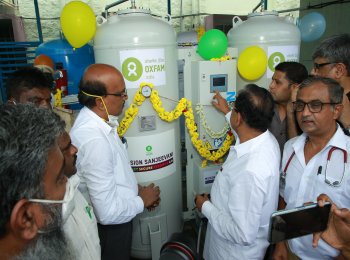
Oxfam India’s First Oxygen Plant in Tumkur
The 300 LPM Oxygen plant, set up under Oxfam India’s COVID-19 response ‘Mission Sanjeevani’, at the 80-bed government hospital at Koratagere in Tumkur in Karnataka will cater to people from 46 surrounding villages. Tumkur MLA, Dalit Leader and former deputy chief minister of Karnataka, G Parameshwara inaugurated the Oxygen plant on 26 July 2021.
Read More
02 Aug, 2021
New Delhi
Delivering Hope and Dignity to Refugees
Oxfam India has been supporting communities worst affected by the pandemic, across India, for over a year now. At the heart of our response are communities already living on the margins such as daily wage workers, transgender communities, informal sector workers and differently abled people. We partnered with HAI to extend our support to refugees from Pakistan living in Delhi.
Read More
07 Jul, 2021
Assam
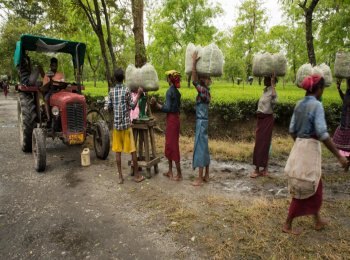
Labour Codes Training for Assam Tea Garden Workers
The Labour Codes will have significant impacts on the informal sector workers including the tea garden workers. A need was thus felt to train the workers around these Codes. The existing Plantation Labor Act, 1951 which used to govern the tea industry will be subsumed under these Codes. Different aspects of the Act will now feature in these four codes. In the above context, Oxfam India in collaboration with Centre for Workers’ Management initiated a training programme for workers across seven districts of Assam, during the month of June.
Read More
13 Apr, 2021
Sitamarhi, Bihar
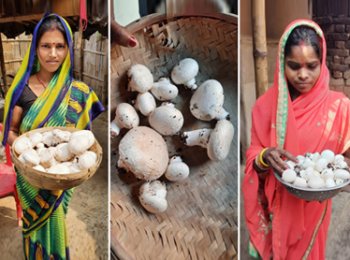
Mushroom Cultivation Makes Communities Resilience
Oxfam India has been working with these communities through its disaster risk reduction programme since 2012. It was in 2017 that it finally started its livelihood intervention programme — mushroom cultivation and vermicomposting — with the women from the Musahar community. This proved useful during the lockdown in 2020.
Read More
