


#LocatingTheBreach
- By Oxfam India
- 28 Feb, 2020
6.5 million people impacted by land conflict in India, investment worth Rs 13.7 trillion under threat
Land Conflict Watch undertook a three-year intensive study of granular data on ongoing 703 land conflicts around India. The study reveals where and why land conflicts are occurring in India and presents fresh evidence of how these land conflicts are affecting different sections of society and several segments of business and economy.
The study reveals that ongoing land conflicts affect lives and livelihoods of over 6.5 million (65 lakh) people and over 2.1 million (21 lakh) ha of land is locked in the conflicts. Rs 13.7 trillion (US $190 billion) of committed, earmarked, and potential investments were found embroiled in 335 of the 703 land conflicts. This constitutes 7.2% of the revised estimate of the country’s GDP for 2018–19.
Land Conflict Watch (LCW), a New Delhi-based independent research initiative that maps and tracks ongoing land conflicts in India, conducted the study between 2016 and 2019, with support from the Rights and Resources Initiative, a global network of organisations working on resources rights of local communities and Oxfam India, a non-profit that works to address poverty and inequality in India.
With the help of over 42 researchers across the country, LCW has analysed and assessed land conflicts based on the different economic sectors involved, social factors at play, laws involved, and land types under contestation. It distils data based on regional political-economic realities, such as the existence of Left-wing extremism (LWE)— the violence caused by armed rebellious groups claiming adherence to Extreme-Left ideologies--in some regions of India and the tribal population-dominated ‘Scheduled Area’ which have special constitutional provisions for protection of tribal rights.
“This research provides, arguably for the first time, a granular and highly representative data set to corroborate what researchers had previously inferred about the nature of land conflicts in India. Marginalised communities – such as tribes and those living in resource-rich but violence-afflicted areas – are disproportionately impacted by land and resource conflicts,” said Kumar Sambhav Shrivastava, co-founder of Land Conflict Watch and one of the co-authors of the study.
“Long-standing land conflicts remain unresolved for years even while new arenas for intense contestation are being created as a result of post-liberalisation economic growth. This bodes ill for both communities and businesses that seek secure access to land resources. The impacts are visible in the unprecedented quantum of investments that are getting locked in disputes over land and resources,” he added.
Against the popular discourse of disputes related to private lands, the study shows that majority of land conflicts (68%) involve common lands. A large number of these conflicts are caused due to violation or non-implementation of the Forest Rights Act, 2006 and other land and environmental legislations like the new Land Acquisition, Rehabilitation and Resettlement Act 2013.
India has array of legislations to recognise land and resource right to resolve disputes over access and ownership, and to facilitate more equitable negotiations for transferring rights and access between different parties.
“Ease of doing business has relaxed several protective clauses of environment and land legislations. The voices of affected communities especially STs and SCs are overlooked and human rights violated. Conflicts have entered their territories and homes directly- said Amitabh Behar, CEO Oxfam India."
The study shows that on one hand, the need for infrastructural enhancement has become the leading reason for new conflicts; on the other, conflicts have emerged from state’s conservation and forestry initiatives also. Among the conflicts analysed in the study, in 104 cases, the conflicts have been going on for at least two decades, and in another 149 conflicts, the case has remained unresolved for at least a decade.
“The destruction of livelihood opportunities, capital, and investment caused by these prolonged cases has had a debilitating impact on the lives of the citizens caught in the conflict as well as on the economy at large,” says the report.
“A complex land tenure system, historical inequity in distribution, and unequal access to resources have always been challenges in India. The research on land conflicts illustrate the real cost of India’s inability to effectively implement progressive laws such as the Forest Rights Act (FRA) and the new Land Acquisition, Rehabilitation and Resettlement (LARR) Act,” said Kundan Kumar, Asia Director for the Rights and Resources Initiative.
The following headlined data provides an overview of how conflicts are impacting lands, lives, and investments. It also highlights the specific triggers, geographies, activities, and socio-economic conditions that lead to the intensification of land conflicts in India:
Land Conflicts
- LCW has documented a total of 703 ongoing land conflicts over the last three years.
- Over 2.1 million (21 lakh) ha of land is locked in these land conflicts.
- Infrastructure development, led by townships and real estate schemes, along with roads and irrigation projects, are causing the highest number (43%) of land conflicts, followed by conservation and forestry related activities (15%), such as compensatory afforestation plantation and wildlife conservation schemes.
Lives Imperiled by Land Conflicts
- These 703 conflicts have affected the lives and livelihoods of 6.5 million (65 lakh) people.
- Infrastructure projects leading to land conflicts affect people the most. More than three million (30 lakh) people have been impacted by 300 infrastructure-related conflicts. Land conflicts over mining projects are the second highest cause of distress, with 852,488 citizens affected.
- On average, each land conflict impacts 10,668 people. Land conflicts involving mining projects affect the highest number of people; on average, each one affects 21,312 people.
Investments Embroiled
- Rs 13.7 trillion (Rs 13.7 lakh crore) of committed, earmarked, and potential investments were found embroiled in 335 of the 703 land conflicts. This constitutes 7.2% of the revised estimate of the country’s GDP for 2018–19. Investment data for the rest of the cases is not ascertainable. The total quantum of investment locked in all the documented conflicts is likely to be substantially higher.
- Indeed, investments in infrastructure-related projects worth over Rs 7 trillion (Rs 7 lakh crore) have been embroiled in land conflicts. Investments worth Rs 2.8 trillion (Rs 2.8 lakh crore) in the power sector and Rs 2.7 trillion (Rs 2.7 lakh crore) in the industrial sector are stuck in land conflicts. These are conservative figures as ascertainable data are not available for all 703 cases.
Pain Points
- Sixty-eight percent of land conflicts relate to common lands. Conflicts over common lands impact 79% of all people affected by land conflicts (5.14 million; 51 lakh).
- Twelve percent of India’s districts are officially affected by Left-wing extremism (LWE). But these districts account for 17% of the total conflicts, constitute 31% of the conflict affected area, and 15% of the people impacted by conflicts. Fifth Scheduled Areas overlap with just 13.6% of India’s districts[1], but 26% of the country’s land conflicts occur in these districts. These cases impact 28.5% of the 6.5 million (65 lakh) people affected, and account for 41% of the total area impacted by land conflicts.
- Sixty percent of all mining related conflicts were found in Fifth Schedule districts.
- Seventy-five percent of all conservation and forestry related conflicts, and 51.4% of mining related conflicts, involved the violation or non-implementation of the FRA, 2006.
- Acquisition of private lands is a reason for conflicts in 37.8% cases. Such cases impact over three million (30 lakh) people and contributes to 71.4% of all investments documented to be locked in such conflicts.
- In 104 (15%) cases, the dispute has been going on for at least two decades, and in another 149 (21%) conflicts, the case has remained unresolved for at least a decade.
NOTE TO THE EDITORS: Oxfam India has released a report capturing the community narratives (case studies) on conservation and management of forest resources and the process of claiming their rights under FRA in 3 states of Chhattisgarh, Odisha, Jharkhand. Please find the link here: https://www.oxfamindia.org/workingpaper/we-belong-forest
Additional Resources:
Case studies of ongoing land conflicts in India from Land Conflict Watch database
- https://www.landconflictwatch.org/conflicts/40-000-trees-cut-in-odisha-s-talabira-for-adani-operated-coal-mine
- https://www.landconflictwatch.org/conflicts/farmers-protest-change-of-land-status-for-jewar-airport-demand-higher-compensatio
- https://www.landconflictwatch.org/conflicts/parasi-gold-block-auction-sparks-protests-tribals-demand-scrapping-of-project
- https://www.landconflictwatch.org/conflicts/proposed-expansion-of-kattupalli-port-in-tamil-nadu-threatens-livelihood-of-fisherfolk
- https://www.landconflictwatch.org/conflicts/40-000-trees-cut-in-odisha-s-talabira-for-adani-operated-coal-mine
- https://www.landconflictwatch.org/conflicts/farmers-protest-change-of-land-status-for-jewar-airport-demand-higher-compensatio
- https://www.landconflictwatch.org/conflicts/parasi-gold-block-auction-sparks-protests-tribals-demand-scrapping-of-project
- https://www.landconflictwatch.org/conflicts/proposed-expansion-of-kattupalli-port-in-tamil-nadu-threatens-livelihood-of-fisherfolk
FOR MEDIA QUERIES, PLEASE CONTACT
- Founder and co-author Kumar Sambhav Shrivastava, kumarsambhav.08@gmail.com Phone- 91-9911998304
- Media Relations Lead, Oxfam India Himanshi Matta, himanshi@oxfamindia.org Phone-91-8860182310
[1] According to the most updated records of the Fifth Schedule Areas available on the websites of the Ministry of Tribal Affairs and the Ministry of Panchayati Raj. Some of these districts are only partially covered under the Fifth Schedule.
Recent News
Related Stories
18 Mar, 2021
Mumbai
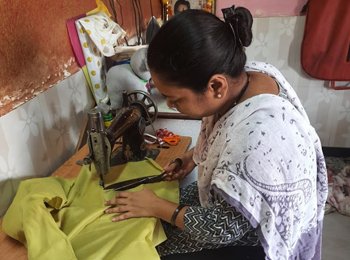
Sewing A Better Future
In Mumbai, livelihood trainings are being carried out among 12 SHGs in Govandi and Mankhurd. Despite the economy opening up, many have still not been able to either get their jobs back or restore the wages that they were getting pre-pandemic. The situation is worse for those who lost their sole breadwinners to the virus. Here's a story of 3 women who have been able to make ends meet, thanks to the livelihood training they received. These trainings are being done in collaboration with Siemens.
Read More
10 Mar, 2021
Mayurbhanj, Odisha
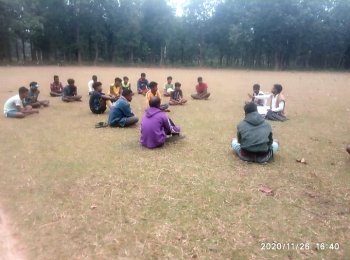
Youth Volunteer As Teachers During Pandemic
Last year, the sudden lockdown led to the closure of more than a million schools throughout the country leading to disruption in education of school students. While children everywhere faced the impact of this discontinuity of their education, the situation proved to be more severe for children from remote rural areas who had no access to internet, smartphone or electricity to be able to access virtual classes. This problem was further exacerbated for tribal students who further faced the challenge with regard to the language of instruction used for classes that were being broadcast. This situation prompted the Dharamveer Youth Group from Prasan Chandrapur Village of Noto Panchayat to come forward and take the responsibility of supporting children from the community so that they could continue their education.
Read More
14 Feb, 2021
Chhattisgarh & Jharkhand
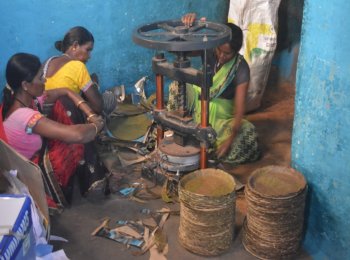
Solar Boost For Rural Livelihood
Based on the success of the solar-powered Sal leaf plate making unit in Chhattisgarh, two more machines were installed in Jharkhand and Chhattisgarh. This value addition will improve the quality of the product and fetch better price than the traditional hand-made plates. These have been set up in Bade Gobra village in Mainpur block in Chhattisgarh's Gariaband district and in Mohanpur Village in Sundarpahari Block in Jharkhand's Godda district.
Read More
11 Feb, 2021
Kushinagar, Uttar Pradesh
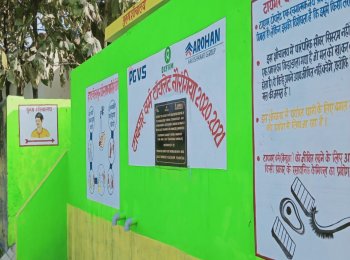
Making Toilets Sustainable
On February 2, 2021, Oxfam India handed over a Tiger Worm Toilet (TWT) complex to the Naurangiya panchayat in Uttar Pradesh’s Kushinagar district. Present at the handing over were community members and representatives from the Arohan Foundation and our on-ground partner PGVS. The toilet complex has five toilets and is built in the complex of the panchayat bhawan.
Read More
