


Living Wages for Tea Plantation Workers
- By Oxfam India
- 09 Jul, 2021
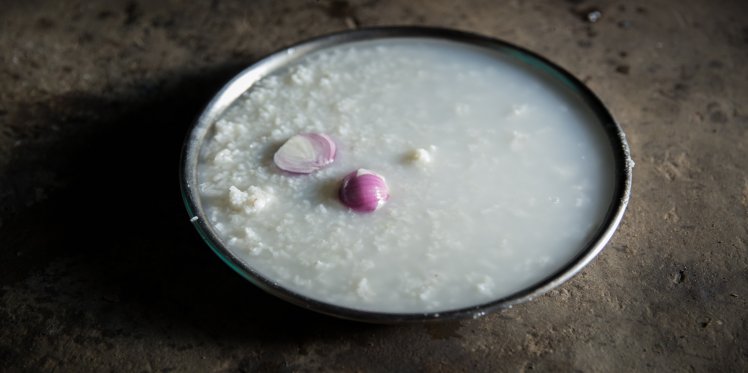
In Defense of Living Wages for Tea Plantation Workers: Evidence from Assam
Oxfam India has launched its new report “In Defense of Living Wages for Tea Plantation Workers: Evidence from Assam”. The study is jointly done by Oxfam India and Dr. Rahul Suresh Sapkal, Assistant Professor, Centre for Policy Studies, IIT Bombay.
New Delhi, 9 July 2021: Oxfam India is working towards strengthening the labour rights of tea plantations workers. The objective is to ensure that tea plantation workers, especially women, are able to live a life of dignity with their human rights respected by tea companies and their rights protected by the State. Oxfam India is working in seven districts of Assam—Biswanath, Dibrugarh, Tinsukia, Lakhimpur, Tezpur, Golaghat and Sivasagar.
The research is based on a primary survey carried out with 5,000 tea plantation workers spread across the seven districts during the period of October to December 2020.
The study considers ‘living wage’ in relation to the International Labour Organization’s (ILO) concept of ‘decent work’ and ‘quality of life’. A ‘living wage’ is beyond mere survival and should enable meaningful participation in society which includes supporting a family, recreation, and saving against future risks. It considers the well-being of the workers and is a wage that enables a worker to afford a ‘decent’ standard of living for herself and her family. In the Indian context, the concept of Living Wages is enshrined in the Supreme Court’s landmark judgment in Workmen v. Management of Reptakos Brett & Co. Ltd. 1991 which advocated the concept of and the right to a living wage.
THE MAIN FINDINGS OF THE REPORT ARE AS FOLLOWS:
- The average family income per month, reported by tea workers, is INR 4,774 (without deductions). The average expenditure on food consumption is INR 1,854 and non-food expenditure is INR 3,895 per person per month. The average deduction by the employer is INR 778; this varies across tea estates. So, after deductions, the in-hand income is around INR 3,996 per month with variations across districts.
- The workers are entitled to get INR 167 per day which is inclusive of both the cash and non-cash benefits, but what they actually receive ranges between INR 160 and INR 180 per day as observed in the study sample across the seven districts.
- According to the estimates of this study, for workers to have a dignified life, the compensation should include INR 285 per day as expenditure on food items (considering 4 members in family) and INR 599 per day as expenditure on non-food items, both essential and non-essential utilities. Therefore, the living wage for a worker should be INR 884 per day for a decent living in the tea plantation sector. The proposed living wage is 81 percent higher than the actual wages workers receive and 54 percent higher than the National Minimum Wage suggested by Anup Satpathy Committee (2019) which is INR 342 for Assam.
- On an average, women earn only 80 percent of what men earn; women worker’s reported average monthly income is INR 3,745 compared to INR 4,672 for men.
- Around 99 percent workers are residing with their family and less than 1 percent (48 workers) workers stay alone near the tea estates. Other family members also get employed from time to time as temporary workers. The size of households in the sample is bimodal[1] and 25.7 percent workers have an average household size of four members and 25.1 percent workers have an average household size of five members.
- There exists a growing incidence of contractualisation in the tea plantation sector in Assam. Only 39 percent of workers can be considered as permanent workers, while the remaining 61 percent are temporary workers when social security and other mandated provisions under the Plantation Labour Act (PLA) are taken into consideration.
- Prior to the COVID-19 crisis, only 7 percent women workers reported access to maternity leave and a mere 2 percent were able to access the facility for children’s education offered by their employers.
- During the nationwide lockdown, only 10 percent of the respondents have worked, as the only tasks performed in that period were fumigation and sewage draining. The remaining workers were unemployed for the entire duration of the lockdown. Women were more severely impacted by the lockdown and were not able to work for 45 days on an average, while for men the duration was 33 days.
“The study is the voice of 5,000 tea workers and we believe that the findings will make all stakeholders in tea sector to work for their welfare. The study finds a stark gap between the current wages that tea workers receive vis a vis the living wages that has been calculated. We appeal to the government and tea industry to consider an upward revision of the wages to improve the lives of the tea workers,” says Amitabh Behar, CEO Oxfam India.
It is worthwhile to note here that Assam tea plantation workers daily wage is the lowest with respect to daily wages of tea plantations in Kerala (INR 403), Tamil Nadu (INR 333) and Karnataka (INR 349). An upward revision has been long due. In February 2021, Assam tea plantation worker’s wage was increased by INR 50 but the High Court stayed the order. In Assam, post-elections, the government gave an order to hike the wage by INR 38. So, the current daily wage of plantation worker is INR 204.
[1] having or involving two modes, in particular (of a statistical distribution) having two maxima.
About Oxfam India
Oxfam India is a movement of people working to end discrimination and create a free and just society. We work to ensure that Adivasis, Dalits, Muslims, and women and girls have safe violence-free lives with freedom to speak their mind, equal opportunities to realize their rights, and a discrimination-free future.
📢Oxfam India is now on Telegram. Click here to join our Telegram channel and stay tuned to the latest updates and insights on social and development issues.
Recent News
Related Stories
20 Jan, 2022
Kerala
Supporting the Flood-Affected in Kerala
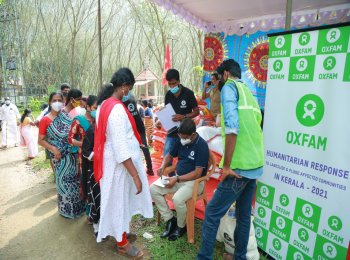
Jobin, Pankajakshi, Remya and Parvathy, though from different districts in Kerala suffered a similar fate in the October 2021 floods and landslides. They were all left without a source of income or food to feed their families. Oxfam India delivered dry ration and safety kits to 2771 families in Idukki, Alappuzha, Pathanamthitta and Kottayam.
Read More
16 Jan, 2022
Uttar Pradesh
Mohalla Classes 2.0
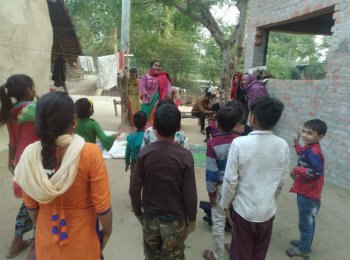
Due to prolonged school closure, children had lost interest in attending classes and there was a wide learning gap during this period. To bridge the learning gap among children, Oxfam India has once again started 15 Mohalla classes covering four districts of Uttar Pradesh. In these classes 321 children including 155 girls and 166 boys are getting education with the help of volunteers and Oxfam India team. Out of these children, 77 children are out of school.
Read More
13 Jan, 2022
Dhubri, Assam
Handcrafting a Water Filter
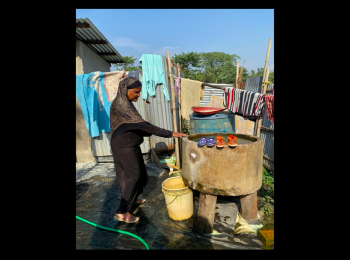
Rowsonara, troubled with the heavy iron content in the water, first made a multi-layer mud filter with coal, sand and rocks through which contaminated water would trickle down to a chamber that would hold clean water. She bettered it by making a cement filter. Quite a few people in the area also replicated the filter in their respective households and now have access to water that is better fit for consumption.
Read More
07 Jan, 2022
Karnataka
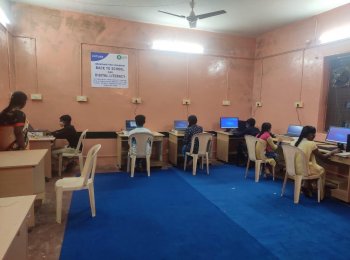
Back to School and Digital Literacy
Schools which were on our Bangalore trail now have refurbished computer rooms as part of the Oxfam India-Virtusa 'Back to School and Digital Literacy' programme. 537 children belonging to some of the most marginalised communities will now have access to computers. And of course, a whole lot of stationery and sports item as well!
Read More
