


Government must protect the rights of forest-dwelling communities | Oxfam India's statement
- By NA
- 24 Feb, 2019
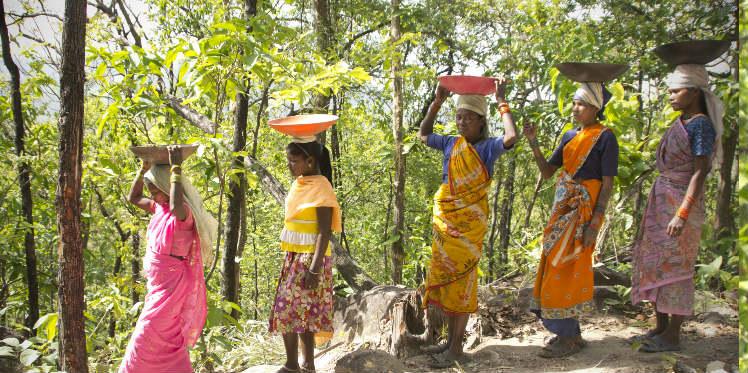
On 13th February, The Supreme Court of India in its order directed various state governments to report on the status of people's claims on their forest land under the Forest Rights Act (FRA). The order further stated that claimants whose rejections have "attained finality" should now be evicted before the next hearing on July 27th 2019. According to the Ministry of Tribal Affairs, as of November 2018, the total number of rejected claims are of 18.92 lakh tribal and other forest-dwelling families.
This comes as a huge blow to the people whose rights are protected under the Forest Rights Act 2006. This Act for the first time acknowledged the historical injustices done to the forest dwellers and recognised their traditional rights over forest land and the right to manage and conserve the resources.
The apathy shown by the Centre and state governments in defending the rights of millions of Adivasi and forest dwellers puts the lives and livelihood of around 20 lakh families at stake. There is enough evidence to show that these are the communities who have been protecting, conserving forests and raising their voices against diversion of forest land for industrial purposes. Their eviction would also violate India’s international human rights obligations.
Reports by the state government and independent committees have shown that the process of recognising rights has been poorly implemented. In several states, systematic rejection of claims has happened without stating the reasons or giving a chance of appeal. Moreover, wrongful rejections are still under review and most significantly the FRA does not have a provision of automatic evictions.
We appeal to the nodal ministry (Ministry of Tribal Affairs) and state governments to present these as part of their response to Supreme Court’s directions and uphold the rights of the forest dwellers to life, dignity and livelihood.
We also appeal to all the citizens of India including forests rights’ activists, civil society groups to stand in solidarity and urge the Centre and state governments to uphold the principles of this landmark Act.
We work towards fair sharing of natural resources and ensuring better livelihoods for forest-dependent communities
Read MoreRecent News
Living Wages for Tea Plantation Workers
09 Jul, 2021
Equitable Vaccine Policy: Civil Society writes to PM
18 May, 2021
Related Stories
02 Mar, 2023
S 24 Parganas, West Bengal
Sonali Neye: Public Heath Champion
Sonali is our Public Health Champion—spreading public health awareness to all the women and girls who ride with her in her Toto. She plans to keep sanitary napkins in the Toto so that it is easily accessible to menstruating riders. What's her story?
Read More
27 Feb, 2023
Kalahandi, Odisha
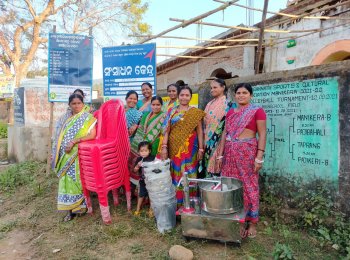
From Resource Centre To A Business Hub
What started as a Resource Centre for information dissemination in Manikera village in Kalahandi has now become a business hub. 30 women in 3 Resource Centres were provided with tent house kits and in the last month and a half they made a profit of Rs 13,500. One such resource centre at Manikera is being run by the 12-member Maa Tarini Women’s group.
Read More
27 Feb, 2023
Koraput, Odisha
Adi Burudi: A President, Farmer and An Inspiration
Once a mono cropper and earning about Rs 20000 annually until a year ago, Adi Burudi now has expanded her scope and avenues of farming and making profits of nearly Rs 35000. The turning point for the 32-year-old was the Oxfam India-SDMCTrust project. The women farmer led livelihoods project was launched in 40 villages of Semiliguda and Pottangi blocks in 2020. Sanaphatu is also one of the project village.
Read More
22 Feb, 2023
Sitamarhi, Bihar
Cash Nudge for Divya Devi
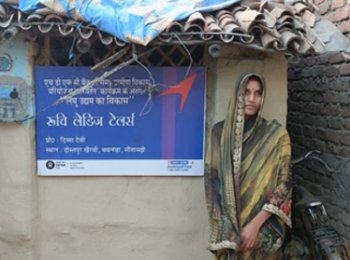
Since her family was going through financial constraints, the cash support was much needed. Divya Devi opened "Ruvi Ladies Tailor" shop. Through Project Utthan, she received Rs 10,800 which is 90% of the financial support she needed; she put in Rs 2000 of her own money to purchase a second-hand sewing machine, cloth, and other supplies for her shop. She also saved up some money to buy the next round of materials.
Read More
