


Government must protect the rights of forest-dwelling communities | Oxfam India's statement
- By NA
- 24 Feb, 2019
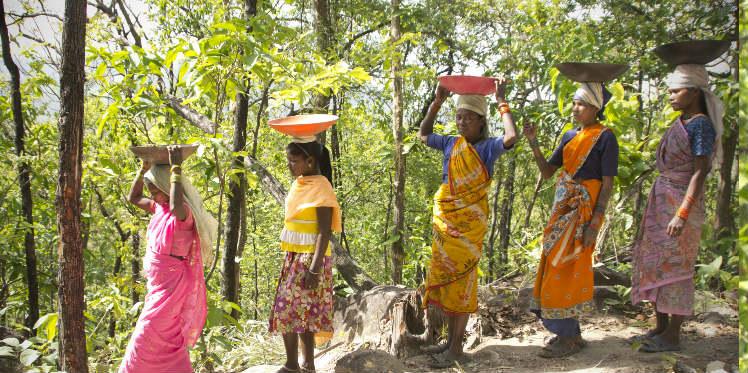
On 13th February, The Supreme Court of India in its order directed various state governments to report on the status of people's claims on their forest land under the Forest Rights Act (FRA). The order further stated that claimants whose rejections have "attained finality" should now be evicted before the next hearing on July 27th 2019. According to the Ministry of Tribal Affairs, as of November 2018, the total number of rejected claims are of 18.92 lakh tribal and other forest-dwelling families.
This comes as a huge blow to the people whose rights are protected under the Forest Rights Act 2006. This Act for the first time acknowledged the historical injustices done to the forest dwellers and recognised their traditional rights over forest land and the right to manage and conserve the resources.
The apathy shown by the Centre and state governments in defending the rights of millions of Adivasi and forest dwellers puts the lives and livelihood of around 20 lakh families at stake. There is enough evidence to show that these are the communities who have been protecting, conserving forests and raising their voices against diversion of forest land for industrial purposes. Their eviction would also violate India’s international human rights obligations.
Reports by the state government and independent committees have shown that the process of recognising rights has been poorly implemented. In several states, systematic rejection of claims has happened without stating the reasons or giving a chance of appeal. Moreover, wrongful rejections are still under review and most significantly the FRA does not have a provision of automatic evictions.
We appeal to the nodal ministry (Ministry of Tribal Affairs) and state governments to present these as part of their response to Supreme Court’s directions and uphold the rights of the forest dwellers to life, dignity and livelihood.
We also appeal to all the citizens of India including forests rights’ activists, civil society groups to stand in solidarity and urge the Centre and state governments to uphold the principles of this landmark Act.
We work towards fair sharing of natural resources and ensuring better livelihoods for forest-dependent communities
Read MoreRecent News
Related Stories

15 Aug, 2021
Tumkur, Karnataka
Oxfam India’s First Oxygen Plant in Tumkur
The 300 LPM Oxygen plant, set up under Oxfam India’s COVID-19 response ‘Mission Sanjeevani’, at the 80-bed government hospital at Koratagere in Tumkur in Karnataka will cater to people from 46 surrounding villages. Tumkur MLA, Dalit Leader and former deputy chief minister of Karnataka, G Parameshwara inaugurated the Oxygen plant on 26 July 2021.
Read More
02 Aug, 2021
New Delhi
Delivering Hope and Dignity to Refugees
Oxfam India has been supporting communities worst affected by the pandemic, across India, for over a year now. At the heart of our response are communities already living on the margins such as daily wage workers, transgender communities, informal sector workers and differently abled people. We partnered with HAI to extend our support to refugees from Pakistan living in Delhi.
Read More
07 Jul, 2021
Assam
Labour Codes Training for Assam Tea Garden Workers
The Labour Codes will have significant impacts on the informal sector workers including the tea garden workers. A need was thus felt to train the workers around these Codes. The existing Plantation Labor Act, 1951 which used to govern the tea industry will be subsumed under these Codes. Different aspects of the Act will now feature in these four codes. In the above context, Oxfam India in collaboration with Centre for Workers’ Management initiated a training programme for workers across seven districts of Assam, during the month of June.
Read More
13 Apr, 2021
Sitamarhi, Bihar
Mushroom Cultivation Makes Communities Resilience
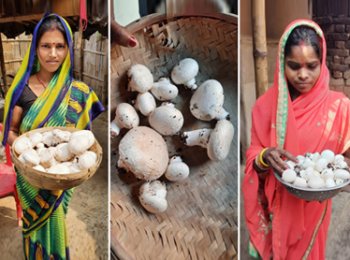
Oxfam India has been working with these communities through its disaster risk reduction programme since 2012. It was in 2017 that it finally started its livelihood intervention programme — mushroom cultivation and vermicomposting — with the women from the Musahar community. This proved useful during the lockdown in 2020.
Read More
