


Government must protect the rights of forest-dwelling communities | Oxfam India's statement
- By NA
- 24 Feb, 2019
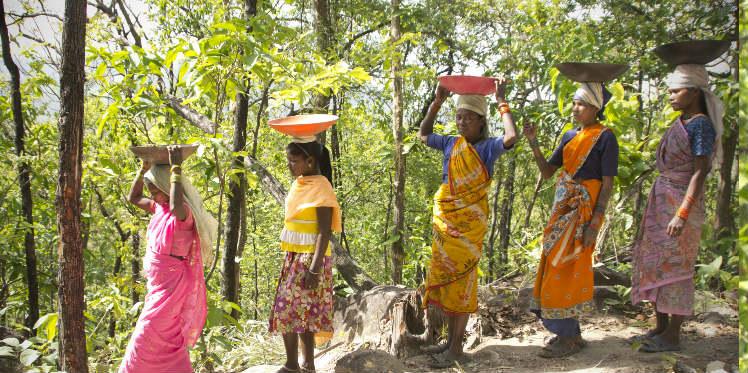
On 13th February, The Supreme Court of India in its order directed various state governments to report on the status of people's claims on their forest land under the Forest Rights Act (FRA). The order further stated that claimants whose rejections have "attained finality" should now be evicted before the next hearing on July 27th 2019. According to the Ministry of Tribal Affairs, as of November 2018, the total number of rejected claims are of 18.92 lakh tribal and other forest-dwelling families.
This comes as a huge blow to the people whose rights are protected under the Forest Rights Act 2006. This Act for the first time acknowledged the historical injustices done to the forest dwellers and recognised their traditional rights over forest land and the right to manage and conserve the resources.
The apathy shown by the Centre and state governments in defending the rights of millions of Adivasi and forest dwellers puts the lives and livelihood of around 20 lakh families at stake. There is enough evidence to show that these are the communities who have been protecting, conserving forests and raising their voices against diversion of forest land for industrial purposes. Their eviction would also violate India’s international human rights obligations.
Reports by the state government and independent committees have shown that the process of recognising rights has been poorly implemented. In several states, systematic rejection of claims has happened without stating the reasons or giving a chance of appeal. Moreover, wrongful rejections are still under review and most significantly the FRA does not have a provision of automatic evictions.
We appeal to the nodal ministry (Ministry of Tribal Affairs) and state governments to present these as part of their response to Supreme Court’s directions and uphold the rights of the forest dwellers to life, dignity and livelihood.
We also appeal to all the citizens of India including forests rights’ activists, civil society groups to stand in solidarity and urge the Centre and state governments to uphold the principles of this landmark Act.
We work towards fair sharing of natural resources and ensuring better livelihoods for forest-dependent communities
Read MoreRecent News
Related Stories
18 Apr, 2022
Lakhimpur Kheri, Uttar Pradesh
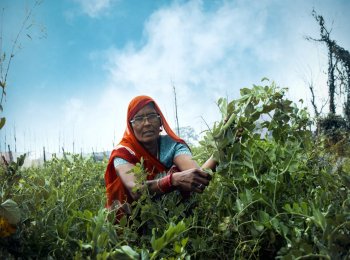
Resource Centres Augment Income Of Women Farmers
In November 2020, members of the women farmer group ‘Gulab Mahila Kisan Samooh’ started a resource centre. Till date, the women farmers have accumulated Rs 8020 in this bank account. Among the villages in the project area, 11 women farmers’ resource centres have been formed. 285 women farmers associated with this project are availing of the direct benefits of resource centres.
Read More
05 Apr, 2022
Kalahandi, Odisha
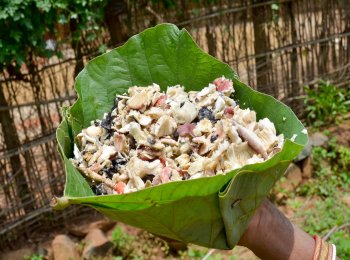
Women Mushroom Farmers Cultivate An Empowered Future
Women mushroom farmers of Borbhata shared that mushroom cultivation is a profitable form of farming unlike traditional crops and vegetables. At present, the local market is growing and there is no problem in marketing mushrooms after harvesting. Through mushroom cultivation, the Borbhata women’s collective is headed towards a successful group enterprise. They have also become capable in meeting their household-level nutritional and financial needs.
Read More
15 Mar, 2022
Kalahandi, Odisha
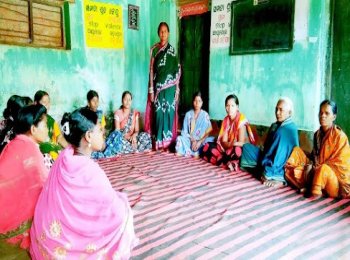
From a Survivor of Child Marriage to a Women’s Rights Champion
Shivaratri Patra is a survivor of child marriage who went on to become a pillar of support for the women in her community. She challenged the gender-based power structures in her village and ensured that the women and girls in her village take charge of their own destiny.
Read More
07 Mar, 2022
Varanasi, Uttar Pradesh
Mission Sanjeevani Reaches The Musahars
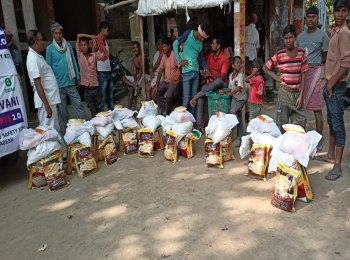
Musahars are a community living in miserable conditions, Covid or no Covid. Priyansh Tripathi travels to Chhateri village where the musahar community continues to live in abject poverty and are worse off after the pandemic. Through Oxfam India's Mission Sanjeevani, dry ration and safety kits were distributed to the 500 families in the village. The ration kits including rice, dal and oil, were designed to cater to the needs of a family of five for a month.
Read More
