


Government must protect the rights of forest-dwelling communities | Oxfam India's statement
- By NA
- 24 Feb, 2019
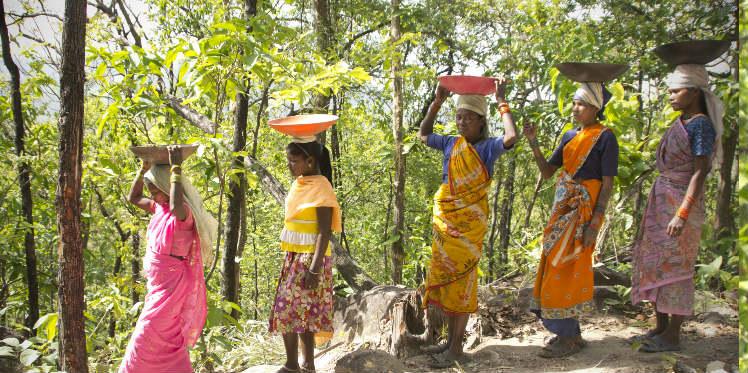
On 13th February, The Supreme Court of India in its order directed various state governments to report on the status of people's claims on their forest land under the Forest Rights Act (FRA). The order further stated that claimants whose rejections have "attained finality" should now be evicted before the next hearing on July 27th 2019. According to the Ministry of Tribal Affairs, as of November 2018, the total number of rejected claims are of 18.92 lakh tribal and other forest-dwelling families.
This comes as a huge blow to the people whose rights are protected under the Forest Rights Act 2006. This Act for the first time acknowledged the historical injustices done to the forest dwellers and recognised their traditional rights over forest land and the right to manage and conserve the resources.
The apathy shown by the Centre and state governments in defending the rights of millions of Adivasi and forest dwellers puts the lives and livelihood of around 20 lakh families at stake. There is enough evidence to show that these are the communities who have been protecting, conserving forests and raising their voices against diversion of forest land for industrial purposes. Their eviction would also violate India’s international human rights obligations.
Reports by the state government and independent committees have shown that the process of recognising rights has been poorly implemented. In several states, systematic rejection of claims has happened without stating the reasons or giving a chance of appeal. Moreover, wrongful rejections are still under review and most significantly the FRA does not have a provision of automatic evictions.
We appeal to the nodal ministry (Ministry of Tribal Affairs) and state governments to present these as part of their response to Supreme Court’s directions and uphold the rights of the forest dwellers to life, dignity and livelihood.
We also appeal to all the citizens of India including forests rights’ activists, civil society groups to stand in solidarity and urge the Centre and state governments to uphold the principles of this landmark Act.
We work towards fair sharing of natural resources and ensuring better livelihoods for forest-dependent communities
Read MoreRecent News
Related Stories
09 Aug, 2023
Koraput, Odisha
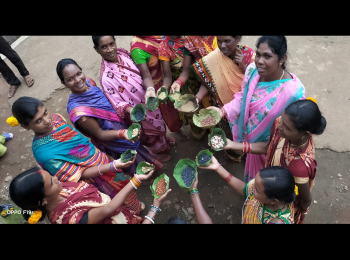
Community Seed Bank: Beyond Preservation And Conservation
Women from the indigenous communities have been playing a critical role in conserving the seeds. On World Indigenous Day, we look at the community seed bank, promoted by Oxfam India-SDMC Trust project, that has ensured large scale exchange of quality native seeds. In the 40 villages and 2000 farmers that we work with, we have ensured conservation and multiplication of native seeds at the community level through custodian farmers.
Read More
07 Jul, 2023
Odisha
A Fresh Start For Pinky
Pinky received all her streedhan back from her in-law’s house due to the mediation by the counsellors at the Bijayini Centre in Nayagarh. This has not just helped her get out of an abusive marriage but also given the confidence of carving her own future.
Read More
05 Jul, 2023
Nalanda, Bihar
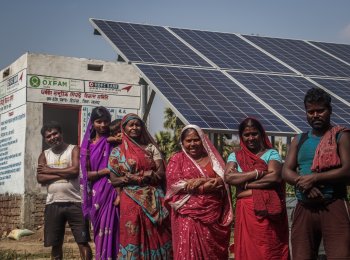
Solar Solution for Bihar Farmers
A solar-based lift irrigation system in Indaut village was set up through Project Utthan, an Oxfam India-HDFC Bank project. The system can irrigate 25 acres of land, which means farmers can irrigate their land independent of the electricity supply in rural Bihar. The system has been installed in areas where land lay bare due to lack of irrigation facilities. Most farmers in the area could not afford their own pump and boring instruments, making irrigation a significant challenge.
Read More
03 Jul, 2023
Kalahandi, Odisha
Araskupa Processing Unit: A Blessing In Disguise
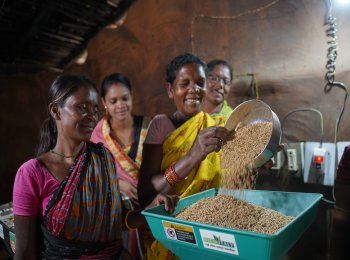
Through Project Utthan, an Oxfam India-HDFC Bank’s HRDP initiative, a 10-member SHG was provided two machines—a 2-in-1 pulveriser and a huller. The former, fitted with blades of different sizes, is for grinding wheat, turmeric, millets, cumins, chilies and other spices. The latter is the paddy processing unit. Though the huller processes about 1.5 quintals of paddy an hour but it has made paddy processing easily accessible to not just Araskupa but six other neighbouring villages (some of them with very remote homes and no access to electricity).
Read More
