


Equitable Vaccine Policy: Civil Society writes to PM
- By Oxfam India
- 18 May, 2021
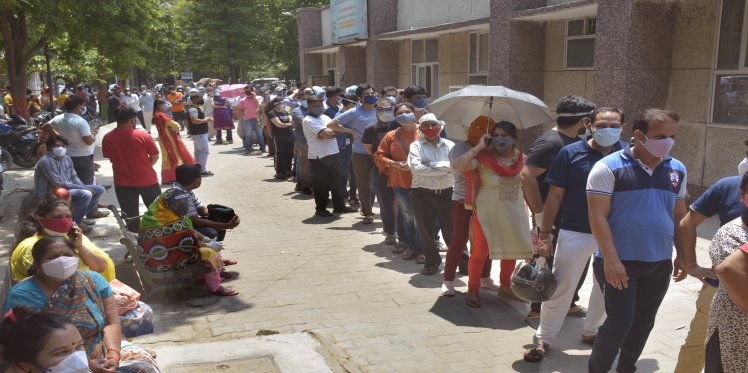
Time Bound, Equitable Vaccine Policy Needed to Ensure Universal Access to Free Vaccine Before It Is Too Late: Public Health Practitioners and Civil Society Members Write to PM
India’s current pace COVID-19 vaccination drive will take 2.4 years to complete, but global epidemiologists feel it could take under a year before the virus may mutate making it difficult for current vaccines to contain the spread
New Delhi, May 17, 2021: 567 prominent public health practitioners, doctors, economists, workers unions, human rights groups, student groups, civil society organisations, and concerned citizens in India have appealed to Prime Minister Narendra Modi to demonstrate leadership in doing what it takes to address inequalities in supply to ensure vaccines reach the vulnerable and ramp up manufacturing to address shortages. The collective letter signed by organisations from 22 states and UTs across India has urged Prime Minister Narendra Modi to remove barriers to vaccine production through modes like a waiver of intellectual property rights to achieve universal coverage.
Amitabh Behar, Chief Executive Officer, Oxfam India said, “The support for India’s global ask for a patent waiver at World Trade Organisation (WTO) is growing. India’s Government needs to show leadership domestically, by lifting patents to its own vaccine and follow its own National Vaccine Policy by ensuring equitable access to everyone to the vaccine but prioritizing the vulnerable and excluded.”
Extremely slow pace of vaccination in India is delaying the pandemic
Overall rates of vaccination are stalling, and shortages are expected to continue until at least July-end. The joint policy brief and analysis by Oxfam India and Forum for Medical Ethics Society (FMES) highlights the several flaws in India’s current COVID vaccination strategy, including failure to adequately explore compulsory licensing of the vaccine. The current policy of differential pricing for the Centre and states and pushing the states to the market for its vaccines would force India’s poorer and more populous states to pay relatively more. Furthermore, vaccine allocations to states are also not in proportion to the emerging demand from those under 45 or the quantum of COVID cases.
Sunita Sheel, Secretary-General, Forum for Medical Ethics Society said, “The Government of India’s approach to COVID-19 vaccine policy stands to be a mockery of Indian Federalism and will be remembered for decades to come for its lethal consequences to common people of India, particularly those at the margins. Given the current global order and deeply interconnected world, lack of access to vaccines anywhere around the world implies a threat to the global health security agenda. This can be averted only if the government puts people first, that is, people over profit and power, NOW!”
COVID-19 Vaccine policy crippled with unfair prices and exclusion
Both SII and Bharat Biotech vaccines in private hospitals will cost an Indian family with 3 adults Rs. 3600 for a full course of the Covishield Vaccine or Rs. 7200 for Covaxin. For the poorest 20% of households, this burden will be 43% (Covishield) and 86% (Covaxin) of their monthly income, respectively. Indians are paying the world’s highest vaccine prices despite providing significant funding and in-kind support for the development of the vaccine and pre-clinical and clinical trials. Successful vaccination drives are rooted in detailed district plans and social mobilization strategies to reach vulnerable communities; these are missing in this drive. The near-complete reliance on online appointments for vaccination without providing walk-in facilities tends to exclude those who lack internet access, the elderly living alone, those with disabilities and populations such as homeless and pavement dwellers, and those in institutions. Only 15% of rural households have access to the Internet and only 24% of India’s population has smartphones. A more targeted bottom-up approach is needed to ensure vaccination nearer to peoples’ habitations, especially in high coronavirus prevalence areas. The civil society has urged the Prime Minister to take the following actions to make vaccines accessible for all before it is too late:
1. Ensure that the vaccine is purchased at true cost prices and provided free of charge to all
2. Ensure its fair allocation which prioritizes at-risk groups, is sensitive to the existence of the digital divide and can reach the vulnerable where they are
3. Be rooted in large scale vaccine procurement by the Central Government at regulated prices which do not financially cripple the finances of India’s states or pitch them against each other in the quest of scarce lifesaving vaccines
4. Immediately enhance financial outlays to public health and do what it takes to make the above happen through all possible steps including compulsory licensing of vaccines and ramping up public sector vaccine manufacturing capacity, to strengthen the public health system to be better prepared for the potential next wave of the pandemic.
Notes to editor
Link to petition: https://forms.gle/1DH82LPnX5qAW6CU6
Endorsement list: Attached with email
Please read the complete policy brief here- http://bit.ly/VaccineforAll
For media queries, please write to akshayt@oxfamindia.org or sunita.bandewar@gmail.com
About Oxfam India
Oxfam India is a movement of people working to end discrimination and create a free and just society. We work to ensure that Adivasis, Dalits, Muslims, and women and girls have safe violence-free lives with freedom to speak their minds, equal opportunities to realize their rights, and a discrimination-free future.
📢Oxfam India is now on Telegram. Click here to join our Telegram channel and stay tuned to the latest updates and insights on social and development issues.
Recent News
Related Stories
31 Jan, 2022
Kerala
Rebuilding Lives In Kerala
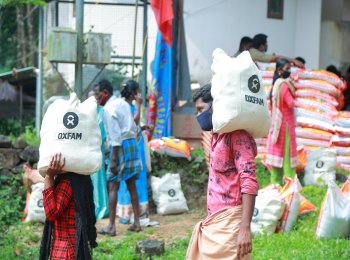
Sabitha, Savithri, Thankamma and Annamma have quite a few things in common. Their houses were either completely or partially destroyed in the landslides that occurred after multiple days of heavy rainfall in October 2021. The flood and landslides damaged houses, roads and left many stranded without phone connectivity and electricity. Oxfam India launched its ‘Kerala Landslide and Flood Response Programme 2021’ and provided ration and safety kit to 2771 families and cleaned and repaired 144 wells.
Read More
31 Jan, 2022
Jorhat, Assam
Jal Jeevan Mission in Tea Gardens
On learning about the Jal Jeevan Mission, Sonia and the others approached the garden management and after several rounds of discussion and persuasion and offering to help, the ball was set rolling. Sonia is associated with Oxfam India's advocacy work in the tea gardens in Jorhat in Assam.
Read More
31 Jan, 2022
Kabeerdham, Chhattisgarh
बेरोजगारी एवं आर्थिक तंगी में मिली राहत
छत्तीसगढ़ के जिला कबीरधाम में मार्च 2020 से लॉक डाउन होने के कारण घने जंगलों और पहाड़ों पर निवास करने वाले जनजाति समुदाय द्वारा निर्मित की जानी वाली वनोत्पाद झोरी, झौहा, बांस का पंखा, टोकरी वनोपज संकलन एवं उसके बिक्री के अलावा, समूहिक खेती के कार्य और अन्य वस्तुवों की बिक्री रुकने से आय के साधन रुक गए साथ ही मनरेगा के कार्य से तत्कालीन मे कोई आर्थिक राहत नही मिल पा रही है, जिससे अधिकांश गाँव राशन भोजन की समस्या से जूझ रहे है।ऑक्सफैम इंडिया के मिशन संजीवनी द्वारा इन दो गाँवों— नागा डबरा और माठपुर— में 100 परिवारों को राहत सामग्री दिया गया |
Read More
25 Jan, 2022
Lakhimpur Kheri, Uttar Pradesh
Farming Yields Empowerment
Since 2016 Mithilesh has learnt and adapted climate resilient agricultural practices, spearheaded an SHG, leased more land and improved her income, yield and soil quality. What's more, she is sending her children to school. The Oxfam India-AIM Trust project with women farmers in Lakhimpur Kheri has made big differences in the lives.
Read More
