


‘Crisis on top of crisis’ as India and Bangladesh brace for super Cyclone Amphan - Oxfam
- By Oxfam International
- 19 May, 2020
Spokespeople available in India and Bangladesh, including Cox’s Bazar
Cyclone Amphan, the strongest ever cyclone recorded over the Bay of Bengal, is expected to hit north-east India and Bangladesh tomorrow (Wednesday, 20 May) threatening millions of people in vulnerable communities already affected by COVID-19 outbreaks and lockdown.
Millions of people are being evacuated in India and 12,000 shelters have been prepared in Bangladesh to house nearly five million people in the expected path of the cyclone. Camps in Cox’s Bazar in Bangladesh, home to almost a million Rohingya refugees, are also likely to be hit and are especially vulnerable given the cramped conditions and an increasing number of coronavirus cases.
Oxfam, working with partners, is preparing life-saving assistance including safety equipment, clean water, sanitation, food and shelter for people in the cyclone’s path.
Pankaj Anand, Director of Programs and Humanitarian response, Oxfam India said:
“Cyclone Amphan is a crisis on top of a crisis. Many of the cyclone evacuation shelters are already being used as coronavirus quarantine centres or housing migrants who have returned to their coastal communities because of lockdown. People are worried there won’t be enough space in the shelters and that they might catch coronavirus in them.”
Dipankar Datta, Country Director, Oxfam Bangladesh said:
“It is already a huge challenge to contain the spread of coronavirus amongst the Rohingya refugees living in overcrowded camps, sharing water and toilet facilities. Cyclone Amphan is also a major threat to the millions of vulnerable Bangladeshis living in low-lying flood-prone coastal areas.”
Without assistance, people will be at risk not only to water-borne and other infections rampant during inclement weather, but also coronavirus, with their immunity compromised. Between the two countries, there are nearly 130,000 COVID-19 reported cases, including an increasing number of cases in Rohingya refugee camps in Cox’s Bazar. In Bangladesh, there are fears that up 1.4 million people may be displaced due to the cyclone, and 600,000 homes could be destroyed. Oxfam is working with partner organizations to help evacuate people to cyclone shelters, provide safe drinking water and dry food. To prevent the spread of coronavirus, it is distributing masks, providing handwashing facilities, and helping disinfect cyclone shelters.
In the low-lying coastal areas, Oxfam is also preparing desalination plants to provide safe drinking water because when the areas flood the salty water is undrinkable.
Parul Begum is a community leader in a small vulnerable coastal village in Bangladesh and supported by Oxfam partner, Society for Development Initiatives. She said people are more concerned about coronavirus than going to the shelters for safety:
“This cyclone is one of the most powerful ones we have faced so far but people are really worried about how they will maintain social distancing in the cyclone shelters. We do not go to the shelters alone but also take our cattle with us. People are unsure about hygiene and safety arrangements. Also, the cyclone shelters do not have adequate facilities for expectant and lactating mothers or sufficient privacy for women and girls.”
In India, Oxfam is working with local partners in communities in Odisha and West Bengal pre-positioning emergency supplies such as shelter material (tarpaulins, groundsheets, blankets), clean water, sanitation, hygiene kits, solar lantern and dignity kits for women and girls. It is also providing training to ensure that the cyclone response is carried out in a safe way to prevent COVID-19 from spreading further in the community.
Notes to editors
- VNR available of Cox’s Bazar – footage shot Sunday 17 and Monday 18 May 2020. It contains interviews with female Rohingya refugee and Moury Rahman, senior Public Health Advisor for Oxfam as well as B roll of camp, people handwashing, social distancing, wearing masks.
- More footage and photographs from Cox’s Bazar will be available from Wednesday.
- In Bangladesh, Oxfam is providing water and sanitation and increasing hygiene awareness to 173,000 people in the Rohingya refugee camps in Cox's Bazar and 9,000 people in the surrounding community. It also helping almost 400,000 people in the coastal districts.
- Oxfam India is working across 14 states to help five million people with hygiene training and over one million people with food during the coronavirus lockdown migration.
Contact information
Spokespeople available in India and Bangladesh, including Cox’s Bazar
For more information and interviews with Oxfam spokespeople please contact:
For India: Himanshi Matta- himanshi@oxfamindia.org, Mobile: +91-8860182310, skype Himanshi.matta
For Bangladesh: Soeb- ajrahman@oxfam.org.uk, Mobile- +8801755621 780 | skype: zobaidurrahman
For Asia region: Nipuna- nipuna.kumbalathara@oxfam.org, Tel/WhatsApp: +94 (0) 71 4873333 Skype: Nipuna.Kumbalathara
Recent News
Related Stories
15 Aug, 2021
Tumkur, Karnataka
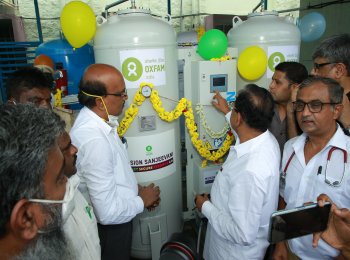
Oxfam India’s First Oxygen Plant in Tumkur
The 300 LPM Oxygen plant, set up under Oxfam India’s COVID-19 response ‘Mission Sanjeevani’, at the 80-bed government hospital at Koratagere in Tumkur in Karnataka will cater to people from 46 surrounding villages. Tumkur MLA, Dalit Leader and former deputy chief minister of Karnataka, G Parameshwara inaugurated the Oxygen plant on 26 July 2021.
Read More
02 Aug, 2021
New Delhi
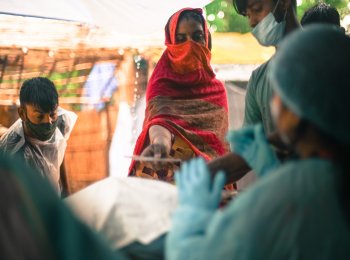
Delivering Hope and Dignity to Refugees
Oxfam India has been supporting communities worst affected by the pandemic, across India, for over a year now. At the heart of our response are communities already living on the margins such as daily wage workers, transgender communities, informal sector workers and differently abled people. We partnered with HAI to extend our support to refugees from Pakistan living in Delhi.
Read More
07 Jul, 2021
Assam
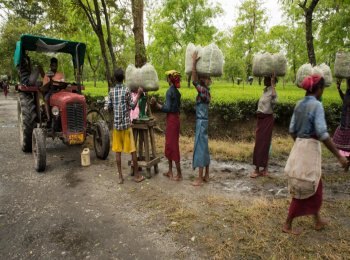
Labour Codes Training for Assam Tea Garden Workers
The Labour Codes will have significant impacts on the informal sector workers including the tea garden workers. A need was thus felt to train the workers around these Codes. The existing Plantation Labor Act, 1951 which used to govern the tea industry will be subsumed under these Codes. Different aspects of the Act will now feature in these four codes. In the above context, Oxfam India in collaboration with Centre for Workers’ Management initiated a training programme for workers across seven districts of Assam, during the month of June.
Read More
13 Apr, 2021
Sitamarhi, Bihar
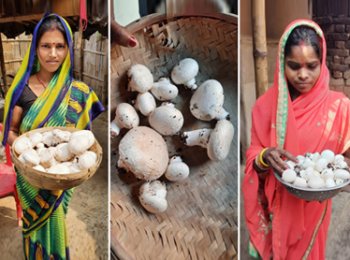
Mushroom Cultivation Makes Communities Resilience
Oxfam India has been working with these communities through its disaster risk reduction programme since 2012. It was in 2017 that it finally started its livelihood intervention programme — mushroom cultivation and vermicomposting — with the women from the Musahar community. This proved useful during the lockdown in 2020.
Read More
