


Coronavirus: Oxfam India responding with relief in 14 states
- By Oxfam India
- 17 Apr, 2020
In the last one week of starting its humanitarian relief response to fight coronavirus, Oxfam India along with its partners have provided dry ration to around 40,000 poor people, delivered 40,000 cooked meals to migrant labourers, distributed 2660 safety kits to frontline workers and reached 4.5 million people through awareness initiatives in India.
Oxfam India is on the ground responding with food (dry ration and hot cooked meals), Personal Protective Equipment (PPE), and Safety kits in 8 states – Delhi, Bihar, Uttar Pradesh, Maharashtra, Kerala, Tamil Nadu, Odisha and West Bengal. In the coming weeks, Oxfam India aims to broaden its response to include 6 more states— Assam, Jharkhand, Telangana, Karnataka, Gujarat and Chhattisgarh.
40,000 people have been provided dry ration, which would help them survive for a month, in states of Maharashtra, Uttar Pradesh, Bihar, Delhi, Odisha, Kerala, Tamil Nadu and West Bengal. One dry ration kit (which varies according to states and regional food requirements) fulfils the food requirements of one household for a month. A household is an average family of five people.
Nearly 40,000 packets of ready-to-eat cooked meals have been distributed among migrant workers, daily wage earners, construction workers and the homeless in Kerala, Tamil Nadu, Delhi and Maharashtra. In Kerala, dry ration has been provided to stranded migrant workers from West Bengal, to enable them to run their kitchen for a few days.
“Coronavirus threatens livelihood, survival and future of millions of poor in India. We are deeply concerned about the exponentially greater burden on people from low-income households. In the last week, we have been flooded with requests for food from different parts of the country. Our teams and partners have worked round the clock to reach out to a significant number of families in need. We have provided training to our partners and staff to ensure their safety and safety of those they are reaching out to,” said Pankaj Anand, Director of Programme & Humanitarian Response at Oxfam India.
The response focuses on Capacity Development of local stakeholders, Food Security and Water, Sanitation and Hygiene (WASH) to ensure the Right to Survival for those worst affected - migrant workers, stranded daily wage earners, agricultural workers and other vulnerable groups including women and girls.
"The challenge posed by the pandemic before everyone is huge. We fear that the virus will push people further into poverty. The needs of the people, particularly migrant workers and daily wage earners require immediate attention by the government. While a large number of efforts are underway to address the urgent need for food and shelter, more needs to be done. We urge people, corporates, philanthropies and international community to help us reach many more vulnerable and poor families in need of care,” said Oxfam India CEO Amitabh Behar.
“There is no work, no source of income for us since the lockdown has started. We would die of hunger; our construction company is not giving us anything to eat. We have been provided food twice and water bottles. The support is helping me and my children survive,” said Rajini, 40-year-old construction worker from Odisha, stranded in East Delhi and receiving support from Oxfam India’s partner EFRAH.
Through mobile vans and announcements in rural areas, Oxfam India is creating awareness regarding the correct symptoms, prevention and precaution. We reached 4.5 million people in Eastern Uttar Pradesh through the intiative. The Uttar Pradesh Government has requested for similar initiatives to be rolled out in other districts of the state.
Oxfam India is also experimenting with alternative messaging systems that include microware software for mass messaging of preventive efforts, across Assam and Uttar Pradesh. In Uttar Pradesh this has been implemented in collaboration with Uttar Pradesh State Disaster Management Authority (UPSDMA) and Lucknow University. The messages are shared with around 600 volunteers across the state who further share it within their network.
Nearly 800 individuals across 14 states – including all Oxfam staff, partners and volunteers have been trained prior to launching the response on Self Protection and Protecting Others, WASH (Water, Sanitation and Hygiene), Gender Equality, Social Protection and Food and Livelihood Support. This was followed by state-wise training sessions for additional partners and volunteers with a focus on response, specially related to contactless distribution. We are taking critical steps to protect the people in the communities we serve, and to safeguard our staff and those on the frontlines of our COVID-19 response.
Oxfam India and local partner NGO RIGHTS in Thiruvananthapuram is supporting around 100 migrant labourers and 1500 migrant workers across Kerala.
"Stranded labourers required basic food items like rice, onions, potatoes, spices, soaps and washing powder. We managed to find a vendor with great difficulty and explained the situation the labourers are faced. The vendors agreed to provide us supplies and we paid them through their bank account and they delivered the supplies to the stranded labourers. We are provided dry packages wherever it is not possible to provide cooked meals," said Suneetha who is working with local partner RIGHTS in Kerala.
ABOUT OXFAM INDIA
During the last ten years, Oxfam India has responded to around 40 humanitarian disasters across the country and directly provided relief to nearly 1.5 million people. Oxfam India’s humanitarian response is guided by the needs of the most vulnerable and marginalized communities in disaster affected areas.
Oxfam has been working in India since 1951 and has responded to numerous humanitarian disasters. Drawing from our substantial expertise in Water, Sanitation and Hygiene (WASH) and Public Health, and lessons learned from past crises, we have hit the ground running.
TO DONATE PLEASE CLICK https://bit.ly/India4All
For media queries please contact:
Himanshi Matta, Media Relations Lead; himanshi@oxfamindia.org; Mobile: 91-8860182310
Laressa A. Gomez [Programme Coordinator - Humanitarian Communications]: +91 9831144091 | laressa@oxfamindia.org
Recent News
Related Stories
09 Aug, 2023
Koraput, Odisha
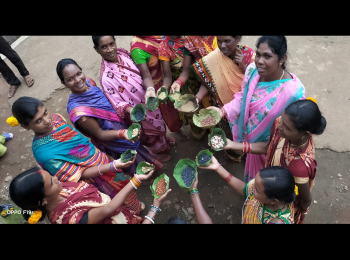
Community Seed Bank: Beyond Preservation And Conservation
Women from the indigenous communities have been playing a critical role in conserving the seeds. On World Indigenous Day, we look at the community seed bank, promoted by Oxfam India-SDMC Trust project, that has ensured large scale exchange of quality native seeds. In the 40 villages and 2000 farmers that we work with, we have ensured conservation and multiplication of native seeds at the community level through custodian farmers.
Read More
07 Jul, 2023
Odisha
A Fresh Start For Pinky
Pinky received all her streedhan back from her in-law’s house due to the mediation by the counsellors at the Bijayini Centre in Nayagarh. This has not just helped her get out of an abusive marriage but also given the confidence of carving her own future.
Read More
05 Jul, 2023
Nalanda, Bihar
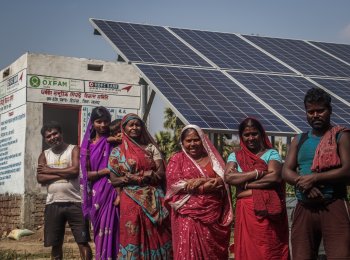
Solar Solution for Bihar Farmers
A solar-based lift irrigation system in Indaut village was set up through Project Utthan, an Oxfam India-HDFC Bank project. The system can irrigate 25 acres of land, which means farmers can irrigate their land independent of the electricity supply in rural Bihar. The system has been installed in areas where land lay bare due to lack of irrigation facilities. Most farmers in the area could not afford their own pump and boring instruments, making irrigation a significant challenge.
Read More
03 Jul, 2023
Kalahandi, Odisha
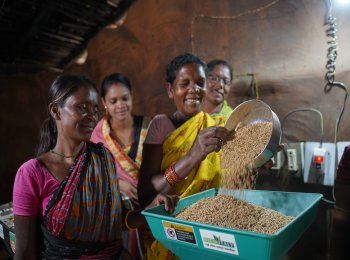
Araskupa Processing Unit: A Blessing In Disguise
Through Project Utthan, an Oxfam India-HDFC Bank’s HRDP initiative, a 10-member SHG was provided two machines—a 2-in-1 pulveriser and a huller. The former, fitted with blades of different sizes, is for grinding wheat, turmeric, millets, cumins, chilies and other spices. The latter is the paddy processing unit. Though the huller processes about 1.5 quintals of paddy an hour but it has made paddy processing easily accessible to not just Araskupa but six other neighbouring villages (some of them with very remote homes and no access to electricity).
Read More
