


COP26: Failure To Confront Both Climate Crisis And Inequality Will Be Catastrophic For India
- By Abhirr VP
- 30 Oct, 2021

Failure To Confront Both Climate Crisis And Inequality Will Be Catastrophic For India
30 Oct 2021 | As the world attends the COP26 summit in Glasgow to find ways to keep the planet liveable in the future, the stark reality facing developing countries like India is that there is nothing equal about the Climate crisis. Oxfam India calls on the Government of India to tackle the twin challenges of climate and growing inequality together at the COP26 summit. A failure to confront extreme carbon inequality at this historic juncture will only mean enabling prevalent injustices that will be catastrophic for India.
Oxfam International’s 2020 briefing ‘Confronting Carbon Inequality’ shows that over the past 20 to 30 years, our limited global carbon budget was squandered in the service of increasing the consumption of the already affluent, rather than lifting people out of poverty. The richest 1% (around 75 million people) were responsible for twice the cumulative emissions of the poorest 50% (3.1 billion people). The two groups that suffer this injustice worst are those least responsible for the climate crisis- poorer and marginalised people and our future generations.
“Climate change is happening now. It is already causing extreme weather that is pushing millions of people deeper into hunger and poverty, even though they did the least to cause this crisis. India must demand that developed countries provide more for climate finance to adapt to the impacts of climate change and compensate for loss and damage and enable a just transition”, said Amitabh Behar, CEO of Oxfam India.
“We are dangerously close to missing the 1.5 degrees Celsius goal of the Paris Agreement. This is bad news for the entire world but worse for particularly vulnerable countries like India which is already experiencing the impacts of a world that is 1.1 degrees Celsius hotter now. The Government of India must demand that developed countries bring down their per capita material and carbon footprint to global average by 2030”, said Amitabh Behar.
India is one of the most unequal countries in the world and it is imperative that the limited carbon budget is used to lift millions of people from poverty and achieve decent standard of living instead of expanding the consumption of a minority of its very richest people. The same argument is applicable to the Global North-South equity since western countries are still consuming much more than what could be considered fair or sustainable.
Oxfam India demands that COP26 address this issue of consumption head on and not as an afterthought. After all, the Global North is responsible for 92% of emissions in excess of the planetary boundary and still continues to consume (and waste) unsustainable amounts of materials and energy. India’s environment minister is correct in saying that COP26 should focus on climate finance, capacity building and transfer of technologies from the developed nations so that poor and developing countries like India can make the necessary transition to a low carbon economy in the small window of time that is available.
“There is also a need to prepare and plan for a ‘Just Transition’ to ensure that the millions of unorganised workers and local communities dependent on the current economy do not suffer due to the eventual and much needed closing of mines and power plants. As this plays out in the next 20-30 years, it is important to ensure social justice is done in this shift towards a renewable future crucial for a climate resilient society”, said Sandip Chowdhury, Project Officer, Access to Energy at Oxfam India.
“India has the world’s largest youth population. The future of hundreds of millions of youth are at stake who are bequeathed a hostile earth by the previous generations. We should remember that climate change is a symptom of a flawed economic system and we need deep, fundamental changes in it. We need to do this with a speed and scale that will be meaningful to avert the worst impacts, mostly on the poor and marginalized communities of the world who did not have much to cause climate change in the first place”, said Amitabh Behar.
About Oxfam India
Oxfam India is a movement of people working to end discrimination and create a free and just society. We work to ensure that Adivasis, Dalits, Muslims, and women and girls have safe violence-free lives with freedom to speak their mind, equal opportunities to realize their rights, and a discrimination-free future.
📢Oxfam India is now on Telegram. Click here to join our Telegram channel and stay tuned to the latest updates and insights on social and development issues.
We work towards fair sharing of natural resources and ensuring better livelihoods for forest-dependent communities
Read MoreRecent News
Related Stories

17 Aug, 2020
Kandhamal, Odisha
Certainly Positive, In Her Resolve
In Kandhamal, our partner NGO SWATI identified the most marginalised, distressed, and vulnerable families. Nirupama’s was one of them. In fact, when Oxfam India—SWATI reached her, she had run out of medicines. As soon as the money reached the bank, she withdrew the money. First she bought her medicines and then she went about investing in what would be most useful to ensure sustainable income for the family.
Read More
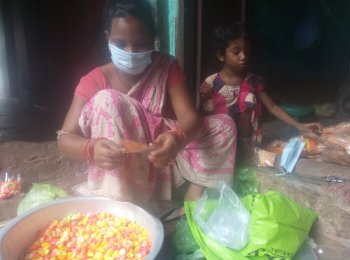
16 Aug, 2020
Khordha, Odisha
Money Support Gives Wings to Ideas
Though the cash was given for families to meet their immediate needs, Madhushmita had something else planned. She started a business from the very next day — she started selling ready to eat items like nali papad, fried groundnuts and cashews.
Read More
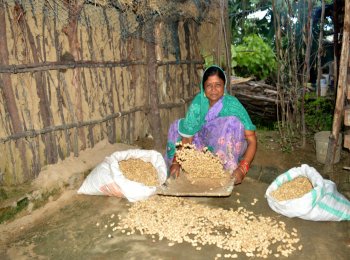
11 Aug, 2020
Puri, Odisha
Cash Support Helps Restart Business
The Rs 5000, though a small amount, helped Gitanjali to start her shop again. She bought raw groundnut with the money and started processing it for sale. She also bought masks and sanitiser to comply with the lockdown rules.
Read More
07 Aug, 2020
Assam
Locked Down in Tea Estates
Rantu Munda, a 32-year-old in the tea garden has had no work since the lockdown as he is a temporary worker. With no work in the tea gardens, and the lockdown restricting their movement, they were stuck without income and were running out of food. "For us, hunger could be more deadly than the coronavirus,” he said.
Read More
