


Ancestral Property: SC Judgement Welcome, Time to Address Regressive Norms as a Society
- By Oxfam India
- 12 Aug, 2020

Oxfam India welcomes the Supreme Court judgement of 11 August 2020 which has chipped away one more barrier women faced to equal rights in ancestral property. The judgement is significant as it gives daughters right to their ancestral property irrespective of whether the father was alive in 2005. The year 2005 is important because the amendment to the Hindu Succession Act, 1956 making daughters ‘coparceners’, i.e., equal rights holders as sons in an undivided joint family property, was passed in the year 2005. This itself was a landmark amendment for women’s equal right to property. However, a Supreme Court judgement of 2015 restricted this right, and where fathers had died before 2005, daughters could not equally inherit ancestral property. The judgement has done away with this restriction.
Oxfam India’s work in the community shows that both social and legal barriers contribute to women not being able to access property rights.
"Laws are but a product of patriarchal society and hence breaching this fortress is especially important. This judgement does exactly that. However social norms such as the ritual of ‘Haq Tyaag’ widely practiced in Rajasthan mark the reluctance in society to accept women’s equal right to property," Ranu Bhogal, Policy Research and Campaigns Director at Oxfam India said.
'Haq Tyaag' is the celebration of a married daughter giving up her property for her brother! Such rituals abound in North India, and in most parts of India women never exercise their right to property lest they lose their ‘maika’ or natal home.
One in three women in India face some form of violence, the largest proportion being of domestic violence. Often, natal homes are the only recourse women have in such circumstances. By traditional social norms, neither the marital nor natal home belongs to the woman—one reason why women have had to put up with abusive relationships.
"As we celebrate this judgement, we must recognise that as a society we still need to traverse some more distance. Social norms continue to override the possibilities provided by law. To make this law socially acceptable a lot more work will be needed. For example, property rights are crucial for single, unmarried women, which is often neglected. Often women are expected to marry as a form of social security. The practice of kanyadaan and dowry needs to be done away with. That will truly enable the implementation of this right. Till we achieve that, women will continue to be dissuaded from demanding their right and the male heirs will justify denying these rights. The courts have done their job. The rest of the work has to be done at the societal level," Ranu Bhogal said.
Legal changes, such as this judgement, have a big role to play also in changing these regressive social norms. We need to create an enabling environment for women and girls to exercise their rights!
Oxfam India works in five states — Bihar, Jharkhand, Uttar Pradesh, Chhattisgarh and Odisha — to help young people challenge social norms and reduce acceptance of gender inequality/gender-based discrimination.
For more information, please contact:
- Savvy Soumya Misra (Media): savvy@oxfamindia.org
- Amita Pitre (Gender Justice Lead): amita@oxfamindia.org
Note to the Editors: Oxfam India’s spokespersons are available for interviews. To arrange interviews or further queries please contact Savvy Soumya Misra: savvy@oxfamindia.org
Recent News
Oxfam India’s Reaction to Budget 2021-22
03 Feb, 2021
The Inequality Virus—India Supplement 2021
22 Jan, 2021
New Education Policy 2020
01 Aug, 2020
Related Stories
22 Dec, 2022
Koraput, Odisha
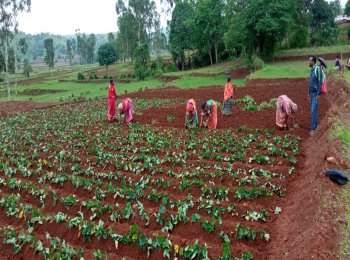
Sweet Potato For A Sweet Future
At the recently concluded PARAB 2022 our sweet potato chips (the purple coloured Bhu Krishna variety) were a huge hit. Though one of the dominant crops in the adivasi belt, sweet potato is only now being seen as a crop that will bring higher returns to the small and marginal farmers.
Read More
24 Nov, 2022
Nalanda, Bihar
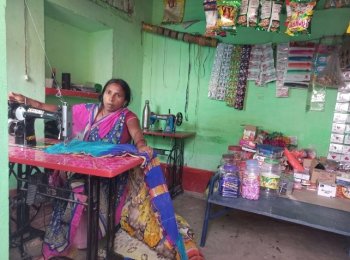
Cash Boost For Entrepreneurship
Madhuri joined the Producer Group as well as the VDC in March 2021; she was keen to be a part of Project Utthan and explore livelihood opportunities. Through HRDP we made conditional cash transfer of Rs 10,000 in November 2021. She took a store on rent at Rs 550 per month and bought a new electric sewing machine. She hasn’t looked back since.
Read More
23 Nov, 2022
Nalanda, Bihar
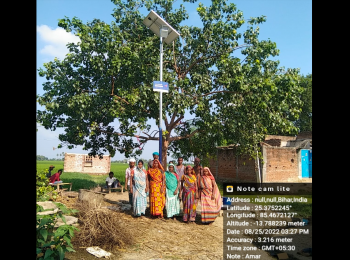
Solar Street Lamps Light Up 15 Villages
Livestock theft and the safety of the women(which in turn limited their mobility) was a matter of concern for the villages. Until Oxfam India-HDFC Bank’s Holistic Rural Development Project (HRDP)* initiative stepped in with a creative and sustainable solution. Since 2020, 165 solar lights were installed in the 15 HRDP villages in the Harnaut, Hilsa, and Nagarnausa blocks of Nalanda district. These lights have reduced the dependency on the sporadic electricity supply in the village and reduced its carbon footprint.
Read More

23 Nov, 2022
Nalanda, Bihar
Farmer Field School: A Centre For Learning
When we started setting up Farmer Field School (FFS) under HRDP, Abhay became our lead farmer and his field became a centre for learning. Oxfam India with support from HDFC bank has established 30 such Farmer Field Schools in 15 villages in three blocks in Nalanda District. These Farmer Filed Schools have been developed as centres of learning in these villages. Abhay was supported with various amenities such as green net (used to grow saplings in controlled temperature), mulching, and high yielding seeds. He was given on-field training from agriculture experts; he was also trained and supported to sow using the zero tillage machine.
Read More
