


Oxfam India organises national consultation on 'Making India’s National Disaster Management Plan Inclusive'
- By ursila
- 30 Nov, 2018
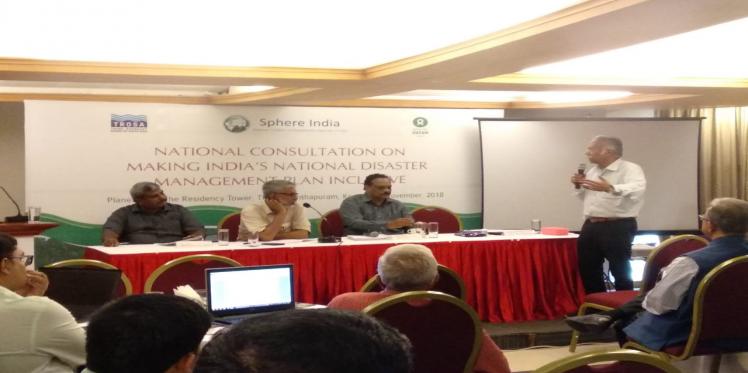
The National Disaster Management Authority has updated the National Disaster Management Plan (NDMP) and the draft updated NDMP, 2018 document has been kept in public domain for review and feedback with 25th November, 2018 as the submission deadline.
In this regard, a national consultation on ‘Making India’s National Disaster Management Plan Inclusive’ has been organized by Oxfam India in collaboration with Sphere India, Transboundary Rivers of South Asia (TROSA) and Inter Agency Group, Kerala at the Residency Tower, Thiruvananthapuram Kerala on 23rd November, 2018. The National Consultation was inaugurated by Mr. P.H Kurian IAS, Additional Chief Secretary, Revenue and Disaster Management, State Relief Commissioner and Convenor, Kerala State Disaster Management Authority in the presence of Dr. Anil Kumar Sinha, IAS (Retd), founder Vice-Chairman, Bihar State Disaster Management Authority, Government of Bihar; Prof. Vinod Menon, Founder Member, National Disaster Management Authority, Government of India; and 40 other participants from various non-government organizations working in the field of disaster management and experts in the field from the states of Assam, Bihar, Kerala, Odisha and Uttar Pradesh.
The objective of the National Consultation was to discuss the various chapters of the draft NDMP, 2018 and suggest modifications to make the draft NDMP, 2018 operationally robust and strategically comprehensive to address the concerns of social inclusion, transboundary disaster risk reduction, improved coordination, addressing regional/inter-state diversities, accountability to affected population and the role of civil society organizations. This is envisaged to make India’s Draft NDMP, 2018 incorporate the spirit of the three global framework; Sendai Framework for Disaster Risk Reduction (SFDRR, 2015-2030), Paris Agreement on Climate Change (COP 21) and Sustainable Development Goals (SDGs). Through this process, the Government of India’s draft NDMP 2018 is expected to get recognized as a good practice initiative which could inspire other governments in the South Asian Region and also within the country to improve resilience building of communities affected by natural disasters, climate change and extreme events.
In his welcome address, Mr. Andrio Naskar, India Humanitarian Program Manager, Oxfam India observed that the draft NDMP 2018 provides an opportunity to ensure that this plan is based on the contextual reality of the complex inter-relationship between poverty and inequality in disaster prone and disaster affected areas Mr. Vikrant Mahajan, CEO, Sphere India emphasized on the aspects of improved coordination for preparedness, response and recovery and argued for a better GO-NGO coordination mechanism within the responsibility framework defined in the draft NDMP 2018. Prof. Menon stated that Social Inclusion’ is one of the five core pillars of the draft NDMP2018 and reflected that the consultative process done in 11 districts and in 4 states (Assam, Bihar, Odisha and Uttar Pradesh) helped to compile the aspirations of civil society organizations assisting the strengthening of multi-hazard preparedness, disaster risk reduction, emergency response capacities, rehabilitation, reconstruction and recovery through an inclusive multi-stakeholder engagement. Mr. Anil Sinha highlighted the need to strengthen the institutional mechanisms at the national, state, district and sub-district levels for mainstreaming disaster risk reduction in development planning Mr. P.H Kurian shared the complex challenges in rehabilitation, reconstruction, and recovery in the recent devastating Kerala floods and landslides. He argued for improving the disaster management processes especially by restoring disrupted livelihoods and repairing damaged infrastructure and public assets. He felt that the Government of India must review the memorandums submitted by the disaster affected state governments in a time bound manner and cater to the needs of the disaster affected communities in a prompt and efficient manner.
The consultation involved various structured methods of group discussion and open sharing and the participants discussed the various components of the draft NDMP 2018 and suggested several practical recommendations. The findings and recommendations from these consultations will be shared with the National Disaster Management Authority.
Recent News
Related Stories
18 Apr, 2022
Lakhimpur Kheri, Uttar Pradesh
Resource Centres Augment Income Of Women Farmers
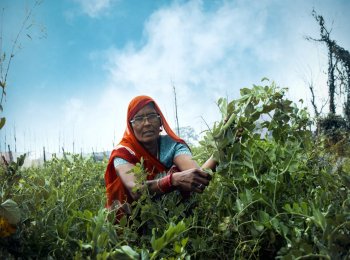
In November 2020, members of the women farmer group ‘Gulab Mahila Kisan Samooh’ started a resource centre. Till date, the women farmers have accumulated Rs 8020 in this bank account. Among the villages in the project area, 11 women farmers’ resource centres have been formed. 285 women farmers associated with this project are availing of the direct benefits of resource centres.
Read More
05 Apr, 2022
Kalahandi, Odisha
Women Mushroom Farmers Cultivate An Empowered Future
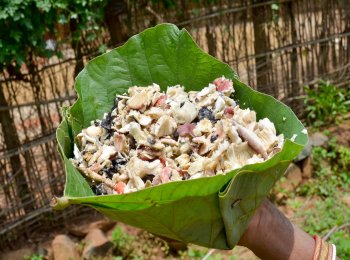
Women mushroom farmers of Borbhata shared that mushroom cultivation is a profitable form of farming unlike traditional crops and vegetables. At present, the local market is growing and there is no problem in marketing mushrooms after harvesting. Through mushroom cultivation, the Borbhata women’s collective is headed towards a successful group enterprise. They have also become capable in meeting their household-level nutritional and financial needs.
Read More
15 Mar, 2022
Kalahandi, Odisha
From a Survivor of Child Marriage to a Women’s Rights Champion
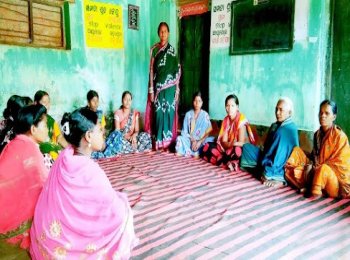
Shivaratri Patra is a survivor of child marriage who went on to become a pillar of support for the women in her community. She challenged the gender-based power structures in her village and ensured that the women and girls in her village take charge of their own destiny.
Read More
07 Mar, 2022
Varanasi, Uttar Pradesh
Mission Sanjeevani Reaches The Musahars
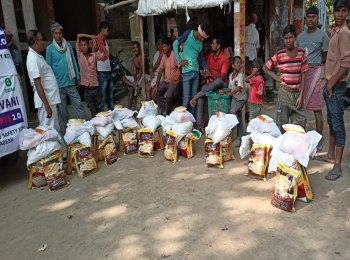
Musahars are a community living in miserable conditions, Covid or no Covid. Priyansh Tripathi travels to Chhateri village where the musahar community continues to live in abject poverty and are worse off after the pandemic. Through Oxfam India's Mission Sanjeevani, dry ration and safety kits were distributed to the 500 families in the village. The ration kits including rice, dal and oil, were designed to cater to the needs of a family of five for a month.
Read More
