


Bihar
Bihar has a total population of 10.38 crores and a total area of 94,163 square kilometres, which accounts for about 2.88% of India’s land mass and about 8.58% of the country’s population (Census of India, 2011). Geographically Bihar has its total size of 94,163.00 sq. km. In terms of population density, Bihar comes at the 3rd position of all states of India. Enriched with fertile lands in its plain areas, Bihar is drained by the Ganges River, including its tributaries Gandak and Kosi. The climate of Bihar is a part of the climatic pattern of the Indian subcontinent. It enjoys a continental monsoon type of climate owing to its great distance from the sea. Approximately 7.2% of state’s total geographical area is covered by moist deciduous forest area which comprises of 6,764.14 km.
The challenges of development in Bihar are enormous due to neglect which has resulted in persistent poverty, lack of infrastructure and weak governance structures. No doubt, strong and serious efforts have been initiated in recent years for a resurgent Bihar with a renewed focus on improved law and order, improved physical infrastructure and improved governance. However, it is evident from recent data that the state is still lagging behind on key social indicators; the current situation of women and girls is marked by poor literacy levels, low enrolment rates in school, high dropouts from school; poor health and nutrition status, reflected in poor access to and use of quality health and nutrition services and inadequate information during all phases of life; high fertility in general-poor access to services/options, reflected in low contraceptive prevalence and high unmet need in the state; high incidence of physical and sexual violence against women and poor recourse to remedial measures by them-including widespread use of sex-selective practices and imbalanced sex ratio, weak decision-making role at family level and non-availability or poor access to credit. The above analysis recognizes that these indicators not only adversely affect the women’s overall quality of life but also hinders the overall development of the individual, society, state and nation.
Few facts and figures
- The Multi-dimensional Poverty Index (MPI) stands at 0.246 and the proportion of the poor population in Bihar is 52.2. Of them, 22.1 per cent come under severely poor population.
- The Per Capita Development Expenditure (PCDE) of Bihar has grown at an annual rate of 15.8 per cent, compared to 13.7 per cent for all-India, between 2011-12 and 2017-18.
- Agriculture and the allied sector contributes 18.9 per cent of the GSDP. The rate of growth of Agriculture and allied sector has been 5.4 per cent during 2005-10 and 3.7 per cent during 2010-14.
- In Bihar, Farm holdings are small and scattered. There are about 1.61 crore farm holdings of which 91 per cent is marginal.
- About 31% of households did not own any land other than homestead and did not do any cultivation on their homestead. As per Census 2011, 17.83 million rural people in Bihar are working as agricultural labourers and most of them are landless.
- The land ownership pattern in Bihar remains acutely skewed even now. The Agriculture Census 2010-11 shows that 96% of marginal (<1ha) and small (1-<2 ha) farmers have access/ control 76% of the total land.
- As per the Agricultural Census of 2010-11, only 14% of the total operational holdings and 13% of the land area are under the control of women in Bihar.
- Only 4.91% of the plots have documents that include women’s names and only 7% of the women have plots titled solely under their names –HSAA study Landesa Dec 2013
- The expenditure on education in Bihar increased from INR 10,214 crore to INR 26,394 crore during the same period, registering an annual increase of 14.4 per cent, higher than the all India average of 12.5 per cent. Likewise, the rate of growth in health expenditure in Bihar during these seven years was also high at 22 per cent.
- The state has achieved substantial progress in health outcome in recent years. The Life Expectancy at Birth for the state has increased substantially from 65.8 years in 2006-10 to 68.7 years in 2012-16, registering an increase of 2.9 years over a period of 6 years.
- In recent years, the number of institutional deliveries in Bihar has also increased remarkably, from 14.07 lakh in 2011-12 to 16.37 lakh in 2017-18, registering a growth of 16.3 per cent.
Jharkhand
Jharkhand was carved out from the state of Bihar and became a separate state on 15th November 2000. The reasons underlying the creation of Jharkhand as a separate state appear varied and complex, but one major reason seems to protect the culture, identity and rights of tribals and forest dwellers over land and forest resources (Horo, 2013). The literal meaning of Jharkhand is a 'tract of a forest' which is located in the Chhotanagpur and its neighbouring areas. Around 29.55 % of the land in Jharkhand is under forest which is resided by Scheduled Tribes and other forest dwelling communities (Forest Survey of India, 2017). It is an important state from the viewpoint of both tribal population and minerals.
Tribals constitute 26.3 per cent as per the 2011 Census of Government of India and as per the information available at the Jharkhand State Mineral Development Corporation Limited (JSMDC), the state contains 40 per cent of India’s precious minerals like Uranium, Mica, Bauxite, Granite, Gold, Silver, Graphite, Magnetite, Dolomite, Fireclay, Quartz, Feldspar, Coal, Iron and Copper.
The resource-rich state has witnessed a massive displacement of people over the last seven decades. A study done by Gladson Dungdung (2009) points out that since independence, 17,10,787 people were displaced while acquiring 24,15,698 acres of their lands for setting up the Power Plants, Irrigation Projects, Mining Companies, Steel Industries and other development projects in Jharkhand. The figure of displacement varies from 1.5 million to 3 million people (Lok Sabha Secretariat, 2013). The state has also witnessed the highest number of migrants in the country. The economic survey of India has revealed that Jharkhand lost close to 5 million of its working-age population between 2001 and 2011 due to migration. More than 5% of the working-age population migrates annually to other states in search of better employment opportunities, education or because of loss of traditional livelihood. The net outflow of the working age population is the highest among states in the country (Economic Survey of India, 2016-17).
It has also been found that the majority of the migrants from Jharkhand belong to tribal and Dalit communities who have witnessed largescale displacement in the name of development since independence (Bhagat, 2016). The agrarian crisis has increased over the years as efforts towards better irrigation facilities, procurement of produce at a minimum support price or creation of off-farm employment opportunities in rural areas have not been paid adequate attention by successive governments (Hill, 2017). The state is also riddled with left-wing extremism and since the bifurcation of the state of Bihar into Bihar and Jharkhand, Naxalite violence, especially that of the Maoist Communist Centre (MCC), has shifted to Jharkhand, which is rich in mineral and forest wealth (Mishra & Ghosh, 2003).
Migration, violence due to Naxalism, agrarian crisis and displacement due to mining and other development projects and a host of other factors led to alienation and deprivation of forest dwellers from their land and resources in Jharkhand. In such circumstances, the enactment of Scheduled Tribes and Other Traditional Forest Dwellers (Recognition of Rights) Act 2006, popularly known as Forest Rights Act (FRA) raised hope among forest dwellers and came with the objective to bring justice to these people, who have been deprived of their land rights for centuries.
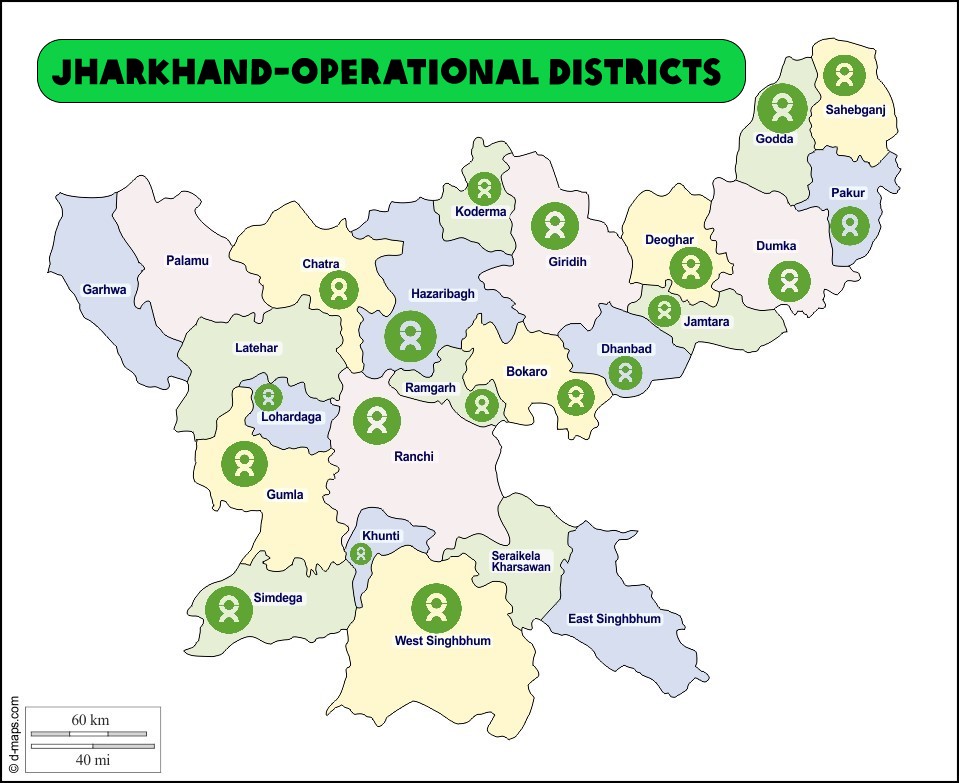
Oxfam India’s thematic programmes in Bihar and Jharkhand
1. Financing for Development and Universal Essential Services- Education
The focus of the education programme is to mainstream Dalit, Tribal and marginalised children into the public education system and thereby reducing Inequality in Education. Community Institutions are strengthened such as School Management Committees, youth engagement for spreading awareness on education, strengthening community-based monitoring system through training of Mata Samiti, Adolescent and Women’s group. State level advocacy and subsequent dialogue involving all stakeholders including Government and Panchayati Raj Institutions through Right to Education forum are done to improve the educational status in Bihar & Jharkhand.
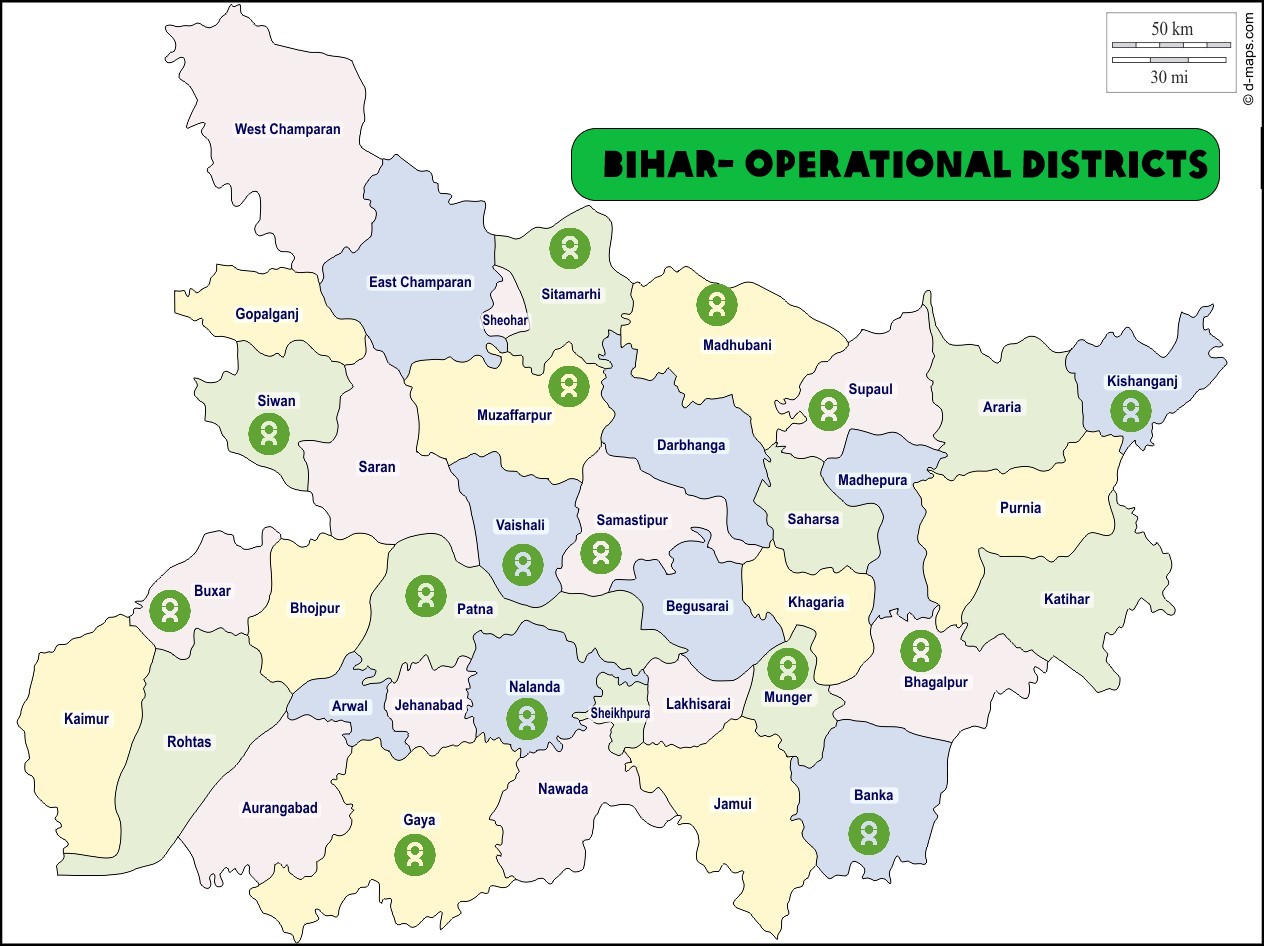
Oxfam India through its partners, Dalit Vikas Abhiyan Samiti (DVAS) and Life Education and Development Support (LEADS), have been able to reach out to 4,546 Households encompassing 11,255 direct beneficiaries across 25 villages & Primary schools from Dalit, Tribal and Muslims in Samastipur, and Khunti district of Bihar & Jharkhand.
2. Financing for Development and Universal Essential Services- Health
Under our health programme, the focus is to reduce Inequality in provisioning and access to quality health care services provided by the government under various schemes. Oxfam India has collaborated with Jan Swasthya Abhiyan in Bihar & Jharkhand to build a narrative on Inequality and have been running a campaign on Access to Free Medicines purpose of which is to provide free essential medicines in all public health facilities. Community intervention includes strengthening Women and Adolescent groups (community-based groups) on maternal and child health services through training and awareness thereby establishing a robust community-based monitoring system.
Focussed intervention through our partner, CHARM covers 20 urban slums of Patna covering 4,485 households and through JSA covering all 38 districts and 28 districts of Bihar and Jharkhand.
3. Advancing Gender Justice
Under the Gender Justice theme, Oxfam India works towards changing such social norms which underpin violence against women and girls. We have built a strong alliance in the state with CSOs, networks and alliances to form an advocacy group and engagement with the government and stakeholders on the issue of child marriage and domestic violence. Oxfam India directly engages with youths in 7 colleges of Patna & Ranchi. We run an online course on men and masculinities in collaboration with the Centre for Health and Social Justice. We also run a film appreciation course on understanding Gender in Indian Cinema and the stereotypical roles which establishes gender identities with the youth groups. In the rural areas with our partners, Oxfam India works in 280 villages where we work with men, women, boys and girls groups on issues of gender, violence against women. Apart from training and awareness programmes, organizing youth festivals are a part of our regular programme.
Through our partners, RAHAT, Sakhiree, Lok Swar, SMVM and Jumav Manch network we have been able to reach out to 20,800 women, girls and men from Dalit, Muslim and Tribal community in Bihar and Jharkhand.
4. Economic Justice - Economic Empowerment of Women Farmers
- Agriculture sector employs 80% of all economically active women in India; they comprise 33% of the agriculture labour force and 48% of the self-employed farmers.
- In India, 85% of rural women are engaged in agriculture, yet only about 13% own land. The situation is worse in Bihar with only 7% of women having land rights, though women play an important role in various agricultural activities.
- Economic Survey 2017-18 says that with growing rural to urban migration by men, there is ‘feminisation’ of the agriculture sector, with an increasing number of women in multiple roles as cultivators, entrepreneurs, and labourers.
- Bihar’s agriculture sector is highly feminized, with 50.1% of the total workforce engaged in farming activities being women (‘Women in the informal economy of Bihar’ – ADRI)
- 70% of all women engaged in cultivation are from households witnessing migration. (Report released in 2014 by IHD, New Delhi)
- About 60-80% of food is produced by rural women.
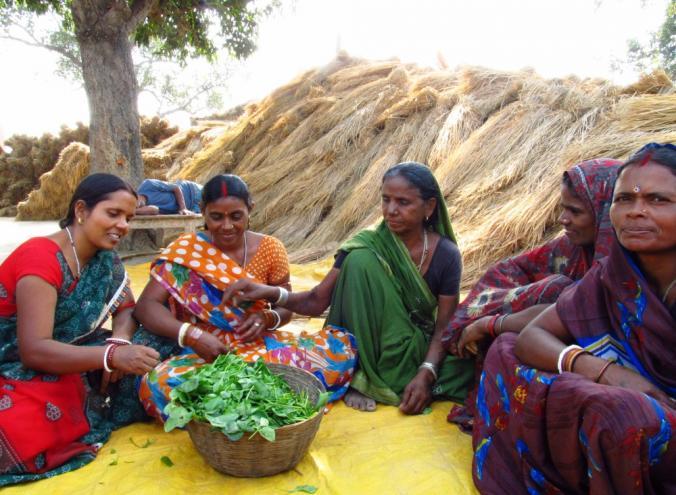
Women farmers in India perform most of the big farming jobs, from sowing to harvesting, yet their access to resources is less than their male counterparts. Closing this gender gap is essential in order to accelerate the pace of growth in the agriculture sector. To address the women farmers concern and contribute towards economic empowerment of women farmers, Oxfam India in association with Implementing partner SEWA is working with around 3,000 women vegetable growers in Munger and Bhagalpur districts of Bihar with the support of its implementing partner SEWA Bharat. (Coverage: 35 villages, 17 Panchayats, 6 Blocks, 2 districts).
Oxfam India focuses on:
- Promotion of a women farmer’s cooperative with 3,000 women farmers
- Registered Farmer Producer Organization (Karn Krishi Utpadak Sangathan) and strengthening their governance
- Training of women farmers on 10 packages of practices for sustainable agriculture
- Linking the women farmers with various government schemes and programmes
- Linking women farmers with local traders and also facilitating a local market space for them
5. Economic Justice – Fair Sharing of Natural Resources
- The vulnerable and marginalised forest-dependent communities in Jharkhand face problems in accessing their rights over forest land and resources as the state has been very slow in recognising the rights under The Scheduled Tribes and Other Traditional Forest Dwellers (Recognition of Forest Rights) Act, 2006. Whilst FRA provides an opportunity to strengthen rights, its implementation so far has been weak.
- Tribal constitute 26% of the total population in Jharkhand with 29.55% of land under forest (Census, 2011 and Forest Survey of India, 2017).
- Effective implementation of FRA would result in recognizing 5,236,400 acres of minimum potential forest area for the forest dweller across Jharkhand (CFR-LA 2016).
- Since independence, 17, 10,787 people were displaced while acquiring 24, 15,698 acres of land for setting up different projects such as Power Plants, Mining and Steel.
- The economic survey of India has revealed that Jharkhand lost close to 5 million of its working-age population between 2001 and 2011 due to migration (Economic Survey of India, 2016-17).
- More than 5 % of the working-age population migrates annually to other states in search of better employment opportunities, education or because of loss of traditional livelihood (Economic Survey of India, 2016-17).
- Even after twelve years of FRA implementation in the state, its only 17 % of the total potential forest area has been recognized under forest rights (Sahoo & Sahu, 2018).
- A total number of 18, 93,477 claims (18, 21,413 individual claims and 72,064 community claims) have been recognized over 17,857,026.94 acres of forest land (46, 73,117.58 acres of IFR ad 13,183,909.36 acres of CFR claims) by the authorities across India (Ministry of Tribal Affairs, 2018).
Access to energy is crucial for securing livelihoods and these areas are characterised by high levels of energy poverty. Jharkhand’s population face power shortage or complete lack of power; only 32% of rural households have access to electricity for lighting while more than 70% still depend on firewood for cooking. The situation of rural tribal households is even worse; only about 8% have access to electricity. As the forest-based livelihoods are local in origin and mostly carried out in small scale, limited efforts have been made to understand the energy needs of such economies.
In Jharkhand to address the above issues, Oxfam India in association with implementing partner Naya Savera Vikas Kendra and Badlao Foundation is working with 3,501 households of Tribal and other forest dwellers in 45 villages of Hazaribagh and Godda district.
Oxfam India focuses on:
- Implementation of Forest Rights Act; strengthening the Forest Rights Committees (FRC) and Community Forest Rights Committee Management Committee (CFRMC)
- Training of forest rights committees at the village level
- Filing of individual forest rights and community forest rights
- Promotion of livelihood activities amongst tribal communities especially women based on renewable energy—smokeless challah model implementation with tribal groups
- State level advocacy for implementation of the Forest Rights Act
6. Humanitarian and DRR
- Out of total 38 districts in Bihar, 28 are flood prone
- 76% of the population in the north Bihar live under the recurring threat of flood devastation
- 768 human life lost due to flood alone in 2016 and 2017
- loss of livelihood INR 277 million in 2016 due to flood
Disaster Risk Reduction programme in Bihar helps in building resilience among the target community by a formation of different committees at Village and school level, WASH infrastructure for safe drinking water, hygiene practices, safe excreta disposal and interventions on flood resilient livelihood. Training on SRHR through an in-house developed toolkit has helped women and girls to change shelter and WASH management during emergencies. Special focus on livelihood options among the most marginalised, Musahars, has been rolled out and they are trained on Mushroom cultivation, vermicomposting and vegetable nursery. Through our intervention, we have Identified 100 local youth volunteers who can be supportive during local emergencies purpose of which is to build a resilient community.
Advocacy with the stakeholders such as Disaster Management Department, GoB and BSDMA have led to the formulation of DRR roadmap based on ‘Sendai framework’ and we have been able to strengthen Inter-Agency Group (IAG) and Mission DRR networks. Through humanitarian response, we could reach out to 17,000 flood-affected community in the districts of Katihar and Sitamarhi by provided NFI kit, Hygiene Kit, Dignity kit and construction of WASH infrastructures.
Through our local partners, Nav Jagriti, ADITHI and Integrated Development Foundation we have reached out to 20,912 households in 45 villages of three districts of Bihar.
7. Social Inclusion programme
In collaboration with our 19 Community Lead Organisations (CLOs) we are ensuring to reach out to socially marginal communities across 17 districts in Bihar and Jharkhand. We are supporting the CLOs for their organizational development, their grassroots planning process and linking them with state and national level networks so that they can evolve as advocacy groups.
Oxfam India focuses on:
- Strengthening CLOs in developing organizational Policies and legal compliances.
- Handholding CLOs is proposal writing and programme development
- Conducting Social equity Accountability audits in all four themes (FRA, RTF, Health & education)
- Ground level planning processes (GLP) through which community identified their issues and presented subsequently to government functionaries