


Oxfam India's gender expert, Ranjana Das writes about the impact of disasters on women
- By Ranjana Das
- 23 Aug, 2019
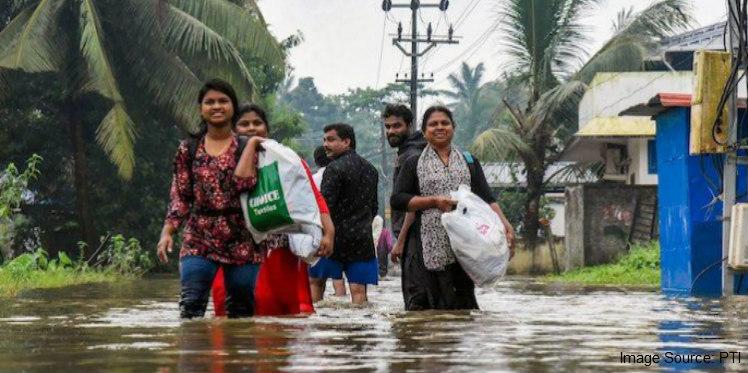
As part of a team that recently conducted a needs-assessment in four flood-ravaged districts of Kerala, we were at Kuddukari village of Ramanagiri Panchayat of Alleppey district where we met Saritha. She showed us an interesting water filter – an aluminum pot with a sponge, from an old bed, at its base. For most people, this is an interesting community-based knowledge; but few will understand Saritha’s plight – who has to fill the pot many times a day to be able to provide clean, filtered water to her family in the aftermath of the floods.
I was a part of the humanitarian team and having worked on gender issues, I was keen to record how women’s domestic work gets affected during and post disaster. At the community level, the immediate needs are housing and household items which have been damaged severely, and availability of work and wages so that the community can cope with the losses. Most assessments by aid agencies mainly focus on livelihoods and assets; these include the recovery of agriculture, horticulture, biodiversity, animal husbandry, tourism, handlooms, and handicrafts. However, domestic workload is an aspect which most of the agencies tend to overlook.
It entails detailed discussion with women to understand their daily routine and how it changed post-disaster. We visited a few of the affected villages in Alleppey and Pathanamthitta districts. The houses are severely damaged; the situation of the kitchen, where women spent most of their time as part of the daily chores, was even worse.
Walking through the villages, it wasn’t difficult to miss the deplorable conditions in which women were cooking. With homes and kitchens flooded and water logged, to an extent, even destroyed, they were seen cooking in the open on earthen stoves and broken gas stoves. The utensils (whatever is left of them) were stacked outside in the open, often on a raised platform; and had to be washed before and after every meal. It had to be organised every now and then. This was going to continue till such time that the houses were repaired, restored back to how it used to be.
Communities in Kerala have always followed the age-old practice of boiling their drinking water. Perhaps this one practice saved them from a massive diarrhea outbreak. Speaking to women, it was evident that while it saved lives, their workload had doubled in the aftermath of the floods. They were now boiling water not only for drinking purposes but also for washing utensils.
For some of the households, nearby water collection points – taps, well, etc – were damaged. Women now had to walk almost double the distance to collect drinking water; they got up an hour earlier every morning just to collect water. This has its domino effect. For instance, women in Eraviperoor panchayat depend on firewood for cooking. The extra rounds of boiling water means that firewood collection has also gone up. Earlier they used to go for firewood collection once or twice a week, but now it is up to four times. These extra rounds of water and firewood collection in addition to their daily routine work of cooking, cleaning, and caregiving was adding to their domestic workload. This has added to their household drudgery.
If the distress of losing their homes, assets and livelihoods was not enough, the women have to bear the brunt of additional household work and recovering from the damage caused by floods. And this domestic workload is not something that is accounted for during assessments conducted by humanitarian agencies.
There is a need to recognise the increase domestic workload after natural disasters and especially analyse it from the perspective of women. Gender mainstreaming efforts in disaster management led to issues of health and hygiene needs of women being met to a considerable extent. Many humanitarian agencies known for WASH (Water, Sanitation, and Health) interventions now reflect a gender sensitive approach. Menstrual hygiene, collapse of sanitation facilities, and lack of private spaces has come into the spotlight as a result of years of gender sensitive disaster management trainings and eventually, programmes.
For instance, the relief kits, along with hygiene promotion material, carry either a pack of sanitary napkins or cash coupons so that women and girls can buy napkins of their choice from the local market. In places where women use cloth instead, agencies have been able to provide locally made cloth napkins; this ensures greater acceptability. Toilets are constructed to ensure safety and privacy for women. Submerged tube-wells are raised and extra space for washing clothes for women is provided. There are few other organisations that also look into the impact on violence against women, especially in the light of rising incidences of trafficking of women and girls after natural disasters. Though these are not exhaustive to address all of women’s needs during the recovery phase, but they definitely make their lives easier.
In the current scenario it is thus important that Aid agencies move forward and take cognizance of the domestic workload on women in their assessments. Because the impact of disaster on women’s domestic workload is ignored, the recovery programmes often add to women’s burden. Most of the long term recovery programmes are around water, sanitation, health and hygiene as well as restoration of livelihoods, and skewed towards women who are often formed into committees and trained to implement the recovery programme.
Thus, there is a need for domestic workload assessment along with an understanding of gendered division of labour within households. It should not be a mere exercise of collecting data and information about women’s daily routine but also to design programmes in an effective manner that does not add to their domestic workload in the post-disaster recovery phase. This is one important aspect that will make gender assessment and subsequent actions holistic and gender sensitive.
For example, all WASH activities tend to only involve women for awareness on practices. Such practices, while extremely useful, add to their household chores. Setting up a filtering unit or cleaning up of affected water supply system within a household should involve both men and women in the family. If this was brought into practice, then perhaps it would not be the sole responsibility of Saritha to fill the water filter; instead it would be a shared responsibility of her husband as well.
This article was prepared after a visit to Kerala as a part of an assessment team last year during September after Kerala floods. The author is a development professional and currently working with Oxfam India.
Original link here
Recent News
Related Stories
18 Apr, 2022
Lakhimpur Kheri, Uttar Pradesh
Resource Centres Augment Income Of Women Farmers
In November 2020, members of the women farmer group ‘Gulab Mahila Kisan Samooh’ started a resource centre. Till date, the women farmers have accumulated Rs 8020 in this bank account. Among the villages in the project area, 11 women farmers’ resource centres have been formed. 285 women farmers associated with this project are availing of the direct benefits of resource centres.
Read More
05 Apr, 2022
Kalahandi, Odisha
Women Mushroom Farmers Cultivate An Empowered Future
Women mushroom farmers of Borbhata shared that mushroom cultivation is a profitable form of farming unlike traditional crops and vegetables. At present, the local market is growing and there is no problem in marketing mushrooms after harvesting. Through mushroom cultivation, the Borbhata women’s collective is headed towards a successful group enterprise. They have also become capable in meeting their household-level nutritional and financial needs.
Read More
15 Mar, 2022
Kalahandi, Odisha
From a Survivor of Child Marriage to a Women’s Rights Champion
Shivaratri Patra is a survivor of child marriage who went on to become a pillar of support for the women in her community. She challenged the gender-based power structures in her village and ensured that the women and girls in her village take charge of their own destiny.
Read More
07 Mar, 2022
Varanasi, Uttar Pradesh
Mission Sanjeevani Reaches The Musahars
Musahars are a community living in miserable conditions, Covid or no Covid. Priyansh Tripathi travels to Chhateri village where the musahar community continues to live in abject poverty and are worse off after the pandemic. Through Oxfam India's Mission Sanjeevani, dry ration and safety kits were distributed to the 500 families in the village. The ration kits including rice, dal and oil, were designed to cater to the needs of a family of five for a month.
Read More
