


NDTV quotes Oxfam's latest Inequality Report- 'Unpaid Work By Women Worth 43-Times Apple's Annual Turnover'
- By NA
- 19 Mar, 2019
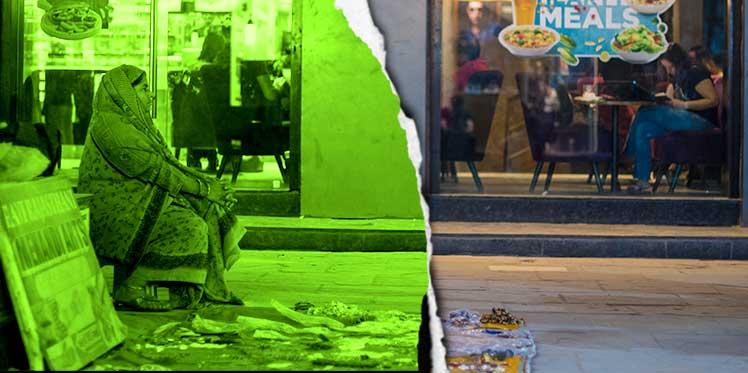
Unpaid work done by women across the globe amounts to a staggering $10 trillion a year, which is 43 times the annual turnover of the world's biggest company Apple, an Oxfam study said today.
In India, the unpaid work done by women looking after their homes and children is worth 3.1 per cent of the country's GDP. Women spend 312 minutes per day in urban areas and 291 minutes per day in rural areas on such unpaid care work, it added.
In comparison, men spend only 29 minutes in urban and 32 minutes in rural areas on unpaid care work.
The report, released by the international rights group before the start of the World Economic Forum (WEF) Annual Meeting in this Swiss ski resort town, also said women and girls are hardest hit by rising economic inequality, including in India.
Oxfam said inequality has a "female face" in India, where women are less likely to have paid work when compared to men, while even among the richest there are only 9 women in the country's 119-member billionaires club.
The paid work women do bring them fewer earnings as compared to men due to the existing wage gap and therefore households that rely primarily on female earners tend to be poorer, it said, referring to the country's gender pay gap at 34 per cent.
It observed that various intersections of caste, class, religion, age and sexual orientation have further implications on women inequality as a process.
The Oxfam study also referred to India's poor 108th ranking on the WEF's Global Gender Gap Index of 2018, saying it was 10 notches less than in 2006 and far below the global average and behind its neighbours China and Bangladesh.
Oxfam said India has many laws that deal with violence against women, but their implementation remains a challenge, including due to a deeply patriarchal society.
It said a law to deal with sexual harassment at the workplace was passed in 2013 after a struggle by women's rights organisations and group of lawyers for 17 years, but it is the recent #MeToo movement in India that has opened the doors for the organised workforce to ensure that mechanisms are in place and due process is followed.
Oxfam said a large majority of women are in the informal sector that does not have any formal mechanisms for dealing with sexual harassment. Consequently, where there is an option, women drop out of the labour force, else continue under exploitative conditions.
Citing a 1,000-household survey undertaken in the states of Bihar, Jharkhand, Chhattisgarh and Uttar Pradesh, Oxfam said 53 per cent of those surveyed said it was acceptable to harshly criticise a woman if she failed to care well for the children and 33 per cent felt it was acceptable to even beat a woman for this reason.
Similarly, 60 per cent felt it was acceptable to harshly criticise a woman if she left a dependent or ill adult unattended and 36 per cent felt it was acceptable to beat her for the same reason.
Also, 41 per cent felt it was acceptable to beat a woman if she did not prepare a meal for the men in the family while 68 per cent felt it was acceptable to criticise her harshly.
Besides, 42 per cent said a woman should be beaten if she failed to fetch water or fuel-wood for her family and 65 per cent felt she deserved to be criticised harshly.
A whopping 54 per cent felt it was okay to beat a woman if she left the house without asking and 86 per cent felt she should be criticised harshly for doing so.
Observing that these issues put severe restrictions on women's ability to go out and undertake paid work, Oxfam said women's ability to undertake paid work is not merely determined by economic considerations but also by social norms.
"It is understood that a woman's primary role is to take care of the house and her family and any income-generating work is secondary to this role," it added.
The study also found that cutting taxes on wealth predominantly benefits men who own 50 per cent more wealth than women globally and control over 86 per cent of corporations.
Conversely, when public services are neglected, poor women and girls suffer most.
"Girls are pulled out of school first when the money is not available to pay fees, and women clock up hours of unpaid work looking after sick relatives when healthcare systems fail," it said.
Oxfam International Executive Director Winnie Byanyima, one of the key participants at the WEF summit, said, "While corporations and the super-rich enjoy low tax bills, millions of girls are denied a decent education and women are dying for lack of maternity care."
"Economic inequality plagued by caste, class, gender and religion need to be tackled on a war-footing," Oxfam India chief Amitabh Behar said.
Oxfam is part of the Fight Inequality Alliance -- a coalition of social movements, environmental groups, women's rights groups, trade unions and NGOs.
The alliance is organising events in over 30 countries from January 18-25, around the same time as the WEF meeting in Davos.
Original link here.
Recent News
Global Hunger Index: Govt Living In Denial
18 Oct, 2021
Pandora Papers: Oxfam India Responds
04 Oct, 2021
First Oxygen Plant Inaugurated in Tumkur, Karnataka
27 Jul, 2021
Related Stories
29 Mar, 2023
Koraput, Odisha
Women Farmers of Koraput Make Brinjal Cultivation Profitable
Jani Nayak, Namita Pujari and Sunita Pujari are breaking new grounds. The three women farmers have learnt brinjal grafting, implemented it in their field and are earning better profits and have reduced their input costs. This is unique because farmers in tribal pockets like Koraput had never experimented with brinjal grafting in the past. In fact the seedlings of the grafted brinjal was available only in neighbouring Chhattisgarh.
Read More
29 Mar, 2023
Nalanda, Bihar
Mushroom Cultivation: Making The Most Of Cash Transfers
Conditional cash transfers was one of the components of the project and Rinku Devi was one of the community members who received Rs 12000 in March 2021. Armed with cash and technical knowhow of mushroom cultivation, Rinku decided to set up a 450 square feet mushroom production unit on her land.
Read More
24 Mar, 2023
Sitamarhi, Bihar
Solar Street Light: Reducing Carbon Footprint and Making Streets Safe
The unlit streets made the returning residents vulnerable to animal attacks. A VDC member told us that her children’s safety was a concern since they returned home at night after tuitions. The issue of lighting, especially in the streets, needed a solution. Under Project Utthan, an Oxfam India-HDFC Bank CSR initiative, 10 solar street lights were installed in the village.
Read More
23 Mar, 2023
Odisha
Making Clean Drinking Water Accessible
Access to clean drinking water is not as simple as it seems. It is a fundamental right yet many have no access to basic clean drinking water. This World Water Day calls for Accelerating Change. Amalin Patnaik and Savvy Soumya Misra write how simple innovations like the Iron Removal Plant is providing access to clean drinking water to coastal communities in Odisha.
Read More
