


Move to raise tax for India's super rich sparks debate
- By The Straits Times
- 15 Jul, 2019
NEW DELHI - Last week's announcement of a higher tax surcharge on India's super rich has sparked a debate between those who say it will discourage wealth creation and those who call it a necessary intervention to reduce the country's entrenched and growing inequity.
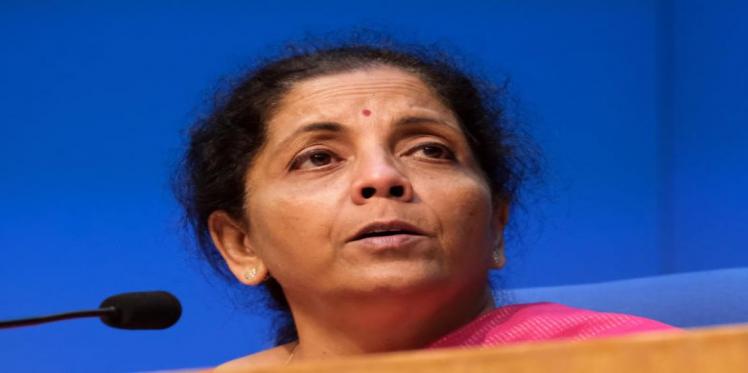
In her Budget speech last Friday (July 5), Finance Minister Nirmala Sitharaman proposed to raise the surcharge from 15 per cent to 25 per cent for those earning between 20 million and 50 million rupees (S$397,000 and S$992,700) a year and to 37 per cent for those earning more than 50 million rupees. This takes the effective tax rate for the two groups to 39 per cent and 42.74 per cent, respectively.
The surcharge, popularly known as a "Robin Hood" tax, will help fund the government's development spending.
Mumbai-based investor Harsh Gupta was among those who criticised the move, saying it will "hurt growth and not raise much revenue" in a Twitter post.
"The skilled are mobile in today's world, India is 4 per cent of global GDP, 40 per cent plus taxes not justified for our services," he added in his tweet.
Critics say the enhanced surcharge could push more wealthy Indians to emigrate to countries where they pay similar levels of income tax but get to enjoy a better living environment, unlike the polluted air and poor infrastructure in their own country.
India witnessed the third-highest outflow of wealthy individuals last year.
Nearly 5,000 millionaires, or high-net-worth individuals (HNWIs), left the country, making up 2 per cent of the total number of HNWIs in India, according to the Global Wealth Migration Review 2019 by AfrAsia Bank and research firm New World Wealth.
Some have urged the government to widen the ambit of tax-paying individuals instead of just raising taxes on the rich.
Taxes on the country's super rich have been increasing in recent years, with a surcharge of 10 per cent first imposed in 2013 on those earning more than 10 million rupees annually.
The country has around 84 million taxpayers, with many of the poor and those in the agricultural sector exempted from paying taxes. Those with an annual income of up to 500,000 rupees are also not required to pay any income tax.
Direct tax revenue for the government has increased by more than 78 per cent since fiscal 2013-14 to around 11.37 trillion rupees in 2018-19.
Those affected by the new surcharge make up only a small percentage of the country's 1.3 billion people.
The Economic Times newspaper reported that only around 0.16 per cent of those who filed tax returns in 2016-17 reported gross incomes between 10 million and 50 million rupees.
Mr Amitabh Behar, the chief executive officer of Oxfam India, described the additional tax burden as a "welcome but extremely inadequate step" in India's efforts to address the stark income and development inequity.
The international charity group, in a report earlier this year, said the fortune of India's billionaires had increased by 35 per cent in 2018 - or 22 billion rupees a day - while 136 million Indians who make up the poorest 10 per cent continued to remain in debt since 2004.
The report revealed that India added 18 new billionaires last year, raising the total number to 119. Their combined fortune surpassed the US$400 billion (S$544.84 billion) mark for the first time. It rose from US$325.5 billion in 2017 to US$440.1 billion in 2018, the single largest annual increase since the 2008 global financial crisis.
"Despite the growth that we have seen for the wealthy, we have a situation where we see the starvation of the public sector," Mr Behar told The Straits Times.
"In areas like education and healthcare, government spending has remained more or less stagnant at around 1.2 and 4 per cent of the GDP. In this context, I would have been far happier had we reintroduced inheritance and wealth tax too," he added.
Getting the richest 1 per cent in India to pay just 0.5 per cent extra tax on their wealth could raise enough money to increase government spending on health by 50 per cent, according to Oxfam India.
Those pushing for greater taxes on the super wealthy argue that India's recent decision is not an aberration but in keeping with what developed countries such as the United States and the United Kingdom are doing. Japan and Denmark have even higher tax rates on the super rich.
"These are societies affluent Indians aspire to be part of and whose public facilities and infrastructure they admire. Such development, however, is not possible in India unless the government can get the tax collection it needs," said Ms Sonu Iyer, a tax partner and national leader with EY India.
"It is about time that India's affluent begin to think about what it is that can make a difference. If a higher contribution makes that difference, one should be happy to make that contribution so long as down the road a general improvement starts to show in the economy," she told The Straits Times.
"And we have seen some change in India on this front. So, I am an optimist and I think we should give this proposal a chance to work," Ms Iyer added.
Original article here
Recent News
Related Stories
18 Apr, 2022
Lakhimpur Kheri, Uttar Pradesh
Resource Centres Augment Income Of Women Farmers
In November 2020, members of the women farmer group ‘Gulab Mahila Kisan Samooh’ started a resource centre. Till date, the women farmers have accumulated Rs 8020 in this bank account. Among the villages in the project area, 11 women farmers’ resource centres have been formed. 285 women farmers associated with this project are availing of the direct benefits of resource centres.
Read More

05 Apr, 2022
Kalahandi, Odisha
Women Mushroom Farmers Cultivate An Empowered Future
Women mushroom farmers of Borbhata shared that mushroom cultivation is a profitable form of farming unlike traditional crops and vegetables. At present, the local market is growing and there is no problem in marketing mushrooms after harvesting. Through mushroom cultivation, the Borbhata women’s collective is headed towards a successful group enterprise. They have also become capable in meeting their household-level nutritional and financial needs.
Read More
15 Mar, 2022
Kalahandi, Odisha
From a Survivor of Child Marriage to a Women’s Rights Champion
Shivaratri Patra is a survivor of child marriage who went on to become a pillar of support for the women in her community. She challenged the gender-based power structures in her village and ensured that the women and girls in her village take charge of their own destiny.
Read More
07 Mar, 2022
Varanasi, Uttar Pradesh
Mission Sanjeevani Reaches The Musahars
Musahars are a community living in miserable conditions, Covid or no Covid. Priyansh Tripathi travels to Chhateri village where the musahar community continues to live in abject poverty and are worse off after the pandemic. Through Oxfam India's Mission Sanjeevani, dry ration and safety kits were distributed to the 500 families in the village. The ration kits including rice, dal and oil, were designed to cater to the needs of a family of five for a month.
Read More
