


Guest workers are hosts in this kitchen
- By Times of India
- 01 Apr, 2020
A group of voluntary service activists in the city has launched an initiative showing feasible ways to help guest workers run their own community kitchen.
The initiative has been launched by the members of Rights, a human rights organisation, and Oxfam India, an NGO. On Tuesday, they launched an initiative by funding a small group of guest workers residing at Poojapura in the city to set up their own community kitchen.
V B Ajaykumar, executive director of Rights said even though there are many community kitchen initiatives by various government agencies and organisations to provide food to guest workers, letting the workers handle their own kitchens was the most effective way to ensure that these workers remain happy.
‘’They come from different parts of the country and their food habits are very different from ours. Their staple diet is not like ours, which is unfortunately being prepared in these kitchens,” Ajaykumar said. Hence, the easiest way to ensure that the guest workers remain happy is to let them cook their own food.
Rights and Oxfam provided essential commodities to a group of 25 guest workers residing in Poojapura. Their representatives were invited to a margin-free supermarket in the locality and were told to purchase whatever commodities they needed for the next 10 days.
“Surprisingly, it turned out to be very cost-effective too,” Ajaykumar said. The entire purchase cost only Rs 12,000. This means three meals of a person for a day cost us only around Rs 50. Besides this, letting these labourers run the kitchens in small groups instead of rallying them to large camps will also ensure the cause social distancing.
He added that they will be launching similar initiatives in more places from Wednesday. They have already identified other similar small groups of guest workers dwelling in different parts of the district. They will also be launching similar measures in Alappuzha and Pathanamthitta districts where they have sufficient strength of volunteers.
Meanwhile, district labour office started operating a call centre where executives have been employed to speak to migrant labourers in their native languages, Hindi, Oriya, Assamese and Tamil. All queries regarding availability of food and camps will be addressed here. Phone no: 0471-2783942 854765525
Recent News
Related Stories
09 Aug, 2023
Koraput, Odisha
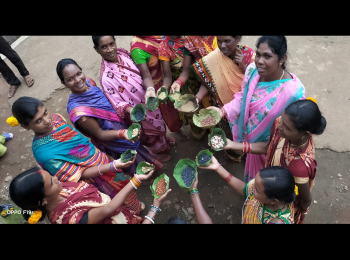
Community Seed Bank: Beyond Preservation And Conservation
Women from the indigenous communities have been playing a critical role in conserving the seeds. On World Indigenous Day, we look at the community seed bank, promoted by Oxfam India-SDMC Trust project, that has ensured large scale exchange of quality native seeds. In the 40 villages and 2000 farmers that we work with, we have ensured conservation and multiplication of native seeds at the community level through custodian farmers.
Read More
07 Jul, 2023
Odisha
A Fresh Start For Pinky
Pinky received all her streedhan back from her in-law’s house due to the mediation by the counsellors at the Bijayini Centre in Nayagarh. This has not just helped her get out of an abusive marriage but also given the confidence of carving her own future.
Read More
05 Jul, 2023
Nalanda, Bihar
Solar Solution for Bihar Farmers
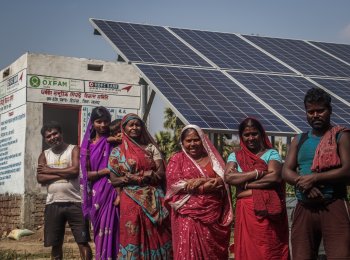
A solar-based lift irrigation system in Indaut village was set up through Project Utthan, an Oxfam India-HDFC Bank project. The system can irrigate 25 acres of land, which means farmers can irrigate their land independent of the electricity supply in rural Bihar. The system has been installed in areas where land lay bare due to lack of irrigation facilities. Most farmers in the area could not afford their own pump and boring instruments, making irrigation a significant challenge.
Read More
03 Jul, 2023
Kalahandi, Odisha
Araskupa Processing Unit: A Blessing In Disguise
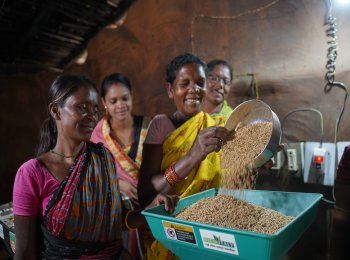
Through Project Utthan, an Oxfam India-HDFC Bank’s HRDP initiative, a 10-member SHG was provided two machines—a 2-in-1 pulveriser and a huller. The former, fitted with blades of different sizes, is for grinding wheat, turmeric, millets, cumins, chilies and other spices. The latter is the paddy processing unit. Though the huller processes about 1.5 quintals of paddy an hour but it has made paddy processing easily accessible to not just Araskupa but six other neighbouring villages (some of them with very remote homes and no access to electricity).
Read More
