


Anjela Taneja reviews the draft New Education Policy 2019
- By Anjela Taneja
- 04 Jul, 2019
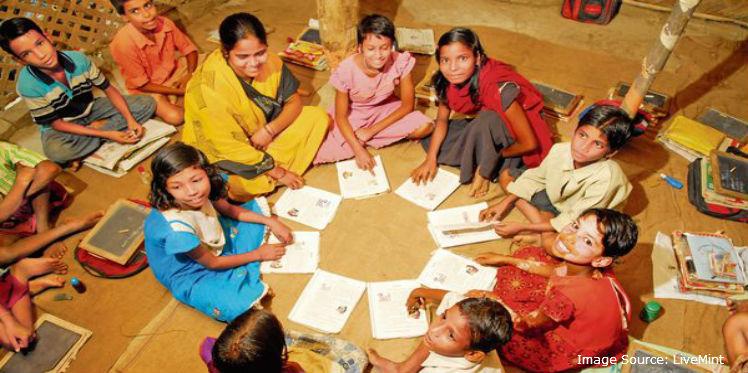
The draft National Education Policy (NEP), 2019, is full of provisions that many in the education sector have been desperate to see for decades. The conferring of the Right to Education to children under six and above 14, doubling of the overall financial allocation to education and strengthening the teaching profession bring cheer. However, many of the policy’s omissions and contradictions, combined with the previous track record of central and state governments in implementing existing education policies, diminish this hope.
The omissions: While the policy talks about the need to bring “unrepresented groups" into school and focus on educationally lagging “special education zones", it misses a critical opportunity of addressing inequalities within the education system. It misses to provide solutions to close the gap of access to quality education between India’s rich and poor children. It proposes to remove the expectations that all schools meet common minimum infrastructure and facility standards, and that primary schools be within a stipulated distance from children’s homes.
India’s schools already vary across the scale—from single room structures without water and sanitation, to technology-enabled international schools. Not specifying a common minimum standard below which schools cannot fall, creates conditions where quality of facilities in some schools will only sink lower, widening this gap.
This is even more of an issue since it proposes a roll back of existing mechanisms of enforcement of private schools making parents “de-facto regulators" of private schools. Parents, and particularly poor and neo-literate parents, cannot hold the onus of ensuring that much more powerful and resourced schools comply with quality, safety and equity norms.
India should have moved towards a national system of education that shapes India’s next generation and enforce standards of quality across the country.
The contradictions: While the policy places considerable emphasis on the strengthening of “school complexes" (clusters of schools sharing joint resources) and decentralized mechanisms for supporting teachers, their everyday management appears to have been tasked to the head teacher of the secondary school in the cluster.
Furthermore, no separate funding appears to have been earmarked for this. This is false economy, since this is a full time activity and needs to be staffed and resourced accordingly.
Lessons from non-implementation of past policies: The policy’s implementation is predicated on the assumption that the education budget would be almost doubled in the next 10 years through consistent decade-long action by both the centre and states. However, the revenue is decentralized to the states and it is unclear what would be done to ensure that resources needed will be allotted. The sheer scale of changes expected, the rapid timeline, the absence of a strong mechanism for handholding states on this journey and the probable inadequate budget raises questions on the full implementation of this policy. India’s history is littered with ambitious education policies that have not been fully implemented. The National Education Policy risks following this tradition, unless the government addresses the reasons behind the past policy-practice implementation gap and makes conscious efforts to carry all of India on the same road towards improvement in education.
Original article here.
Recent News
Related Stories
31 Jan, 2022
Kerala
Rebuilding Lives In Kerala
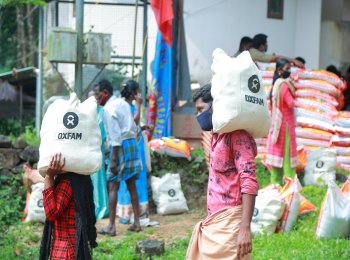
Sabitha, Savithri, Thankamma and Annamma have quite a few things in common. Their houses were either completely or partially destroyed in the landslides that occurred after multiple days of heavy rainfall in October 2021. The flood and landslides damaged houses, roads and left many stranded without phone connectivity and electricity. Oxfam India launched its ‘Kerala Landslide and Flood Response Programme 2021’ and provided ration and safety kit to 2771 families and cleaned and repaired 144 wells.
Read More
31 Jan, 2022
Jorhat, Assam
Jal Jeevan Mission in Tea Gardens
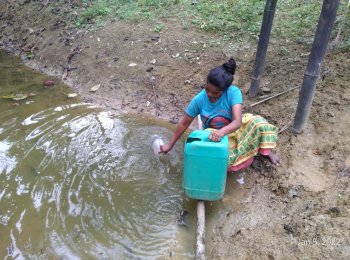
On learning about the Jal Jeevan Mission, Sonia and the others approached the garden management and after several rounds of discussion and persuasion and offering to help, the ball was set rolling. Sonia is associated with Oxfam India's advocacy work in the tea gardens in Jorhat in Assam.
Read More
31 Jan, 2022
Kabeerdham, Chhattisgarh
बेरोजगारी एवं आर्थिक तंगी में मिली राहत
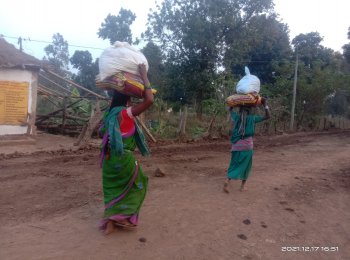
छत्तीसगढ़ के जिला कबीरधाम में मार्च 2020 से लॉक डाउन होने के कारण घने जंगलों और पहाड़ों पर निवास करने वाले जनजाति समुदाय द्वारा निर्मित की जानी वाली वनोत्पाद झोरी, झौहा, बांस का पंखा, टोकरी वनोपज संकलन एवं उसके बिक्री के अलावा, समूहिक खेती के कार्य और अन्य वस्तुवों की बिक्री रुकने से आय के साधन रुक गए साथ ही मनरेगा के कार्य से तत्कालीन मे कोई आर्थिक राहत नही मिल पा रही है, जिससे अधिकांश गाँव राशन भोजन की समस्या से जूझ रहे है।ऑक्सफैम इंडिया के मिशन संजीवनी द्वारा इन दो गाँवों— नागा डबरा और माठपुर— में 100 परिवारों को राहत सामग्री दिया गया |
Read More
25 Jan, 2022
Lakhimpur Kheri, Uttar Pradesh
Farming Yields Empowerment
Since 2016 Mithilesh has learnt and adapted climate resilient agricultural practices, spearheaded an SHG, leased more land and improved her income, yield and soil quality. What's more, she is sending her children to school. The Oxfam India-AIM Trust project with women farmers in Lakhimpur Kheri has made big differences in the lives.
Read More
