


Oxfam India's policy expert, Anjela Taneja writes on the Draft New Education Policy in News18
- By
- 04 Jun, 2019
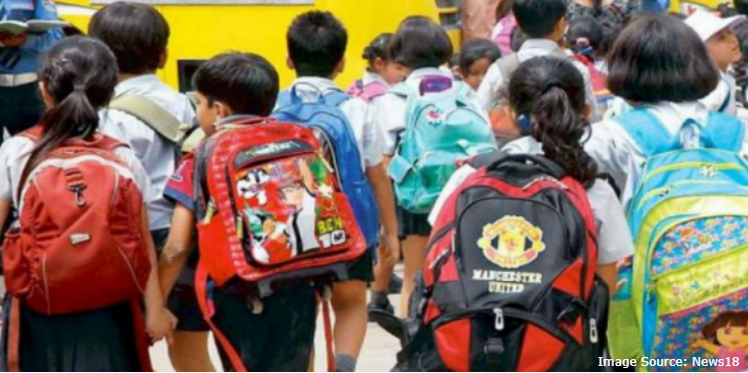
The draft New Education Policy 2019 includes some long-awaited shifts in the education sector like the inclusion of both early childhood education and secondary education of the Right to Education Act, doubling the budget allocation for education, strengthening decentralised mechanisms of teacher management and support, expansion of school nutrition programme to include provision of school breakfast, and a possible return of the no-detention policy.
Many of these are long-standing civil society demands and are highly welcome. However, there are some risks which must be talked about before this policy is finalised.
The policy includes some positive provisions. It reiterates the lasting position of the Indian state of prohibiting ‘for-profit’ provision in education, expects schools to adhere to standard curriculum and assessment procedures, proposes regulation of fees and makes an effort to stop commercial enterprises.
However, it also proposes loosening of mandated quality norms of schools, removes the role of government for recognition of schools (henceforth, to be done through self-accreditation, peer review and audit by school management committee members and fellow schools on regular intervals), calls for a review of the 25% reservation for poor children under Right to Education Act (RTE) as it is “unduly restrictive”, and removes all provisions of state-led inspection and enforcement of regulatory provisions.
Alarmingly, it makes a rather bizarre proposal that parents become de-facto regulators of private schools instead of the state.
This risks introducing a wild west of deregulation for private education. The principal mechanism of regulation described appears to be through uploading information in the public domain with the expectations that parents make informed choices based on the information declared and that citizens file grievances if they find misrepresentation in the claims.
There is no clarity on the role of the line department. It seems that they will have no formal direct role in verifying the validity of the claims or ensuring compliance.
There is also no evidence that access to public information alone will create a virtuous cycle that would drive up school quality through school choice and competition.
Research suggests that quality is not a significant criterion while selecting school and even when it is, parental perceptions are often idiosyncratic.
Often, parents end up choosing schools with large classes (as an indicator of high popularity and strict discipline) despite the fact that smaller class sizes are critical for improved student learning.
Furthermore, schools learn to game the system. Thus, the desire for high promotion rates has been shown to lead to lenient marking in some private schools.
The policy specifically promotes private schools, yet there is scarce evidence worldwide to suggest that private schools by definition deliver better quality, let alone, equitable education.
The World Bank’s 2018 World Development report highlights that private schools often appear to do better because they enroll children from relatively advantaged backgrounds who can afford to pay and not because they deliver better quality of education.
Recent research from India suggests that the gender gap in private enrolment is on the rise, even as it is reducing in government schools.
The policy could have instead reiterated the need for extension of the public school network to address the hitherto unreached populations in remote areas and urban slums where low fees private schools flourish.
It could have also more holistically addressed the aspirations of India’s middle class within a strengthened public education system.
Furthermore, in the absence of an operational definition of philanthropic or commercial schools (let alone a mechanism to weed out the latter) it would appear as if private schools per se are being encouraged.
In contrast, evidence exists of schools abusing their “not for profit” status, hiding profits and adopting underhand means to maximise earnings.
The spate of exclusionary incidents and the number of cases of denial of admission by private schools to poor children under the 25% quota make the proposed policy sound incredibly naïve when it says that they can be trusted and “given the autonomy to do the right thing” on their own.
An argument made in the draft policy is that legally binding quality norms under RTE are somehow detrimental to innovation and quality.
What the Act lays down is really minimal infrastructure norms like toilets for girls, ramps for children with disabilities, drinking water and a roof over students’ heads. It is unclear how the presence of these would impede learning.
There is reason to question whether innovation is even possible without these minimum prerequisites. Recognising that inputs are needed to improve outcomes, every school — government or private — should adhere to this really minimal floor of quality.
Any parent who has had children enrolled in private schools recognises the sheer power asymmetry between parents and teachers.
Poor and neo-literate parents, in particular, cannot be expected to hold the onus of ensuring that much more powerful and resourced schools comply with quality, safety and equity norms.
Data for countries relatively richer than India shows that systems with low levels of competition have higher social inclusion and that upward social mobility is higher in government systems.
Giving India’s parents access to this online information about private schools is welcome, but should not replace a formal inspection by the government to ensure adherence to school standards and a process to penalise (and eventually close) schools that consistently fail to adhere to national norms, especially in a country where many parents are illiterate and lack access to the internet.
There have to be immediate and real consequences when schools fail to adhere to what they promise to deliver.
Expecting winnowing out of non-performing schools through competition between schools to attract parents, is an inefficient and ineffective strategy. All schools should comply with the optimum standards of quality from day 1.
Regulation of private provision is an internationally recognised role of the state and the Indian government cannot afford to shrug off one of the core reasons for its existence.
Last year’s human rights council resolution explicitly reiterated that the states’ regulatory frameworks must “ensure the regulation of all education providers”, unambiguously requiring to regulate private providers.
At a time when there is a growing global consensus about the need for stronger regulation of private schools, it is unclear why India is considering a giant leap backwards from the international consensus.
Fortunately, this is still a policy draft and it can be hoped that the government would not make the mistake of going down the path of complete deregulation of private school education.
The state cannot afford to let market competition determine school quality. Our children deserve better.
Original link here.
Recent News
Oxfam India’s Reaction to Budget 2021-22
03 Feb, 2021
The Inequality Virus—India Supplement 2021
22 Jan, 2021
New Education Policy 2020
01 Aug, 2020
Related Stories
22 Dec, 2022
Koraput, Odisha
Sweet Potato For A Sweet Future
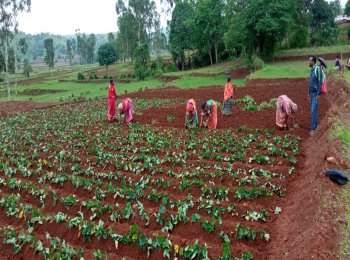
At the recently concluded PARAB 2022 our sweet potato chips (the purple coloured Bhu Krishna variety) were a huge hit. Though one of the dominant crops in the adivasi belt, sweet potato is only now being seen as a crop that will bring higher returns to the small and marginal farmers.
Read More
24 Nov, 2022
Nalanda, Bihar
Cash Boost For Entrepreneurship
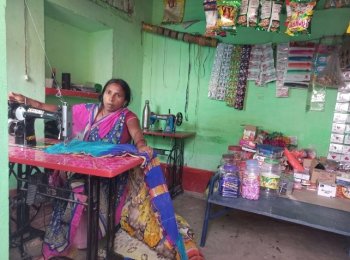
Madhuri joined the Producer Group as well as the VDC in March 2021; she was keen to be a part of Project Utthan and explore livelihood opportunities. Through HRDP we made conditional cash transfer of Rs 10,000 in November 2021. She took a store on rent at Rs 550 per month and bought a new electric sewing machine. She hasn’t looked back since.
Read More
23 Nov, 2022
Nalanda, Bihar
Solar Street Lamps Light Up 15 Villages
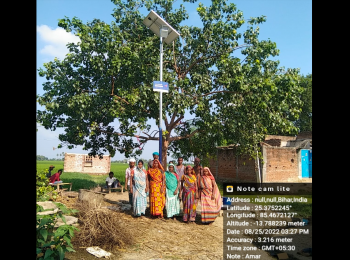
Livestock theft and the safety of the women(which in turn limited their mobility) was a matter of concern for the villages. Until Oxfam India-HDFC Bank’s Holistic Rural Development Project (HRDP)* initiative stepped in with a creative and sustainable solution. Since 2020, 165 solar lights were installed in the 15 HRDP villages in the Harnaut, Hilsa, and Nagarnausa blocks of Nalanda district. These lights have reduced the dependency on the sporadic electricity supply in the village and reduced its carbon footprint.
Read More

23 Nov, 2022
Nalanda, Bihar
Farmer Field School: A Centre For Learning
When we started setting up Farmer Field School (FFS) under HRDP, Abhay became our lead farmer and his field became a centre for learning. Oxfam India with support from HDFC bank has established 30 such Farmer Field Schools in 15 villages in three blocks in Nalanda District. These Farmer Filed Schools have been developed as centres of learning in these villages. Abhay was supported with various amenities such as green net (used to grow saplings in controlled temperature), mulching, and high yielding seeds. He was given on-field training from agriculture experts; he was also trained and supported to sow using the zero tillage machine.
Read More
