We must act immediately to take on the second, more severe wave of COVID-19
Your support is vital!

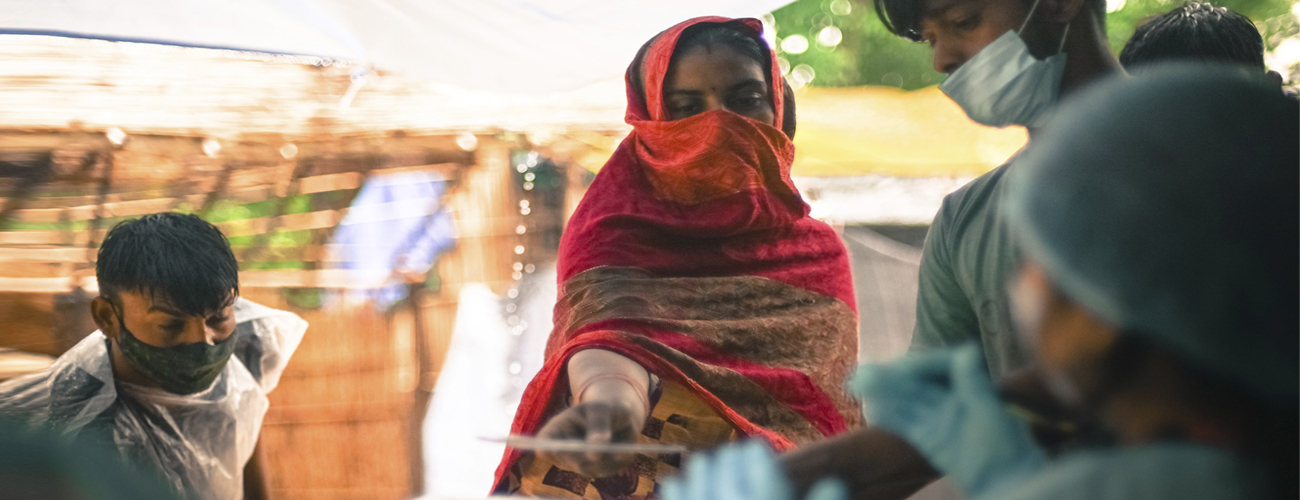
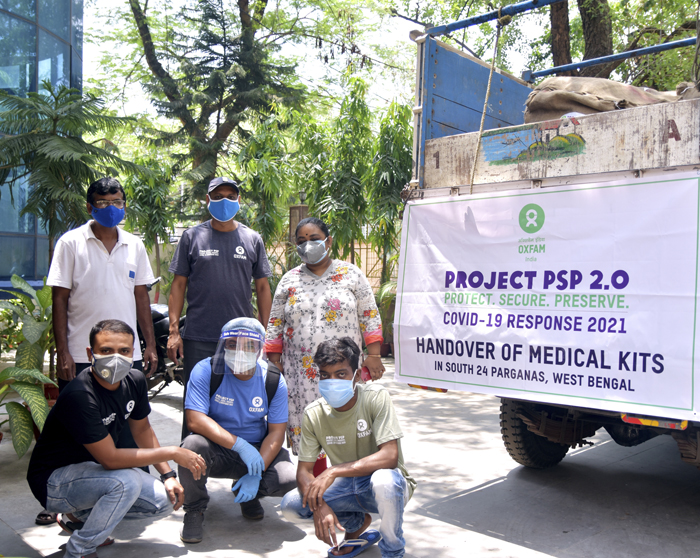
We will distribute and install medical equipment and accessories at government institutions (hospitals/health centres).
We will distribute PPE kits and safety kits to frontline health workers and community.
We will engage with policymakers to ensure the COVID-19 vaccine is purchased at true cost prices and provided free of charge to all.
We will reach out with food to the stranded workers and to the most marginalised and vulnerable communities.
We will make direct cash transfers to the most marginalised households and impart skill-based, livelihood training for women and self-help groups to help them generate income.
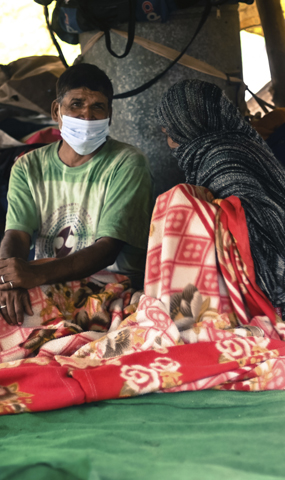
India is in the grip of a second deadly coronavirus wave. Despite being through the pandemic for a year, we did not learn our lessons. The continued neglect of the healthcare system has led to its complete collapse under the crushing weight of the pandemic.
Poor communities,once again will bear the brunt. Living in crammed areas without sanitation and using shared toilets and water points, they have no means to follow COVID-19 guidelines.
In addition, migrant workers employed in the informal sector are once again facing uncertainties. Sporadic lockdowns and curfews have already triggered another exodus of migrant workers, putting them at the risk ofnot just contracting COVID-19 but also prolonged months without jobs or money.
We must once again come together and support the most vulnerable fight this crisis. Together we must stand for #India4All.
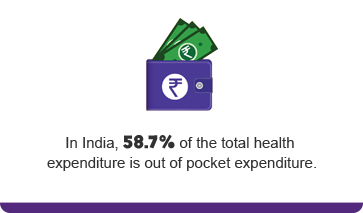
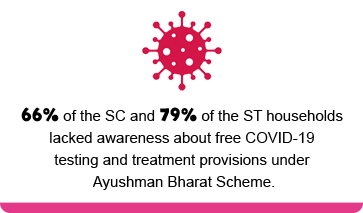
Source: The Inequality Virus – India Supplement 2021



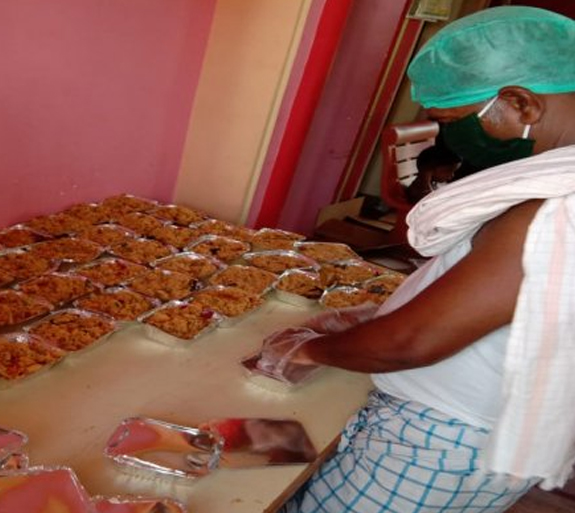
32-year-old Jagadeesh and his brother ran an eating joint in Karnataka’s Sira town. The brothers earned about Rs. 400 – Rs. 500 a day. The lockdown meant zero income for their family of eight people.
Along with our partner on ground, we decided to work with Jagadeesh to distribute cooked meals to migrant workers under our Pathik Project. This way, food was supplied to people walking home and Jagadeesh and his family also had a source of income.
Jagadeesh, with help from his family prepared meals for about 200 people for two days. They prepared the food at home, under sanitized conditions. “The money we got from these two days came at a very crucial time for all of us,” said Lakshamamma, Jagadeesh’s mother. Jagadeesh is now confident of taking on bigger food orders to cope with the pandemic.
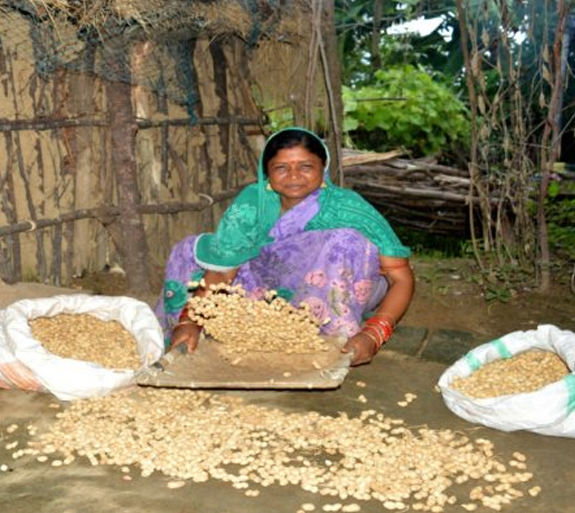
Gitanjali Kandi ran a small shop on the footpath, selling fried groundnuts to tourists outside the Konark Sun Temple. Her husband worked has a daily wage labourer. Despite their meagre earnings, the couple were sending both their children to school. However, during the lockdown both Gitanjali and her husband lost their incomes. Eventually their savings also exhausted.
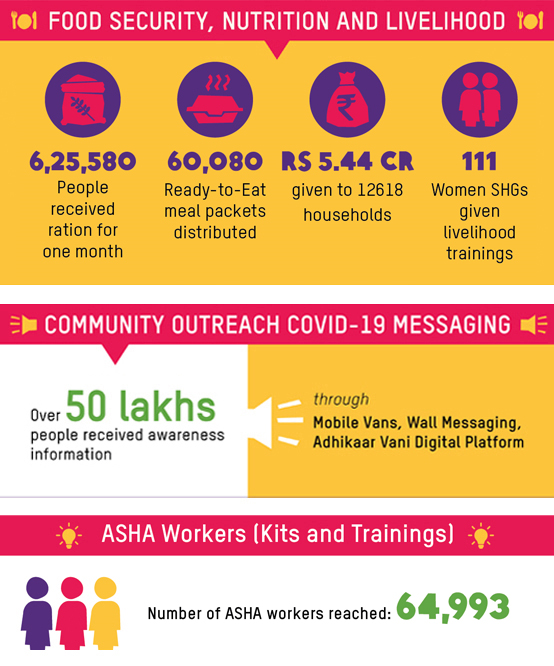
Oxfam India has been responding to the COVID-19 crisis across 16 states. Gitanjali’s was one of the families to whom we reached out in Odisha. We provided dry ration kits and Rs. 5000 cash to her family.
Though a small amount, the cash helped Gitanjali start her shop again after the lockdown was lifted. She bought raw groundnuts with the money and started processing it for sale. She also bought masks and sanitisers to comply with the health guidelines.
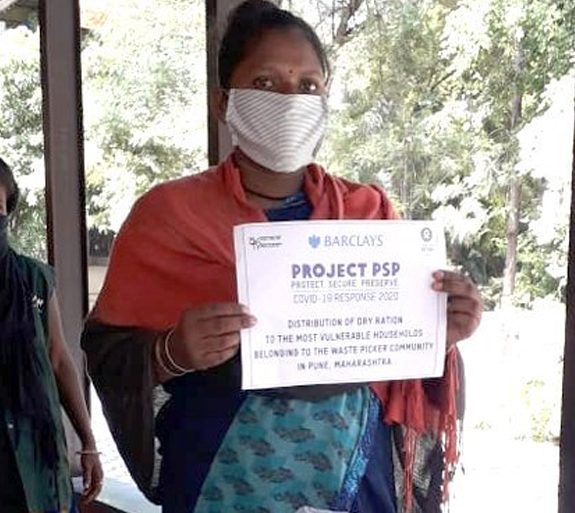
Millions of informal sector workers in India have been pushed to the brink of poverty. Although most of them lost their jobs during the lockdown, many workers in the frontlines – waste pickers and sanitation workers continued working.
24-year-old Swati, a waste picker continued picking waste from Pune’s Wagholi Gram Panchayat area. Since the income from waste picking was not enough to support her family, she used to segregate waste and sell scraps. But during the lockdown, with scrap stores shut, she lost almost half of her income and could not make ends meet.
As part of our response, Oxfam India has been reaching out to informal sector workers like Swati with dry ration, hygiene and safety kits. The dry ration includes rice, flour, pulses, salt, some spices, edible oil, sugar, and tea. Each kit serves a family of five for two meals for 30 days.
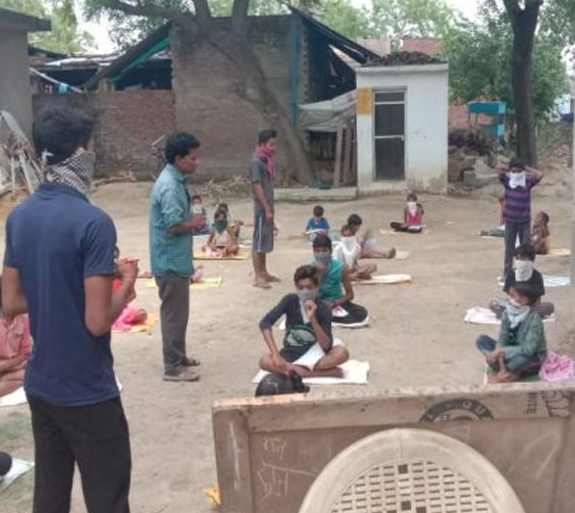
Oxfam India tried some innovative methods to ensure classes where not disrupted and children continued learning despite school closure. We engaged with School Management Committees and parents to identify volunteers in different villages. With help from school teachers, volunteers were trained to conduct offline classes while following COVID-19 related safety measures.
The volunteers follow a set routine. They teach at the same time every day and conduct recreational activities such as toy making and storytelling sessions, and play games to keep the children engaged.
"This is interesting and very useful, otherwise we would have fallen behind on our studies. Plus this also helps us to meet with our classmates," says Shivani Patel of class 7. Till date we have provided offline classes to over 1100 children across four districts in Uttar Pradesh.



Your contributions are eligible for up to 50% tax benefit under section 80G

I have been supporting Oxfam for the past 12 years. I'm proud to be associated with an organisation that is committed towards education, women rights and poverty elleviation. I hope to motivate others to join Oxfam India.
Meera Dutt

My association with Oxfam India started 9-10 years ago. I find Oxfam's work genuine that shows results in empowering women and children. My contribution to Oxfam is truly helping in creating an impact.
Anup Mukherjee

For the past decade, I have dedicatedly supported Oxfam. I believe in Oxfam's work. Their work on the ground has helped many children receive an education. They work for the most vulnerable people and i will continue to support them to help people in need.
Anita Bakshi